From Foe to Friend: A Rare Chapter in History

Across oceans and centuries, a difficult past slowly became a lasting friendship.

History often remembers the battles. It remembers the flags raised and lowered, the victories celebrated, and the defeats mourned. Far less often does it remember the moment when former enemies choose to shake hands instead of clenching fists.

That is what makes Philippine-Spanish Friendship Day different.

Every June 30, the Philippines remembers not the beginning of a war, but the end of one. The date traces its roots to the Siege of Baler in 1899, when Spanish soldiers who had remained inside a church for months finally learned that the war had already ended and that Spain had transferred the Philippines to the United States under the Treaty of Paris.

What happened next was unusual for its time.

Weeks after the siege ended, President Emilio Aguinaldo issued a decree ordering that the Spanish soldiers be treated not as prisoners of war, but as friends and assisted in their return to Spain. The gesture transformed the final chapter of a conflict into the opening page of a new relationship.

More than a century later, that act of reconciliation inspired the creation of Philippine-Spanish Friendship Day through Republic Act No. 9187 in 2002.

The friendship continues today.

Spanish words still live in everyday Filipino conversations. Family names, town plazas, fiestas, churches, recipes, and traditions quietly carry pieces of a shared past. Trade, education, tourism, and cultural exchanges continue to connect both nations in the present.

None of this erases the painful parts of history. Colonial rule brought hardship alongside influence, and remembering both is part of understanding the whole story.

Philippine-Spanish Friendship Day does not ask us to forget the past. It asks something more difficult and perhaps more valuable: to remember the past honestly while choosing what kind of future to build from it.

History has many stories about how wars begin.

This is one of the rarer stories about how peace lasts.

⌨ ᴛʸᵖⁱⁿᵍ ᴏᵘᵗ ᵒᶠ ᵗʰᵉ ʙˡᵘᵉ ᵈᵃʳᵉᵐ ᵐᵘˢⁱᶜ ᵇˡᵒᵍ
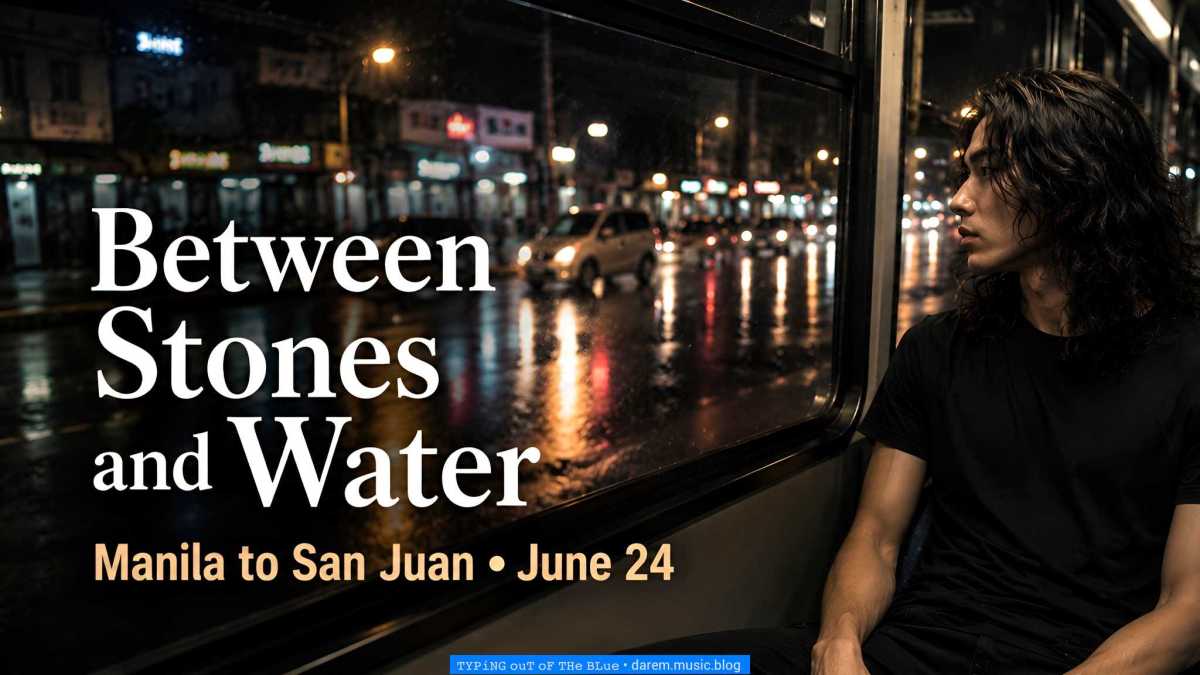
Play Acoustically Amid the Noise and Haste • Darem Placer • Full album. Press play.

Between Stones and Water

A simple trip turns into an unexpected reflection as one traveler passes through two very different celebrations.

June 24 was supposed to be an ordinary day of travel.

The plan was simple: catch a ride, pass through Manila, visit a few places, and head home before evening. But some dates seem determined to tell their own stories.

That morning, he found himself moving through Manila. The city was marking Manila Day, a reminder that on June 24, 1571, Manila was formally established as a city under Spanish rule. Around him were traces of centuries layered upon one another. Old churches stood beside modern buildings. Historic walls watched over busy streets. The city carried the memories of triumphs and tragedies, of leaders and laborers, of generations who helped shape its story.

Manila did not celebrate with the excitement of a street festival. There were ceremonies, cultural programs, and reminders of history. It was a day for looking back.

Later, his journey brought him to San Juan.

There, the atmosphere was completely different.

The streets were alive with laughter. Water flew through the air. Children carried water guns like tiny soldiers in a friendly battle. No one seemed safe from getting soaked. Within minutes, he was wet from head to toe.

At first, it felt like pure fun. But behind the tradition was a deeper story.

June 24 is also the feast of Saint John the Baptist, the prophet who prepared the way for Jesus. Water became part of the celebration because John baptized people in the Jordan River, calling them to repentance and renewal. What looked like a citywide water fight carried the memory of a man whose message pointed people toward something greater than himself.

As evening approached, he finally began the trip home.

His clothes were still damp. The noise of the celebrations had faded behind him.

Through the bus window, the city moved past in fragments. A church tower. A row of old buildings. A crowded corner waiting for the light to change. Together, they felt like notes from different centuries finding their place in the same song.

He thought about the two places he had visited that day.

Manila stood as a reminder of a city that endured through centuries of change.

John the Baptist was remembered for a different reason. He built no city and founded no earthly kingdom. His role was to prepare the way for others.

Some people spend their lives building things that can be seen. Others spend their lives helping others find the right path. Both leave a mark, though not always in the same place.

By the time he reached home, his clothes had dried, but some things were not so quick to fade.

⌨ ᴛʸᵖⁱⁿᵍ ᴏᵘᵗ ᵒᶠ ᵗʰᵉ ʙˡᵘᵉ ᵈᵃʳᵉᵐ ᵐᵘˢⁱᶜ ᵇˡᵒᵍ