
The Beauty of Small Goodness

Small kindness can shift the world’s weight—proof that being good isn’t hard at all, it’s actually the coolest way to live.

Inspired by Saint Thérèse’s “little ways”

Sometimes we think goodness needs to be big—like saving the world, or giving away everything we own. But the truth is, being good can be simple.

It could be holding the door for someone carrying heavy bags. Smiling at the security guard who stands all day. Listening to a friend who feels no one hears them. Sharing food when someone forgot theirs. Saying “thank you” even when people forget to notice the effort.

These are not grand gestures, but they carry quiet power. They remind us that kindness is not rare—it’s always within reach. And when we choose it, life feels lighter, cooler, more human.

Goodness is not about applause. It’s about love and humility in everyday moves. The kind of love that doesn’t ask for credit, the kind of humility that doesn’t keep score.

And maybe that’s the secret: being good is not hard. Being good is cool. Because every small act adds up, like drops of water becoming a river that refreshes the world.

Just like Saint Thérèse of the Child Jesus taught with her “little ways”—to love in the smallest things, and in doing so, to light the world.

ᴛʸᵖⁱⁿᵍ ᴏᵘᵗ ᵒᶠ ᵗʰᵉ ʙˡᵘᵉ ᵈᵃʳᵉᵐ ᵐᵘˢⁱᶜ ᵇˡᵒᵍ

Traces of courage, silence, and sacrifice—this is Saints.

Listen on Apple Music, Apple Music Classical, and YouTube Music
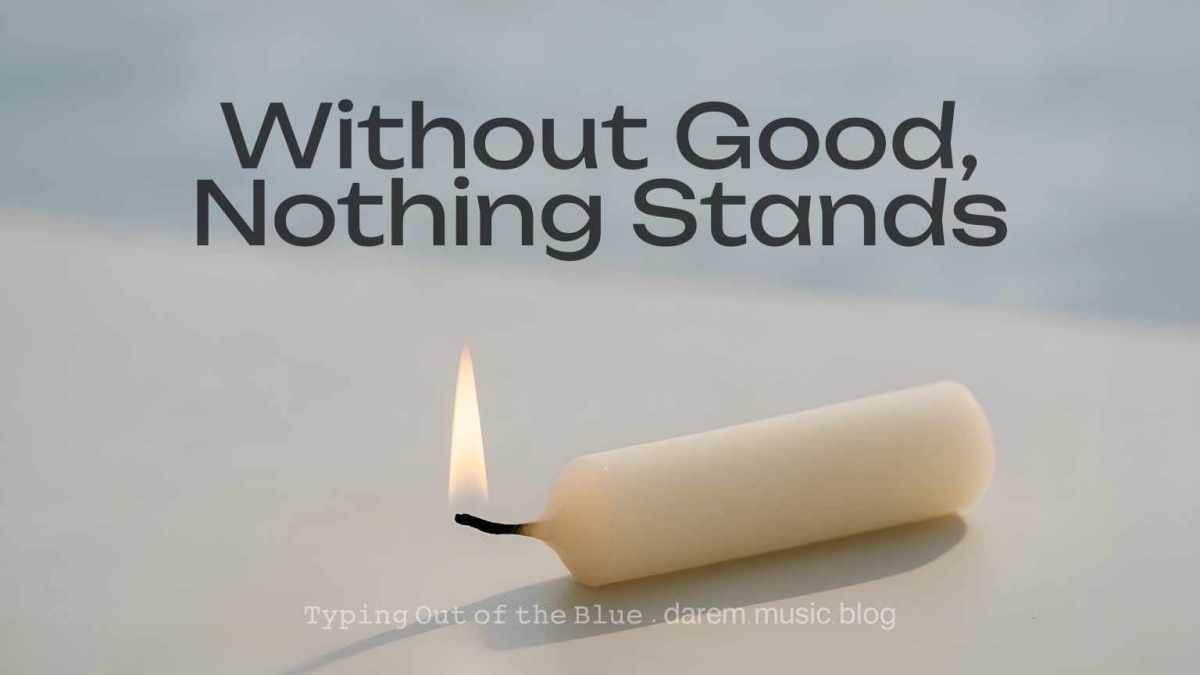
Without Good, Nothing Stands

What if the very thing that keeps the world from collapsing isn’t power, money, or fame—but something far quieter?

The world today feels like a stage where evil plays the louder role. Shortcuts, corruption, manipulation—these things often get the spotlight. People who cheat and twist the rules climb faster, while those who choose honesty walk the long road, unnoticed. It’s like living in a hacked system where the clever trickster seems smarter than the steady builder.

But here’s the strange part: evil rarely comes pure. Even the worst men sprinkle bits of good. A syndicate boss provides food allowance for his hitmen. A corrupt tycoon donates to charity. A father who hurts strangers will still show tender care to his own child. That’s the mask of evil—it borrows pieces of goodness to look human, to buy loyalty, to silence critics, or to quiet its own guilty heart.

And that’s why people get confused. When such a man dies, some will say, “He was kind. He paid for my son’s tuition.” They forget the blood trail that tuition came from. Evil buys its legacy in fragments of good, hoping history will weigh kindness heavier than killings.

Still, goodness stands out—not because it changed, but because the world around it darkened. Once, goodness was expected. Now, it’s rare. And anything rare draws attention. When most lie, truth shocks. When most cheat, honesty surprises. When most grab, kindness disarms. Like a candle, ordinary in daylight but unforgettable in the night, goodness shines simply because shadows surround it.

So whose world is this? On the surface, the bad look like the owners. They have the wealth, the power, the headlines. But underneath, it’s the good who keep the world alive. Without honest workers, faithful friends, caring parents, and silent heroes, everything would collapse. Evil consumes, but goodness sustains.

In the end, shortcuts fade. Evil mutates to survive, improving its tricks until it leaves an indelible imprint of rot. But even then, one real act of goodness can outlast the noise. Because evil thrives by bending truth, while goodness simply is—and without goodness holding the ground, even the evil would have nothing left to stand on.

𝚃𝚢𝚙𝚒𝚗𝚐 𝙾𝚞𝚝 𝚘𝚏 𝚝𝚑𝚎 𝙱𝚕𝚞𝚎 • 𝚍𝚊𝚛𝚎𝚖𝚙𝚕𝚊𝚌𝚎𝚛.𝚌𝚘𝚖