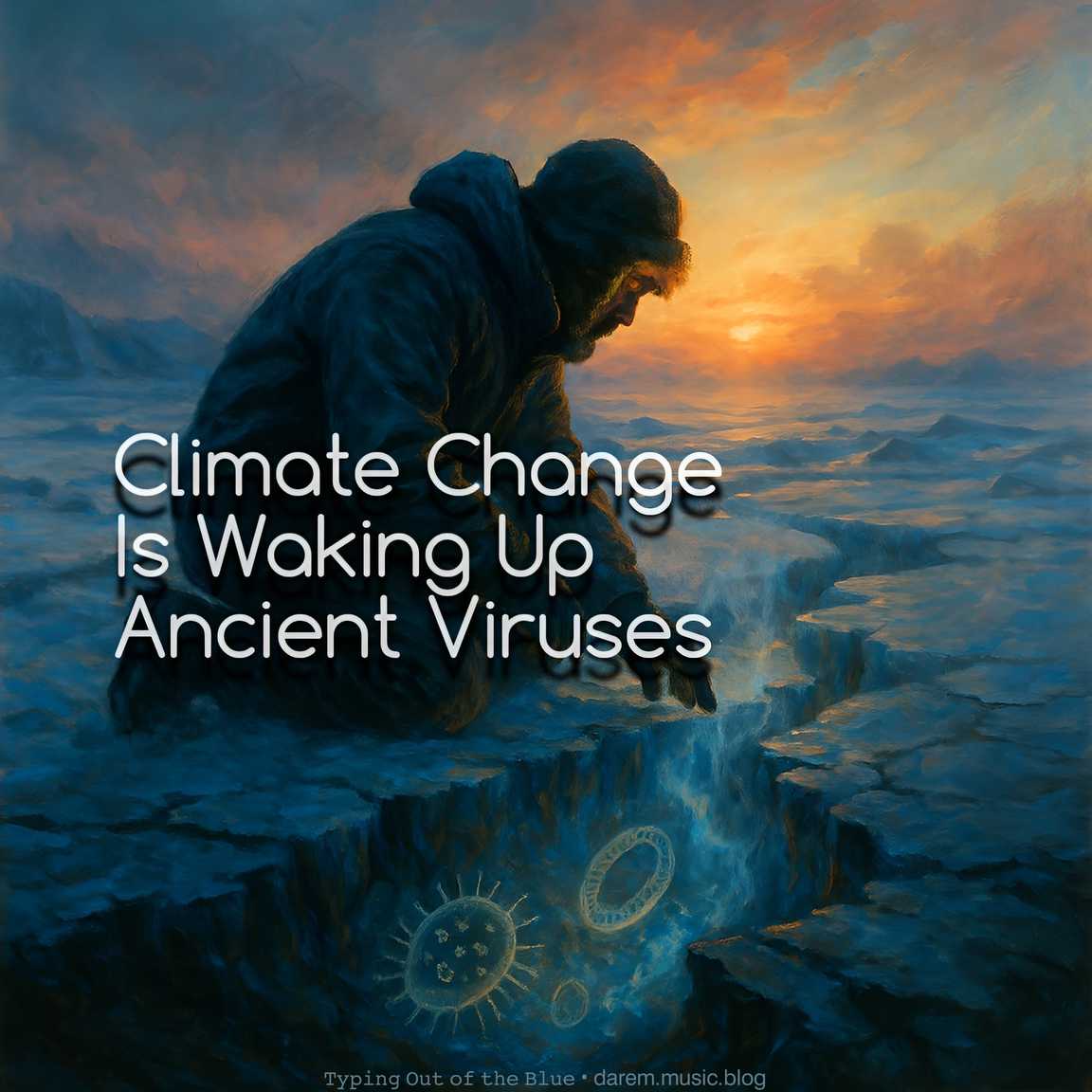
Climate Change Is Waking Up Ancient Viruses

Melting ice is releasing ancient microbes and viruses. The past is waking—and scientists say the world must pay attention.

As the planet warms, something old is stirring beneath the ice.

In the frozen Arctic and distant mountain ranges, scientists are finding ancient microbes and viruses—some frozen for tens of thousands of years. They call them “zombie viruses.” Not because they crawl, but because they never truly died.

🧊 What’s Beneath the Ice

Permafrost, the ground that stays frozen for centuries, is melting faster than ever. Inside it are the remains of plants, animals, and microorganisms from a forgotten world. When the ice thaws, those tiny life forms can wake up again.

In Siberia, researchers revived 13 ancient viruses, including one that’s 48,500 years old and still capable of infecting amoebas.

In the Himalayas, scientists discovered around 1,700 unknown viral species trapped inside glacier ice. They may not infect humans, but they reveal how much life the Earth has been keeping in storage.

⚠️ The Real Concern

The risk to humans is still small—but not zero.

In 2016, melting permafrost in Siberia released anthrax bacteria from a frozen reindeer carcass, infecting both people and animals. That outbreak proved one thing: some threats from the past can still return.

As mining, drilling, and research move deeper into thawing ground, more contact with ancient microbes becomes possible. Each disturbance of the ice opens another page of the planet’s old archive.

🌡 More Than Health

The melting isn’t just a health issue—it’s a climate one.

When permafrost softens, it also releases carbon and methane, powerful greenhouse gases that trap more heat and speed up global warming. The ice is part of Earth’s natural balance; when it breaks, the rhythm changes everywhere.

🔍 What Scientists Warn

Researchers are calling for stronger monitoring and safety systems in melting regions. We can’t refreeze the planet overnight, but we can track what’s emerging and prepare for the possible consequences.

Ignoring the problem doesn’t stop it—it only lets the thaw go unnoticed.

🌱 The Reminder

Climate change isn’t only about heatwaves and rising seas. It’s also about the Earth reopening its old pages.

Every melt reveals something forgotten.

Every discovery reminds us that when we disturb the past, it might just wake up.

⌨ ᴛʸᵖⁱⁿᵍ ᴏᵘᵗ ᵒᶠ ᵗʰᵉ ʙˡᵘᵉ ᵈᵃʳᵉᵐ ᵐᵘˢⁱᶜ ᵇˡᵒᵍ

👉 Download Sky-Low on Bandcamp

💿 Just type 0 if you want to download the album for free.

Sky-Low
“Sky-Low” is not just an album—it’s an awareness campaign about climate change and a challenge to protect our planet.

57 Extra Superhot Days—And Counting

2100 sounds far, but the planet’s already heating fast—each decade is a chance to cool it down before it’s too late.

The world’s getting hotter—literally. A new study says we’re heading for around 57 more “superhot” days every year by the end of this century. A superhot” day means one that’s hotter than 90% of what used to be normal for that place—whether that’s 38°C in Manila or 30°C in London.

That’s year 2100. Sounds far, right? But it’s not some sci-fi future—it’s the direction we’re already walking into today.

Every decade we ignore adds heat our kids will live through. It’s not “too far.” It’s too close if we keep pretending it’s not our problem.

🌍 The unfair heat

Big countries create most of the pollution, but small countries pay the bigger price. Small island nations like Samoa, Panama, and the Solomon Islands don’t have huge factories or millions of cars, yet they’re surrounded by oceans that trap more heat and make their air more humid. That means their temperatures rise faster, their crops dry quicker, and their people suffer longer.

Meanwhile, richer nations that caused most of the carbon buildup can afford cooling systems and better healthcare—so they feel the heat less, even when it’s the same sun. It’s not just science. It’s injustice in slow motion.

🌡 Heat with no mercy

Scientists now warn that heatwaves are changing—longer, harsher, deadlier. Europe already feels it tenfold. India’s heat now mixes with humidity, turning ordinary afternoons into survival tests.

Every “superhot” day means higher electricity use, more crops failing, and people—especially the poor—fainting, falling, and dying. This isn’t “climate drama.” It’s real life, heating up faster than our response.

Between hope and heat

Back in 2015, when countries agreed under the Paris Agreement, they helped slow down the planet’s heating. Without that agreement, the world could’ve faced around 114 extra superhot days every year instead of 57. So yes—we can still change the story.

The year 2100 isn’t a faraway doom date—it’s a signpost, warning us early enough to act. We can still cool the earth if we move together—less greed, more care, more action. The clock isn’t just ticking—it’s burning. But that means there’s still time to turn off the fire.

⌨ ᴛʸᵖⁱⁿᵍ ᴏᵘᵗ ᵒᶠ ᵗʰᵉ ʙˡᵘᵉ ᵈᵃʳᵉᵐ ᵐᵘˢⁱᶜ ᵇˡᵒᵍ

👉 Download Sky-Low on Bandcamp

💿 Just type 0 if you want to download the album for free.
Sky-Low
“Sky-Low” is not just an album—it’s an awareness campaign about climate change and a challenge to protect our planet.