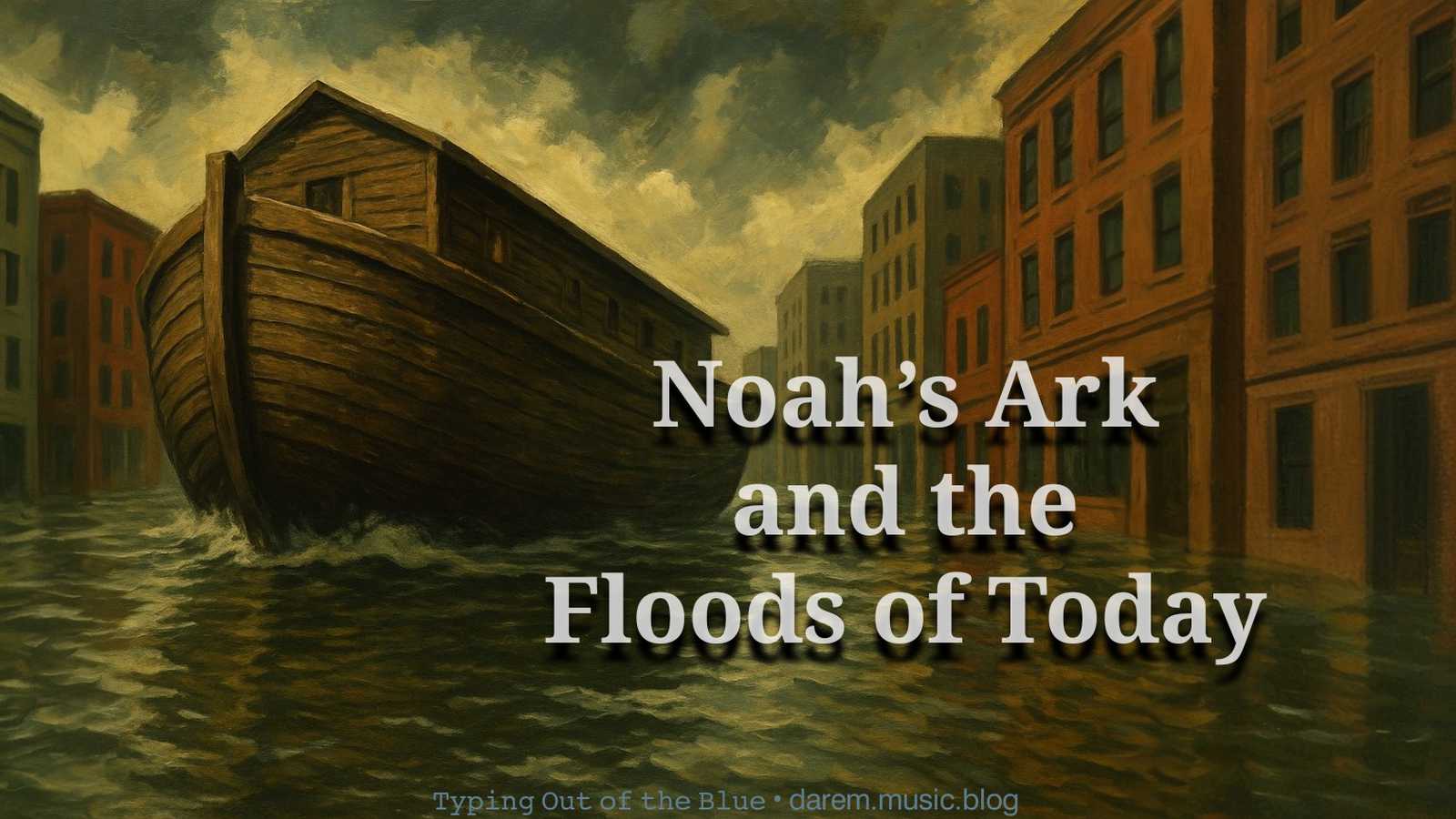
Noah’s Ark and the Floods of Today

Floods keep coming—not just from rain, but from corruption that weakens the walls meant to keep us safe.

Noah’s Ark is one of the oldest warnings in human history. A world drowned not just in water but in corruption. People were violent, greedy, and careless. God told Noah to build an ark, and while others laughed, he obeyed. When the flood came, the ark floated—not because it was magic, but because it was built right.

Fast forward to today. The flood is back—not in the same way, but just as destructive. Climate change makes storms stronger, rains heavier, and floods deadlier. And what do we do? We build our “arks”—dikes, drainage systems, pumping stations. But unlike Noah, we cut corners. Money disappears, projects are left unfinished, walls are weak. Corruption eats the very structures meant to protect us.

History repeats itself. Before, the corruption was in human hearts. Now, it’s in flood control budgets and contracts. Same root: greed. Same result: destruction.

Noah’s story is more than a Bible tale. It’s a mirror. It tells us survival isn’t just about escaping the flood, but about doing what’s right before the flood even comes. If we keep choosing corruption, then every rainfall becomes our judgment day.

The rainbow still hangs in the sky—a sign of mercy, a promise of life. But it also asks a question: Will we finally learn, or will we keep building broken arks until we drown ourselves?

ᴛʸᵖⁱⁿᵍ ᴏᵘᵗ ᵒᶠ ᵗʰᵉ ʙˡᵘᵉ ᵈᵃʳᵉᵐ ᵐᵘˢⁱᶜ ᵇˡᵒᵍ

When the Planet Turns Darker

From glaciers vanishing in Venezuela to sudden floods drowning Metro Manila, the past weeks have felt less like news and more like a countdown. The planet isn’t whispering anymore—it’s screaming.

Fragments of a World Running Out of Time

This past month, climate change didn’t whisper—it screamed. From vanished glaciers to flooded city streets, the planet feels like it’s running out of time.

Aug 30, 2025 — Pakistan’s Summer Escape Turns Deadly

What used to be a cool mountain refuge turned into a death trap. A sudden cloudburst at Babusar Pass killed 13 people, while more than 800 have died in this year’s floods across Pakistan. Melting glaciers, stripped forests, and unstable monsoons turned postcard views into disaster zones.

Aug 30, 2025 — Philippines Flash Flood Nightmare

In Quezon City, five days’ worth of rain fell in just one hour. Streets became rivers, drainage collapsed in 36 barangays, and families scrambled to safety. The deluge even surpassed the intensity of Ondoy back in 2009.

Sept 2, 2025 — Scientists vs. Politics

More than 85 climate scientists openly criticized the U.S. Department of Energy’s latest climate report, calling it biased and error-filled. Their warning: when politics twists science, the fight against climate change turns into shadowboxing.

Sept 5, 2025 — Venezuela’s Last Glacier Is Gone

Venezuela has become the first country in modern times to officially lose all its glaciers. The once-majestic Humboldt Glacier finally shrank past the point of recognition. It’s not just ice disappearing—it’s a nation losing part of its memory, its water source, and its soul.

Sept 5, 2025 — Wildfires Spread Toxic Skies

From the Amazon to Canada to Siberia, wildfires are burning so intensely that their smoke is circling the globe. The UN says dangerous particles are poisoning air quality thousands of miles away. What starts in one forest ends in another person’s lungs.

Sept 5, 2025 — Oceans at the Edge

New studies show coastal ecosystems could collapse by 2050 if warming seas and overfishing continue. This isn’t just about coral and fish—this is about food chains, storm protection, and life along every shore.

Sept 6, 2025 — India’s Monsoon Fury

Over 725 lives have been lost in northern India as floods and landslides ripped through villages from June to September. Scientists warn that shorter but more violent monsoons are the new normal. Rain that once nourished now strikes like a hammer.

Sept 6, 2025 — Philippines Weather Whiplash

By early September, Tropical Depression Lannie had already moved out of PAR, but its shadow lingered. The storm supercharged the southwest monsoon, hitting Metro Manila with sudden downpours. One moment sunny, the next moment knee-deep floods in low-lying areas of Las Piñas, Parañaque, and beyond. Climate change doesn’t feel abstract here—it feels like a mood swing in the sky.

Sept 2025 — Corals Losing Their Color

The 2023–2025 global coral bleaching event has already affected about 84% of reefs worldwide. Reefs are nurseries of the ocean, and they’re fading faster than anyone imagined. Once they’re gone, they don’t come back.

Sept 2025 — The Next Five Years

The World Meteorological Organization projects there’s an 80% chance that one year between 2025–2029 will be hotter than 2024—the hottest year on record. And an 86% chance the planet will cross the 1.5°C threshold. That line in the sand is about to be erased.

Glaciers gone. Rivers raging. Forests burning. Seas rising. Science ignored.

Every headline feels less like news, more like a countdown.

And the countdown only stops if we act before the timer hits zero—all that because we chose to ignore climate change.

𝚃𝚢𝚙𝚒𝚗𝚐 𝙾𝚞𝚝 𝚘𝚏 𝚝𝚑𝚎 𝙱𝚕𝚞𝚎 • 𝖽𝖺𝗋𝖾𝗆.𝗆𝗎𝗌𝗂𝖼.𝖻𝗅𝗈𝗀