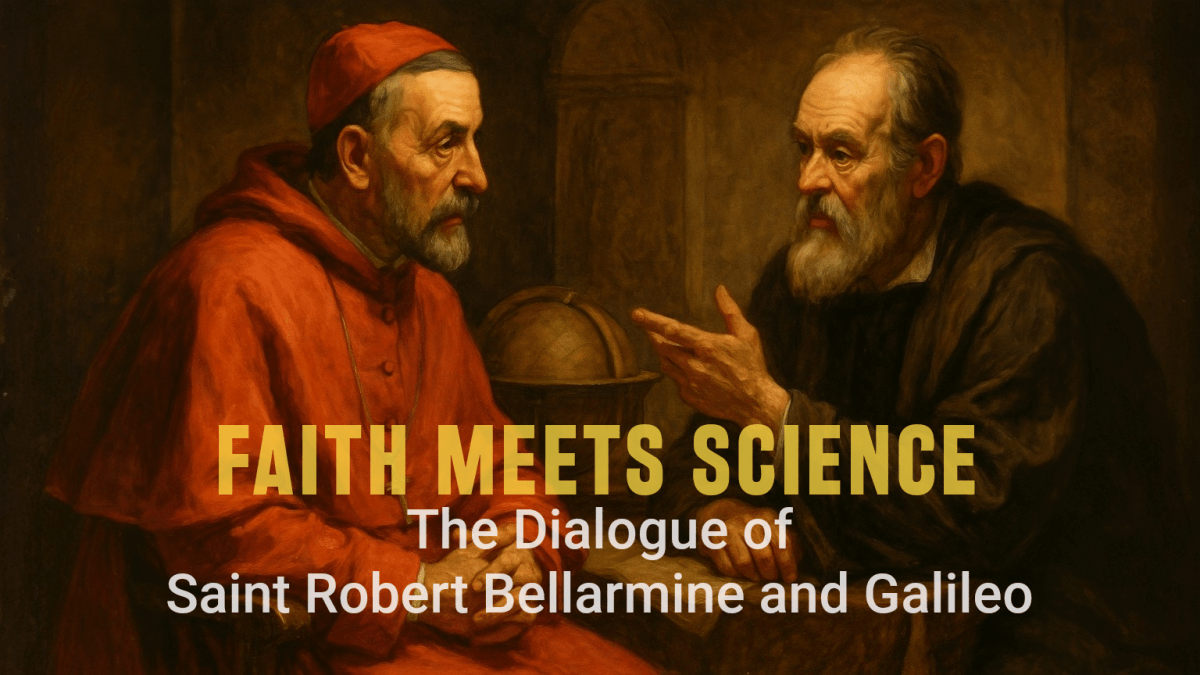
Faith Meets Science

Science challenged faith, but the response was more than resistance. A meeting of minds left a lesson the world needs today.

The Dialogue of Saint Robert Bellarmine and Galileo

When Galileo said the Earth moves around the Sun, many thought it clashed with the Bible. Cardinal Robert Bellarmine, a Jesuit and top Church thinker, was asked to respond.

In 1616, Galileo met with Cardinal Robert in Rome. Cardinal Robert wasn’t against him, but he told him: if one day science proves it true, then the Church must reread Scripture in that light. But until then, it should be treated as a theory, not as fact.

Cardinal Robert respected Galileo’s talent but wanted solid evidence before reshaping faith. He even gave Galileo a written note confirming he had not been condemned, only cautioned. After Cardinal Robert’s death in 1621, Galileo faced trial and was forced to take back his claims.

This story shows Cardinal Robert as more of a careful referee than an enemy—reminding us that faith and science can walk together, as long as we keep both humility and proof in mind.

Each year on September 17, we remember Saint Robert Bellarmine—a man with a listening ear and an understanding heart, something the world really needs today.

What Happened Next

1616 – Cardinal Robert cautioned Galileo: treat heliocentrism (the idea that the Earth moves around the Sun) as theory until proven.

1633 – Galileo was tried and forced to recant (publicly take back his claim), living under house arrest.

1822 – The Vatican allowed books teaching heliocentrism.

1835 – The Index of Forbidden Books (the Church’s official banned list) removed heliocentrism works.

1979 – Pope John Paul II opened a new study of Galileo’s case.

1992 – Pope John Paul II officially acknowledged the Church’s error and praised Galileo.

ᴛʸᵖⁱⁿᵍ ᴏᵘᵗ ᵒᶠ ᵗʰᵉ ʙˡᵘᵉ ᵈᵃʳᵉᵐ ᵐᵘˢⁱᶜ ᵇˡᵒᵍ
Traces of courage, silence, and sacrifice—this is Saints.

Listen on Apple Music, Apple Music Classical, and YouTube Music
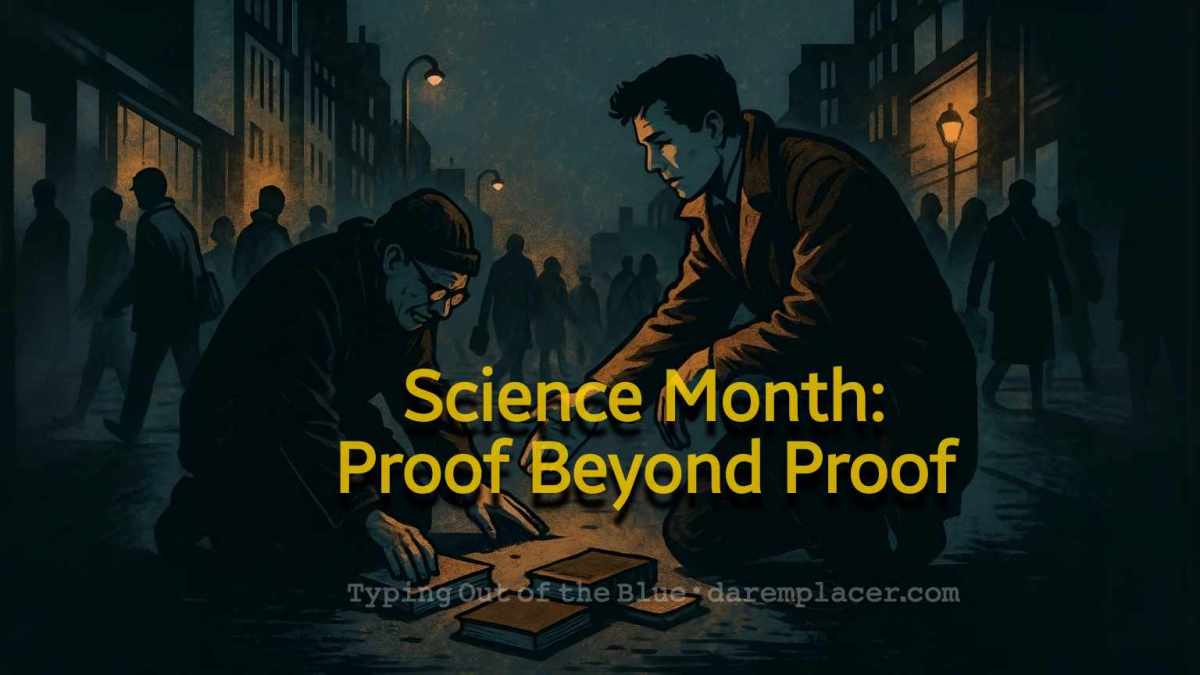
Science Month: Proof Beyond Proof

September is Science Month in the Philippines—a time of experiments and proof. But what about the things that can’t be tested in a lab?

In the Philippines, September is Science Month—a whole month set aside for experiments, projects, and discoveries. It’s one of the longest science celebrations in the world; in many other countries, science is usually given only a week. Waw, one whole month for science!

But ever noticed? There’s no Soul Month. Not even a Soul Week. (Okay fine, there’s All Souls’ Day—but that’s for remembering the dead, not for celebrating the soul alive in us.) Because the soul does not need experiments. You cannot place love on a scale, or hold forgiveness in a flask, or trap kindness in a microscope’s lens.

Science Month is all about proof—solid, visible, repeatable. We measure the stars, we count the cells, we ask the questions of how.

Science is for the material world. But the soul exists within us—here in this life, and beyond it. And the proof of the soul is seen in people: in kindness freely given, in forgiveness quietly offered, in love that refuses to end.

It’s like digital money—you don’t see it or touch it, but you know it’s real because it works. The soul is the same: unseen, yet undeniable in the way it changes lives.

That is why those social experiments on kindness feel hollow. Kindness is not a trick. It is not a show. The true soul needs no stage. Its proof is quiet, but it changes the world.

Science can measure the effects of kindness, and faith can teach about the soul—but the deepest proof is found in how we live it.

Science Month reminds us of discovery, of the gift of knowing the how. But the soul whispers the why. While science experiments end, the soul never stops. The soul lives in us, and beyond us.

𝚃𝚢𝚙𝚒𝚗𝚐 𝙾𝚞𝚝 𝚘𝚏 𝚝𝚑𝚎 𝙱𝚕𝚞𝚎 • 𝚍𝚊𝚛𝚎𝚖𝚙𝚕𝚊𝚌𝚎𝚛.𝚌𝚘𝚖