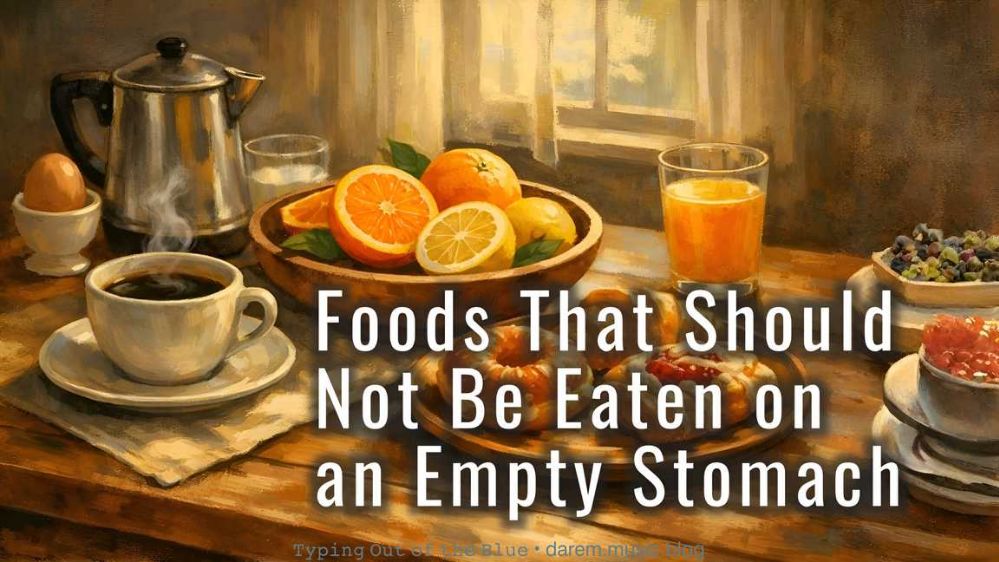
Foods That Should Not Be Eaten on an Empty Stomach

Some foods feel normal, but eating them on an empty stomach can quietly cause discomfort and energy crashes.

Not all foods are good to eat first thing in the day. Some may be healthy in general, but when eaten on an empty stomach, they can cause discomfort, irritation, or energy crashes. Here are common examples and why it is better to avoid them at the start.

Coffee 

Coffee increases stomach acid. When your stomach is empty, this can lead to acidity, nausea, or a jittery feeling. Some people also experience heartburn or sudden weakness. Coffee is gentler when taken after food.

Citrus fruits 

Oranges, lemons, and other citrus fruits are acidic. On an empty stomach, they can irritate the stomach lining and cause a sour or painful feeling. These fruits are better eaten with meals.

Spicy food 

Spicy dishes can irritate the stomach when there is no food to buffer the spice. This may lead to stomach pain or discomfort early in the day. Spicy food is safer when eaten with rice or other solid food.

Sugary foods 

Cakes, donuts, and candies cause a quick rise in blood sugar. When eaten on an empty stomach, this is often followed by a sudden drop, leaving you tired and hungry again. Sugar works better when balanced with proper food.

Raw vegetables 

Raw vegetables like cucumber or broccoli are healthy but harder to digest on an empty stomach. They can cause bloating or an uncomfortable feeling. Light cooking or pairing with food helps.

Carbonated drinks 

Soft drinks contain gas and acid. Drinking them on an empty stomach can cause bloating and irritation. They also provide no real nourishment to start the day.

The simple idea is this: foods that are too acidic, too spicy, or too sugary are not ideal as the first thing your stomach receives. Starting with gentle, simple food helps your body ease into the day.

⌨ ᴛʸᵖⁱⁿᵍ ᴏᵘᵗ ᵒᶠ ᵗʰᵉ ʙˡᵘᵉ ᵈᵃʳᵉᵐ ᵐᵘˢⁱᶜ ᵇˡᵒᵍ

Digital Albums by Darem Placer on Bandcamp
Listen. Support. Buy. Download.

When Not Eating Is Actually Good

Not eating isn’t always bad. Sometimes your body just needs a pause, not another plate. Learn how fasting really works.

We all grew up thinking we had to eat three times a day—breakfast, lunch, dinner. Miss one and people said you’d get weak. But that rule didn’t come from nature. Someone just made it up, and everyone went with it. Nobody even asked why.

Back in the 1700s, people simply ate when they got hungry—plain and real. Farmers ate after long days—hunters after a good catch. No clocks yet. No rules. Then came the 1800s—factories took over, and the bell started running people’s lives more than hunger did.

By the 1900s, cereal brands joined the game. They said breakfast was “the most important meal of the day.” Catchy line. Sold boxes. It wasn’t really about health—just a smart business move.

These days, science says your body doesn’t actually care much about time. When you give it space—what people now call intermittent fasting—your system fixes itself. Clears leftovers, steadies sugar, makes room to breathe again. It’s not starving. It’s letting your body catch up.

Still, fasting’s not for everyone. If your stomach’s weak or you’ve got ulcers or low sugar, don’t push it. Hunger pain isn’t strength—it’s your body saying, “slow down a bit.”

Try it this way:

• Not hungry? Then skip it. You’re fine.

• Hungry? Eat. Don’t wait too long, or you’ll attack the food like it’s been missing all day.

• Keep water near. Sip when you want.

• Eat real food when you do.

• Rest, too. If you barely slept or your head’s too tired, fasting won’t do you any good.

Skipping a meal once in a while’s okay. Your body could still be working on the food from earlier. You don’t need to chase every rule people made up. Just listen.

⌨ ᴛʸᵖⁱⁿᵍ ᴏᵘᵗ ᵒᶠ ᵗʰᵉ ʙˡᵘᵉ ᵈᵃʳᵉᵐ ᵐᵘˢⁱᶜ ᵇˡᵒᵍ