The sky used to rise above us. Now it hangs low, reminding us what happens when the world is no longer free.
The earth was free. It still is, technically—but we’ve turned it into something you can only rent. You rent land. You rent water. You rent your own time trying to afford them.
Once, the world was open. Everything you needed to live was just there. But humans love to measure things, so we put prices on what can’t really be owned. And now, the world feels less like a home, more like a subscription that’s always about to expire.
Even in music, it’s the same story. We call it streaming—sounds like freedom, but it’s really rent. You don’t own the song you love—you just borrow it from a server somewhere. That’s why I made a free album called Sky-Low—a quiet reminder of what was once free, and what’s slowly falling under the weight of our own noise.
But here’s the question that burns quietly under all this: do we stop caring just because something is free?The earth was free—and maybe the real question is, did we ever understand why it was given to us for free?
2100 sounds far, but the planet’s already heating fast—each decade is a chance to cool it down before it’s too late.
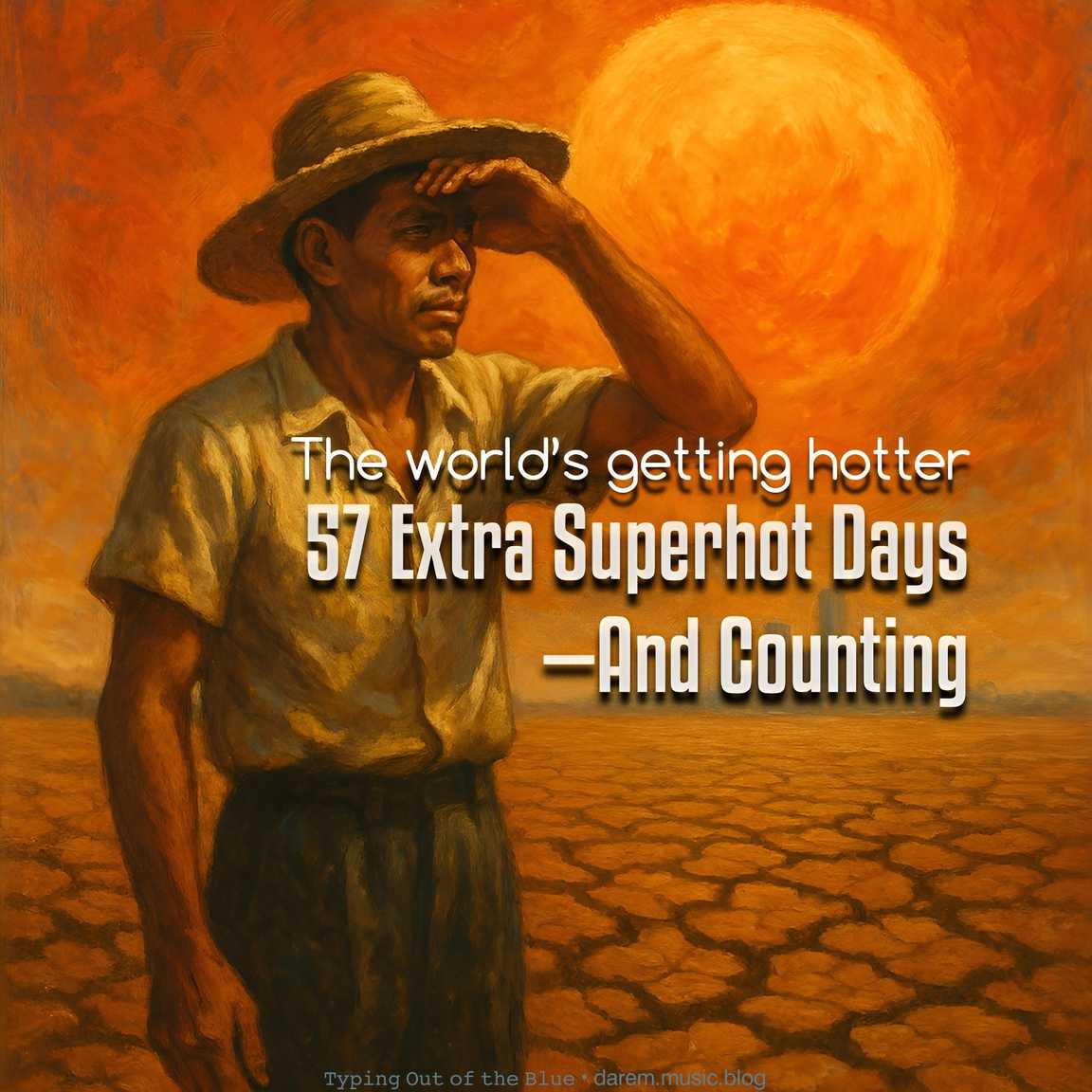
The world’s getting hotter—literally. A new study says we’re heading for around 57 more “superhot” days every year by the end of this century. A “superhot” day means one that’s hotter than 90% of what used to be normal for that place—whether that’s 38°C in Manila or 30°C in London.
That’s year 2100. Sounds far, right? But it’s not some sci-fi future—it’s the direction we’re already walking into today.
Every decade we ignore adds heat our kids will live through. It’s not “too far.” It’s too close if wekeep pretending it’s not our problem.
🌍 The unfair heat
Big countries create most of the pollution, but small countries pay the bigger price. Small island nations like Samoa, Panama, and the Solomon Islands don’t have huge factories or millions of cars, yet they’re surrounded by oceans that trap more heat and make their air more humid. That means their temperatures rise faster, their crops dry quicker, and their people suffer longer.
Meanwhile, richer nations that caused most of the carbon buildup can afford cooling systems and better healthcare—so they feel the heat less, even when it’s the same sun. It’s not just science. It’s injustice in slow motion.
🌡 Heat with no mercy
Scientists now warn that heatwaves are changing—longer, harsher, deadlier. Europe already feels it tenfold. India’s heat now mixes with humidity, turning ordinary afternoons into survival tests.
Every “superhot” day means higher electricity use, more crops failing, and people—especially the poor—fainting, falling, and dying. This isn’t “climate drama.” It’s real life, heating up faster than our response.
⚖ Between hope and heat
Back in 2015, when countries agreed under the Paris Agreement, they helped slow down the planet’s heating. Without that agreement, the world could’ve faced around 114 extra superhot days every year instead of57. So yes—we can still change the story.
The year 2100 isn’t a faraway doom date—it’s a signpost, warning us early enough to act. We can still cool the earth if we move together—less greed, more care, more action. The clock isn’t just ticking—it’s burning. But that means there’s still time to turn off the fire.