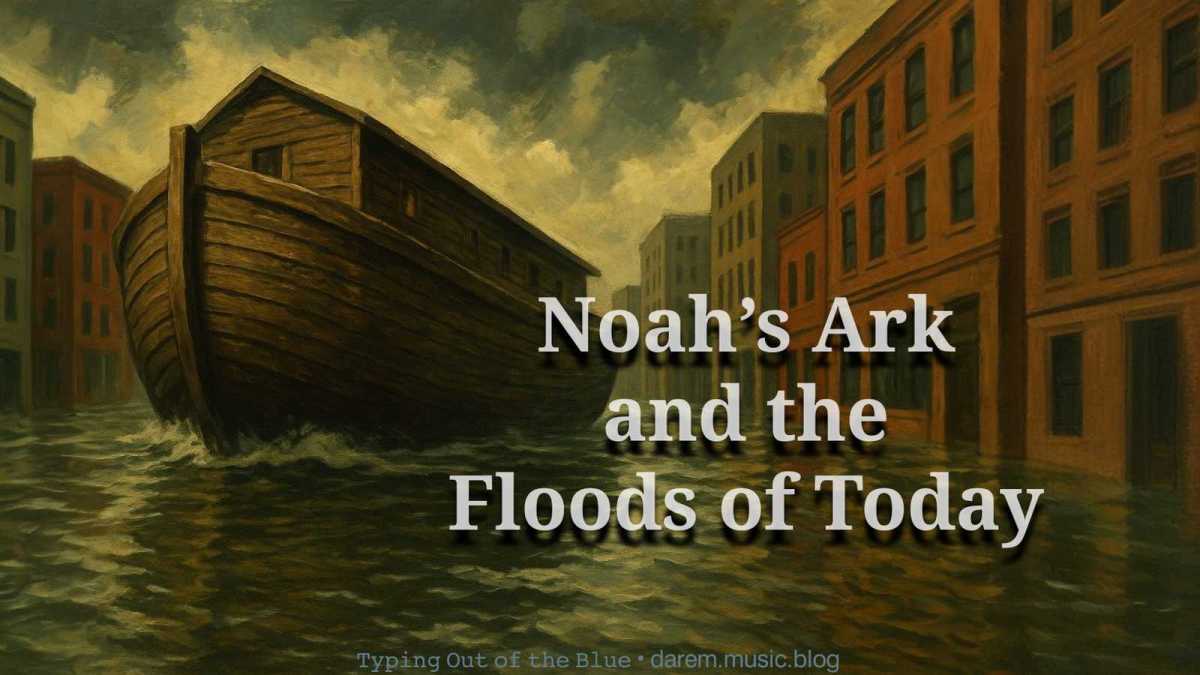
Noah’s Ark and the Floods of Today

Floods keep coming—not just from rain, but from corruption that weakens the walls meant to keep us safe.

Noah’s Ark is one of the oldest warnings in human history. A world drowned not just in water but in corruption. People were violent, greedy, and careless. God told Noah to build an ark, and while others laughed, he obeyed. When the flood came, the ark floated—not because it was magic, but because it was built right.

Fast forward to today. The flood is back—not in the same way, but just as destructive. Climate change makes storms stronger, rains heavier, and floods deadlier. And what do we do? We build our “arks”—dikes, drainage systems, pumping stations. But unlike Noah, we cut corners. Money disappears, projects are left unfinished, walls are weak. Corruption eats the very structures meant to protect us.

History repeats itself. Before, the corruption was in human hearts. Now, it’s in flood control budgets and contracts. Same root: greed. Same result: destruction.

Noah’s story is more than a Bible tale. It’s a mirror. It tells us survival isn’t just about escaping the flood, but about doing what’s right before the flood even comes. If we keep choosing corruption, then every rainfall becomes our judgment day.

The rainbow still hangs in the sky—a sign of mercy, a promise of life. But it also asks a question: Will we finally learn, or will we keep building broken arks until we drown ourselves?

ᴛʸᵖⁱⁿᵍ ᴏᵘᵗ ᵒᶠ ᵗʰᵉ ʙˡᵘᵉ ᵈᵃʳᵉᵐ ᵐᵘˢⁱᶜ ᵇˡᵒᵍ

Sunny Suspension, Rainy School Day—Why?

Yesterday we could predict the sky. Today, the sky refuses to be predicted. That should scare us all.

Why do class suspensions so often feel wrong? One day, schools close under the hot sun. The next, heavy rain pours when classes push through. And this happens even with upgraded weather tools—satellites, Doppler radars, rain gauges, computers.

This is not just in the Philippines. Around the world, the same thing happens. In the United States, snow days are declared early, sometimes without a single flake falling—other times students walk home in blizzards when schools stay open. In Europe, sudden heat waves close schools in France and Spain, only for cooler weather to return the next day. South Asia’s monsoon rains now come in wild bursts—flooding one area while another stays strangely dry. In Australia, smoke from bushfires is hard to predict, with schools caught in the middle.

Years ago, weather forecasting was almost exact. In the 1960s, satellites like TIROS-1 gave people their first real view of storms from space. By the 1980s and 1990s, Doppler radars and computers made storm tracking sharper. In the 2000s, forecast apps gave hourly updates, and for a while, a three-day forecast felt almost certain.

But climate change broke the rhythm. Seasons blurred. Rains turned into flash floods instead of steady showers. Sunshine in the morning can vanish under strong storms by afternoon. Forecasting became harder not because scientists got worse, but because the air itself grew unstable, messy, unpredictable.

That is why suspensions, cancellations, and warnings often feel off. Leaders must decide hours before, using data that can change within minutes. Better to look overcautious than risk lives. The problem is not poor leadership—it is a world that no longer behaves the way it used to.

Climate change is no longer a faraway issue; it is here. It floods our streets, stops our schools, burns our summers, and shakes our daily lives. If the weather can no longer keep its word, maybe it is time we keep ours—to waste less, to care more, to take steps, even small ones, that add up.

Because if we ignore the signs, tomorrow’s “sunny suspension” may not just be a hassle—it may be a warning humanity cannot afford to miss.

ᴛʸᵖⁱⁿᵍ ᴏᵘᵗ ᵒᶠ ᵗʰᵉ ʙˡᵘᵉ ᵈᵃʳᵉᵐ ᵐᵘˢⁱᶜ ᵇˡᵒᵍ
👉 Download Sky-Low on Bandcamp

💿 Just type 0 if you want to download the album for free. If you’d like to support my efforts, feel free to name your price.

Sky-Low
“Sky-Low” is not just an album—it’s an awareness campaign about climate change and a challenge to protect our planet.