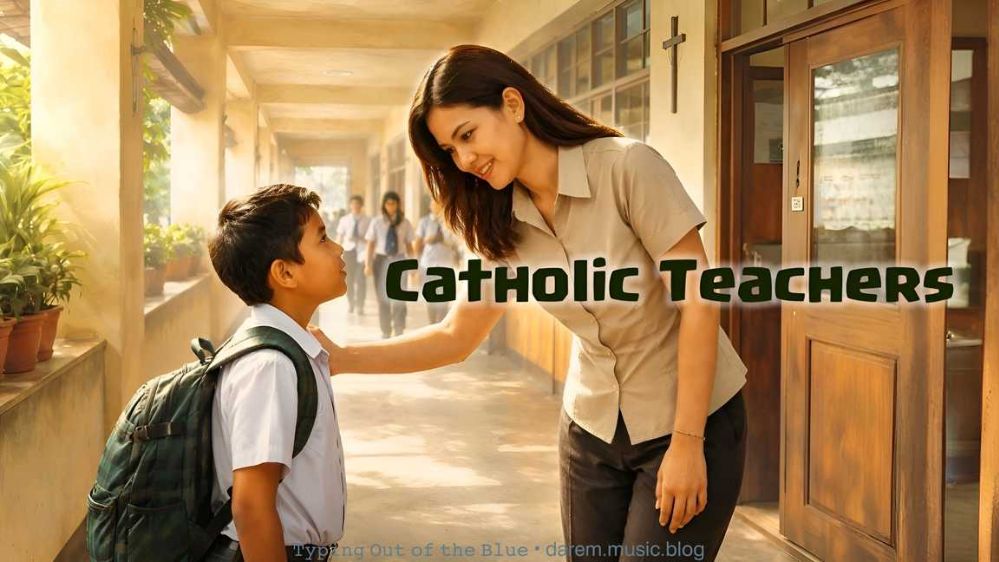
Catholic Teachers

How Catholic teachers teach, day to day—quiet, steady, and human.

The bell rings. Students are already seated. One is late. Another forgot a notebook. Someone is whispering at the back. The teacher pauses, looks around, and waits. No shouting. No lecture. Just silence doing its work. Then class starts.

That’s how Catholic teachers usually teach. Nothing dramatic.

They explain lessons. They repeat instructions. They correct mistakes when they happen, not when they become embarrassing. When someone crosses a line, they deal with it directly. When someone struggles, they notice. They don’t treat the room like a crowd. They treat it like people.

Rules matter in their class. Not because rules feel good, but because without them, everything falls apart. A Catholic teacher keeps rules steady. Same rule for everyone. No shortcuts. No favorites. Students feel that, even if they complain about it.

Faith doesn’t come in speeches. It shows up in small choices. How the teacher reacts when patience is tested. How consequences are given without sarcasm. How effort is acknowledged, even when the result is not perfect.

Sometimes it happens outside the classroom. A short talk in the hallway. A reminder before dismissal. A quiet correction that never becomes public. These moments don’t look important, but they stay.

Most days feel routine. Lesson done. Homework checked. Another day finished. Nothing that feels special while it’s happening.

But years later, a former student remembers that class. Not the topic. Not the quiz. Just the way things were handled. Fair. Clear. Human.

January 28 is called Catholic Teachers’ Day. Nice to note. But the work happens every ordinary day anyway.

⌨ ᴛʸᵖⁱⁿᵍ ᴏᵘᵗ ᵒᶠ ᵗʰᵉ ʙˡᵘᵉ ᵈᵃʳᵉᵐ ᵐᵘˢⁱᶜ ᵇˡᵒᵍ

Digital Albums by Darem Placer on Bandcamp
Listen. Support. Buy. Download.

Private Schools at Risk—And How to Save Them

Private schools in the Philippines are at a crossroads. The future will not be secured by outside lifelines—what really matters lies within.

Private schools in the Philippines face challenges deeper than they appear. The issue is not only about funding or enrollment numbers, but about the very systems that keep schools alive. Weak foundations, outdated practices, and a lack of long-term vision put many institutions at risk.


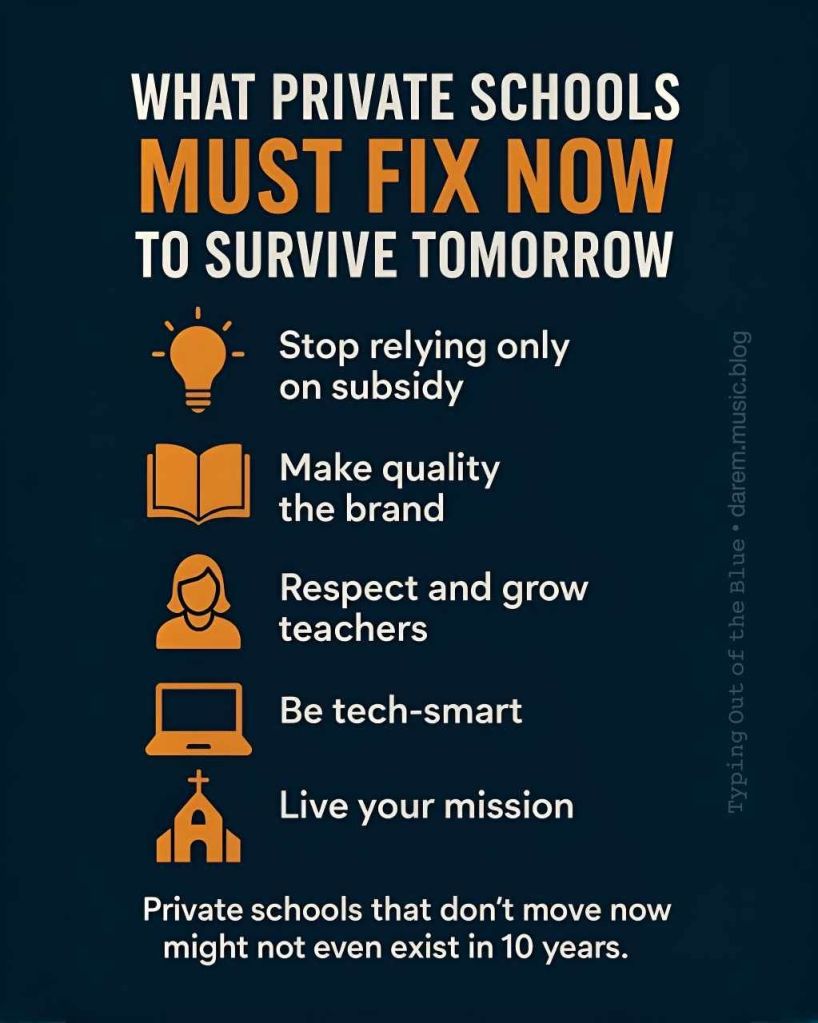
For private schools to survive—and thrive—they must rebuild from within. The path forward can be found in five essentials:

Live Your Mission

Every Catholic or mission-driven school has a deeper purpose beyond academics. That mission must be more than words on a poster. It should be alive in the way students are formed—not just for grades, but for faith, values, and service.

Make Quality the Brand

The true strength of a school is its reputation. Parents will always choose quality education when they see it. Excellence cannot be seasonal—it must be consistent, visible, and part of daily life in the classroom.

Respect and Grow Teachers

Teachers are not just employees—they are the heartbeat of a school. If they are undervalued, the system collapses. Respect means fair treatment, professional growth, and recognizing that when teachers are supported, students achieve more.

Be Tech-Smart

Education is moving forward with technology. Schools that resist will be left behind. Digital tools, modern teaching methods, and openness to innovation are no longer luxuries—they are essential for survival.

Build Financial Independence

Government aid is helpful, but it should never be the backbone. Schools need financial strength through alumni networks, partnerships, and creative income streams. A school that cannot stand on its own is always at risk.

The Hard Truth

The survival of private schools will never depend on outside lifelines. Without reform, many will close their doors in the next decade. Only those that build a strong foundation—mission alive, quality consistent, teachers respected, systems adaptable, and finances secure—will stand the test of time.

𝚃𝚢𝚙𝚒𝚗𝚐 𝙾𝚞𝚝 𝚘𝚏 𝚝𝚑𝚎 𝙱𝚕𝚞𝚎 • 𝖽𝖺𝗋𝖾𝗆.𝗆𝗎𝗌𝗂𝖼.𝖻𝗅𝗈𝗀