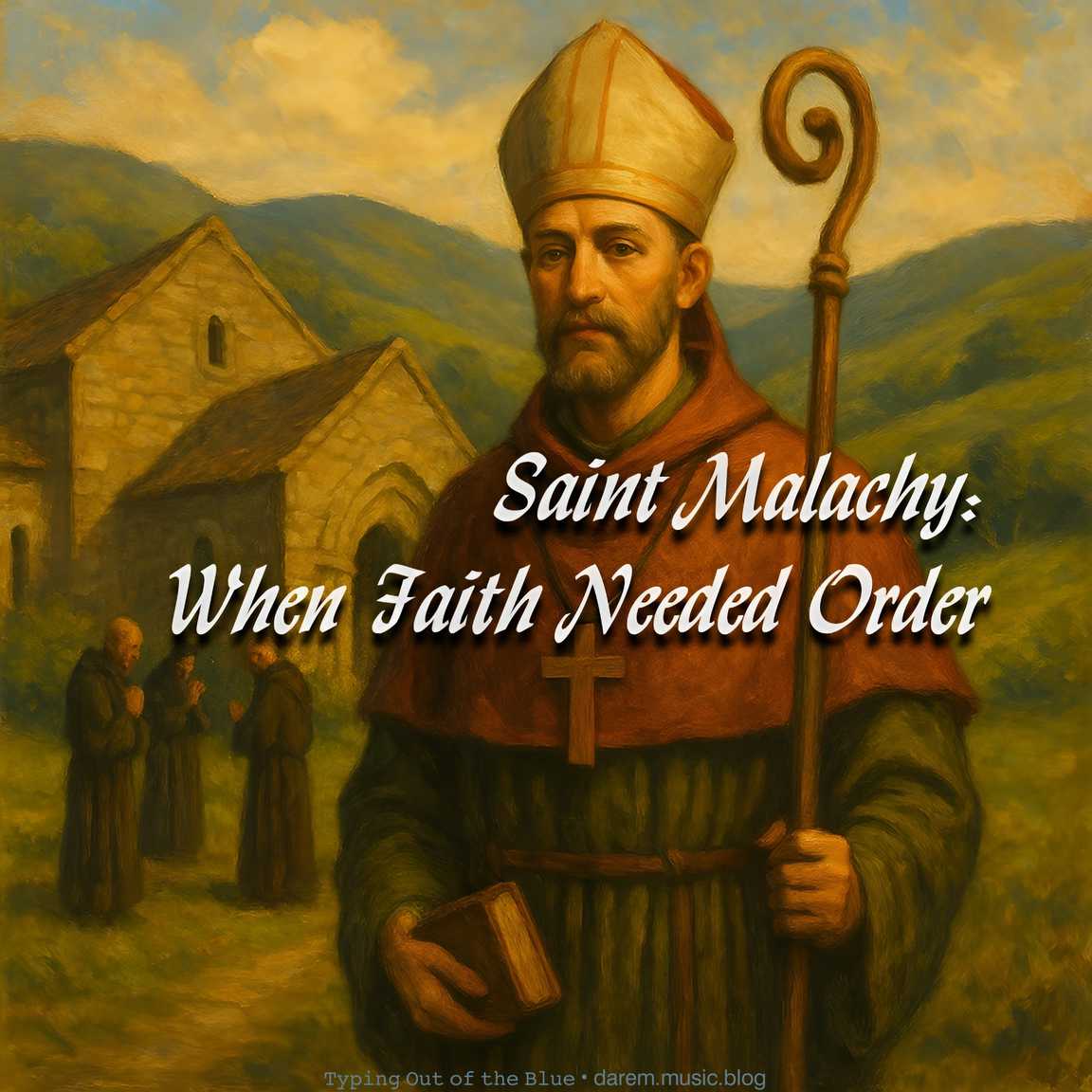
Saint Malachy: When Faith Needed Order

He didn’t seek control—only clarity. And through quiet reform, he turned confusion into peace that still echoes today.

In the early 1100s, the Church in Ireland had the heart but not the harmony. Monks prayed, abbots ruled, and bishops passed their titles like family treasures. It wasn’t scandalous, just uncoordinated. Think: different choirs singing one song, but in separate keys.

Malachy, who later became Archbishop of Armagh in Northern Ireland, stepped into that scene quietly. He didn’t come with power, only purpose. He saw that faith was alive but needed direction. So, he worked to bring unity. He reintroduced the Roman way of worship so that everyone prayed the same way again. He stopped the practice of families passing down church positions. He reminded priests to live simply and serve humbly. And he helped people rediscover confession—a forgotten path to peace.

Some leaders pushed back, not wanting change. But Malachy didn’t fight. He reformed through patience, kindness, and example. Slowly, people began to follow.

He built friendship with Saint Bernard of Clairvaux and helped Ireland reconnect with the rest of the Catholic world. When he died in France in 1148, the Church in Ireland was more united and alive than before.

Malachy wasn’t chasing control. He was restoring balance. Because when faith finds order, hearts find peace.

⌨ ᴛʸᵖⁱⁿᵍ ᴏᵘᵗ ᵒᶠ ᵗʰᵉ ʙˡᵘᵉ ᵈᵃʳᵉᵐ ᵐᵘˢⁱᶜ ᵇˡᵒᵍ

Traces of courage, silence, and sacrifice—this is Saints.

Listen on Apple Music, Apple Music Classical, and YouTube Music
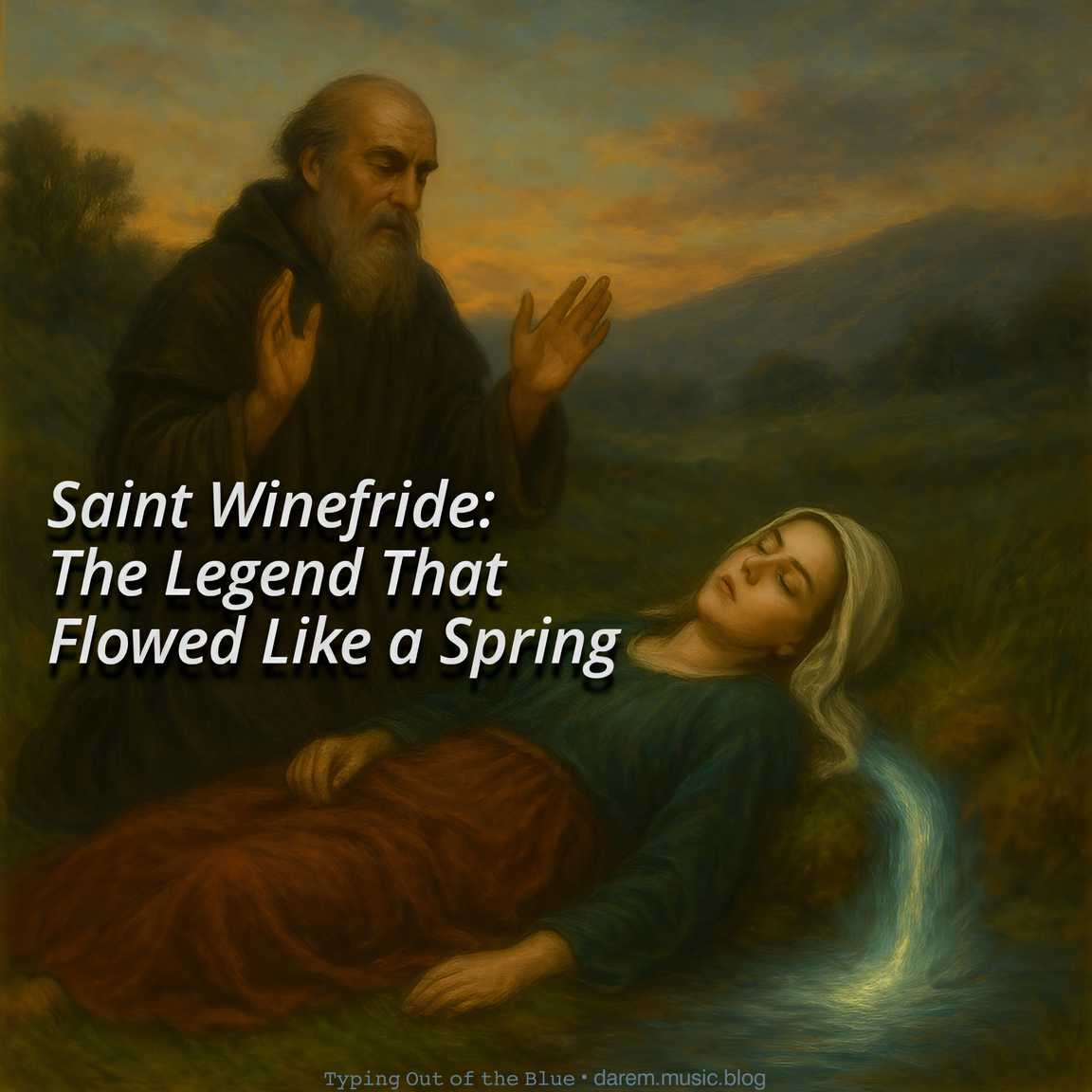
Saint Winefride: The Legend That Flowed Like a Spring

A Welsh legend of faith and healing that still flows through time—Saint Winefride, the woman who chose purity over pride.

In 7th-century Wales lived a young woman named Winefride—known in Welsh as Gwenfrewi. Born to a noble family, she chose a quiet and devoted life, turning away from wealth to live for faith. History remembers her as a woman of purity and prayer, guided by Saint Beuno, a respected priest of her time.

But around her life grew a story so powerful that it outlived the centuries.

According to legend, a man named Caradoc, angered by her refusal to marry him, struck her down and severed her head. The head rolled down the hill, and where it came to rest, a spring burst from the ground. Saint Beuno found her lifeless body, took her head, placed it back on her neck, and prayed with deep faith. The story says she opened her eyes—and lived again.

From that moment, the spring was said to carry healing power—a gift that drew pilgrims from across Britain.

Whether this miracle truly happened or simply became part of the faith’s poetry, no one can say for sure. But the place remains: Holywell, in Flintshire, Wales. For more than a thousand years, it has been called the “Lourdes of Wales,” a well where people still come to pray, hoping to find healing for the body and peace for the soul.

Legend or truth, Saint Winefride’s story endures because it speaks of something timeless—the rise of faith after violence, purity stronger than pride, and grace flowing even from pain.

⌨ ᴛʸᵖⁱⁿᵍ ᴏᵘᵗ ᵒᶠ ᵗʰᵉ ʙˡᵘᵉ ᵈᵃʳᵉᵐ ᵐᵘˢⁱᶜ ᵇˡᵒᵍ

Traces of courage, silence, and sacrifice—this is Saints.

Listen on Apple Music, Apple Music Classical, and YouTube Music