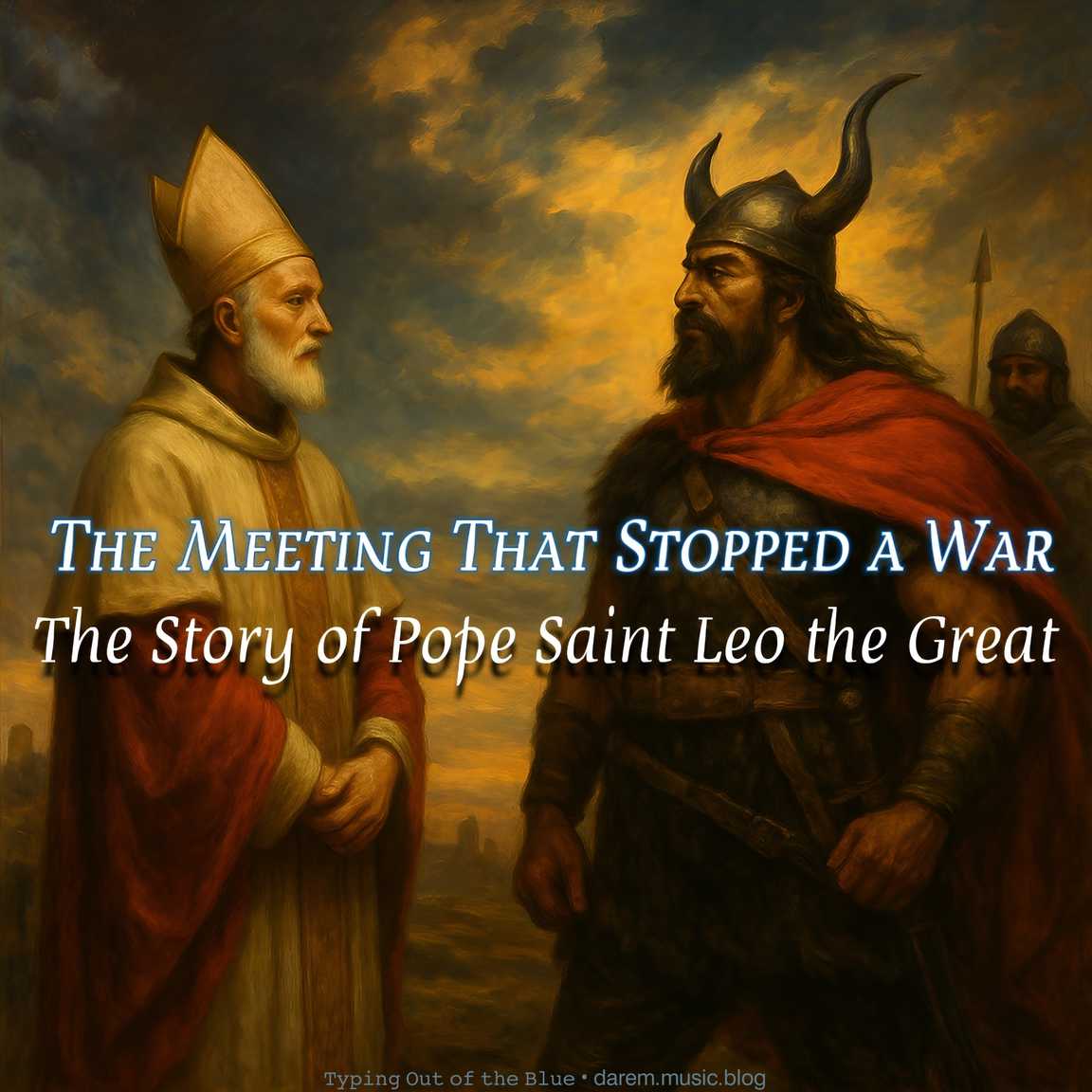
The Meeting That Stopped a War

He faced invaders with faith and led a broken world toward courage and truth.

The Story of Pope Saint Leo the Great

Back in the 5th century, when the Roman Empire was crumbling, a man named Leo stood tall—not with armies or wealth, but with faith and courage. He later became Pope Leo the Great, one of the most remarkable leaders of the early Church.

As pope, Leo faced both chaos and fear. Barbarian invasions were spreading, and confusion in faith was growing. Yet he stayed firm. When Attila the Hun, the feared leader of a nomadic empire that had conquered much of Europe, marched toward Rome, Pope Leo personally met him and convinced him to turn back—without a single battle fought. That moment alone made history, but his real greatness ran deeper.

Pope Leo’s words shaped Christian belief for centuries. Through his writings and sermons, he explained how Jesus is both truly God and truly man—a truth the Church still stands on today. He believed that real strength comes from humility, and that leadership means serving others, not ruling over them.

Pope Leo the Great died in 461, leaving behind a world still in ruins, but a faith stronger than ever. His title “the Great” wasn’t given for power—but for the peace, clarity, and courage he brought when everything else was falling apart.

⌨ ᴛʸᵖⁱⁿᵍ ᴏᵘᵗ ᵒᶠ ᵗʰᵉ ʙˡᵘᵉ ᵈᵃʳᵉᵐ ᵐᵘˢⁱᶜ ᵇˡᵒᵍ

Traces of courage, silence, and sacrifice—this is Saints.

Listen on Apple Music, Apple Music Classical, and YouTube Music

Saint Charles Borromeo: When Faith Healed the Stomach

He never cured stomach pain in life—yet one prayer after his death did. Faith turned compassion into a healing legacy.

Archbishop Charles Borromeo wasn’t known for performing miracles while alive, but for living them quietly—through compassion and sacrifice. During the plague in Milan, he walked barefoot in the streets, feeding the hungry and comforting the dying.

He had nothing to do with stomach illnesses in his lifetime. Yet after his death in 1584, one story changed how people remembered him. Someone suffering from a severe stomach illness prayed to Archbishop Charles for help—and was miraculously healed. Word spread fast. Others with the same pain started praying to him too, and many claimed to find relief.

When he was canonized in 1610, people began calling him Saint Charles Borromeo, the patron against stomach ailments—for ulcers, colic, and other gut troubles that humble the strong.

Saint Charles reminds us that faith lives even in the body’s smallest ache. He didn’t heal stomachs himself, but he led people closer to the One who could.

⌨ ᴛʸᵖⁱⁿᵍ ᴏᵘᵗ ᵒᶠ ᵗʰᵉ ʙˡᵘᵉ ᵈᵃʳᵉᵐ ᵐᵘˢⁱᶜ ᵇˡᵒᵍ

Traces of courage, silence, and sacrifice—this is Saints.

Listen on Apple Music, Apple Music Classical, and YouTube Music