Saint Bonaventure’s Stories

What made a life memorable was not only knowledge, but the way it was lived.

Bonaventure was born around 1221 in Bagnoregio, Italy. His real name was Giovanni di Fidanza. He lived at a time when Europe was changing. New universities were opening, and students traveled long distances to learn from respected teachers. He later became a Franciscan priest, theologian, and one of the most respected teachers of his time.

As a young man, Father Bonaventure joined the Franciscan Order. He wrote many books, later became a cardinal, and was also named a Doctor of the Church, a title given to saints whose writings continue to guide Christians in understanding the faith.

The Boy Who Lived

One old tradition says Father Bonaventure became very sick as a child. His mother brought him to Saint Francis of Assisi and begged him to pray.

The boy recovered.

People later connected his name, Bonaventure, with the words buona ventura, meaning “good fortune” or “good future.”

The Answer Without Words

Saint Thomas Aquinas once wanted to know where Father Bonaventure got the ideas for his books.

Instead of giving a long explanation, Father Bonaventure pointed to a crucifix.

That simple gesture said enough. Books can fill the mind. Prayer teaches it where to look.

The Hat Stayed on the Tree

When Pope Gregory X made Father Bonaventure a cardinal, papal messengers arrived carrying the red hat of his new office.

They found him washing dishes.

His hands were dirty, so he asked them to hang the hat on a nearby tree while he finished his work.

The dishes came first. The ceremony came later.

Knowledge, hard work, and success each played their part in Saint Bonaventure’s life. Humility was the note that kept the whole piece from falling apart.

Let’s keep learning the saints’ way—day by day.

Classical Haze • Darem Placer

⌨ ᴛʸᵖⁱⁿᵍ ᴏᵘᵗ ᵒᶠ ᵗʰᵉ ʙˡᵘᵉ ᵈᵃʳᵉᵐ ᵐᵘˢⁱᶜ ᵇˡᵒᵍ
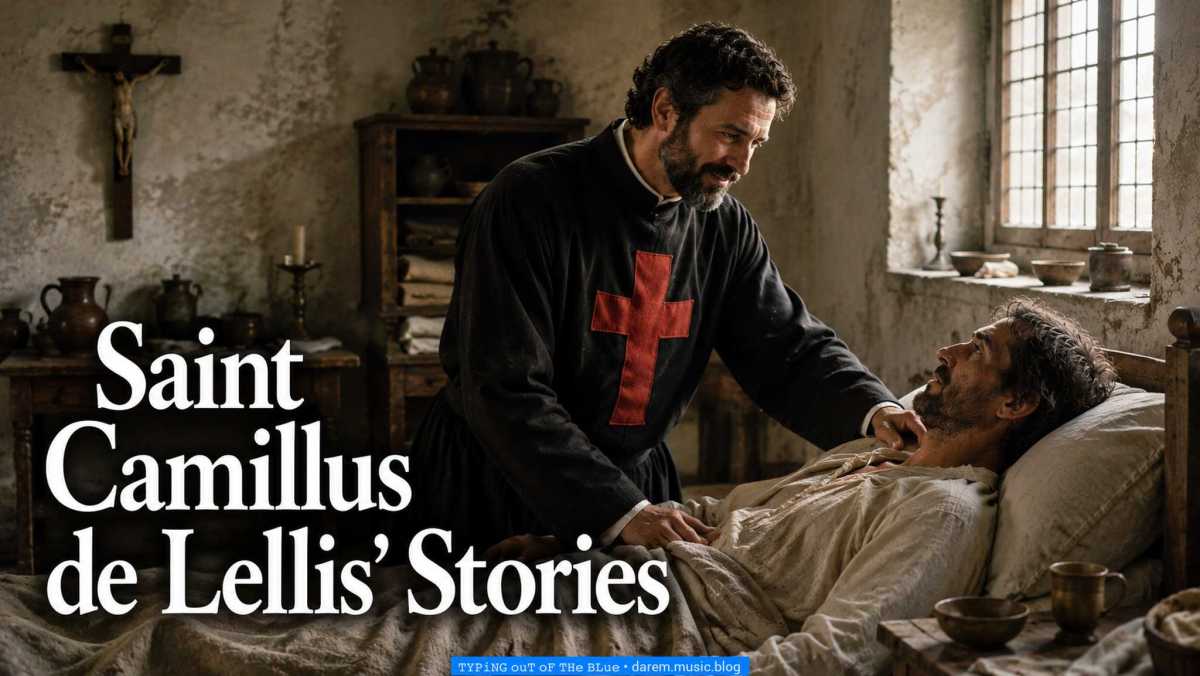
Saint Camillus de Lellis’ Stories

Some lives are measured not by what they achieved, but by how they treated others.

Camillus de Lellis was born in 1550 in the Kingdom of Naples, Italy. As a young man, he became a soldier and struggled with gambling. He also lived with a painful leg wound that never fully healed. For a while, his life seemed to be going nowhere.

After a deep conversion, Camillus became a priest and devoted his life to caring for the sick, the poor, and the dying. He later founded the Camillians, a religious order whose members served people who were often forgotten.

More Heart in Your Hands

One day, Father Camillus saw a caregiver treating a patient without much care. Instead of giving a long lecture, he simply said,

“Put more heart into those hands.”

Those few words summed up the way he lived. He believed healing was not only about skill. It also meant treating every patient with kindness, respect, and dignity.

Leading by Example

Although he founded a religious order, Father Camillus never stayed on the sidelines. He carried patients himself, cleaned wounds, changed bandages, and sat beside those who had no family to comfort them.

For him, serving others was not about position. It was simply the right thing to do.

When the Plague Came

When plague spread through towns, fear drove many people to leave. Father Camillus and his companions chose to stay.

They entered hospitals and homes to care for the sick, even though they knew they could become sick themselves. Some members of the order died while serving others, but they believed no one should be abandoned in their final days.

A Tall Man With a Kind Heart

Father Camillus stood about 6 feet 6 inches (198 cm) tall, making him unusually tall for his time. His size caught people’s attention, but his kindness stayed in their memories.

The painful leg wound he had carried for years gave him a deeper understanding of what many patients were going through, and he treated them with patience and respect.

Saint Camillus never discovered a cure for disease. He did something different. He changed the way people treated those who were suffering. By the way, he was not a doctor.

That still speaks to our time. Hospitals have become more advanced, but kindness can still be in short supply. Every day gives us an opportunity to slow down, notice someone who feels invisible, and be there for them, just as every note has its place in a melody.

Let’s keep learning the saints’ way—day by day.

⌨ ᴛʸᵖⁱⁿᵍ ᴏᵘᵗ ᵒᶠ ᵗʰᵉ ʙˡᵘᵉ ᵈᵃʳᵉᵐ ᵐᵘˢⁱᶜ ᵇˡᵒᵍ

Empty Piano Bar • Darem Placer