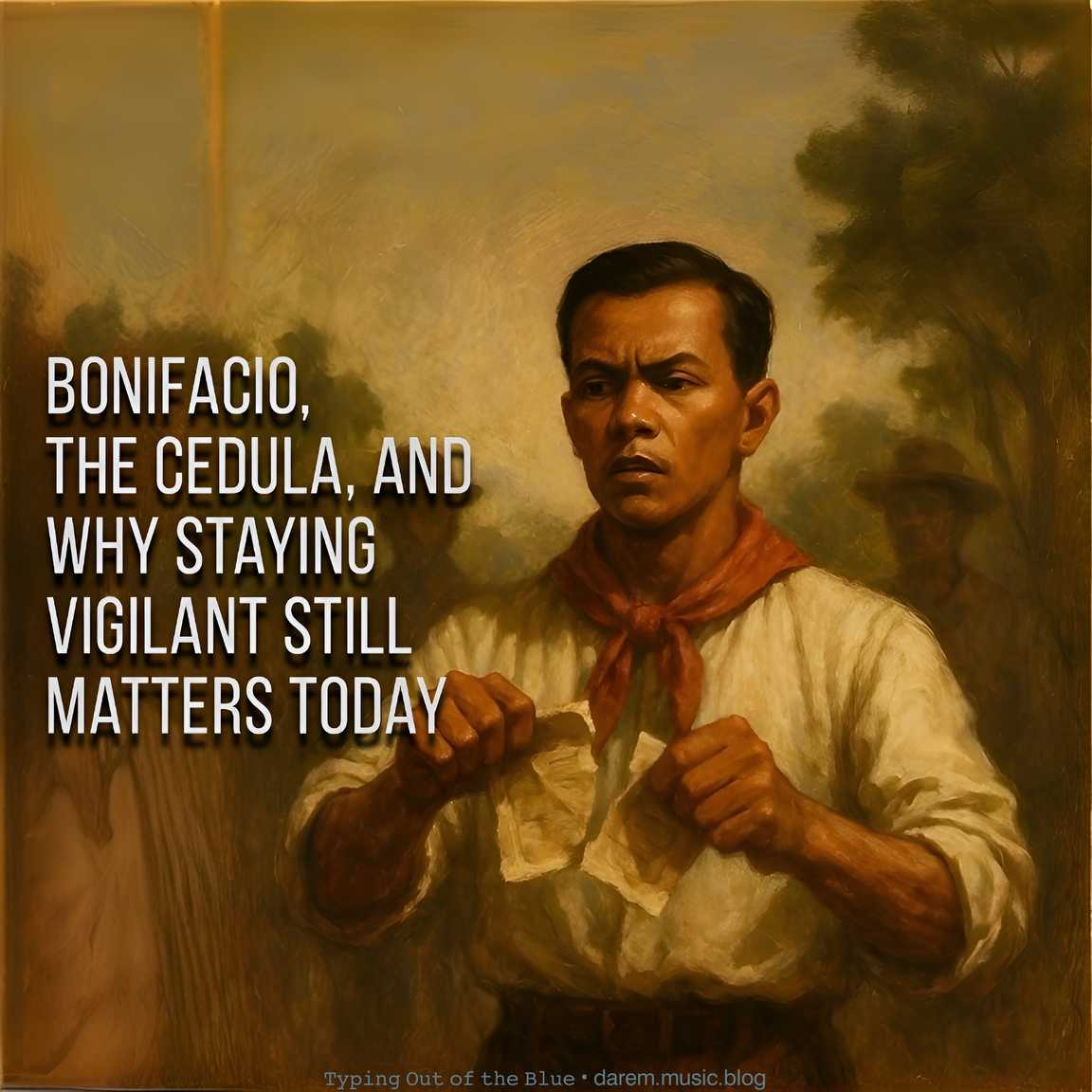
Every November 30, the Philippines remembers Andres Bonifacio, the man who helped spark the 1896 revolution. One of the most iconic moments in his story happened in Balintawak, when he tore his cedula in front of the Katipuneros.
What was the cedula back then?
The cedula—also known as the community tax certificate—was not just a piece of paper. It symbolized Spanish control because it showed that:
• you paid the colonial tax
• you accepted the Spanish government
• you recognized their authority
Tearing it was a bold, public declaration of rebellion. It sent one clear message: “We do not recognize this government anymore.” That moment helped ignite a revolution.
Why tearing a cedula today is… pretty meh
The cedula still exists today, but it no longer carries any real meaning. It’s not tied to oppression or authority anymore—it’s simply leftover bureaucracy.
And here’s the ironic part: For many people, the cedula feels less like a useful document and more like a tiny tax on simply being alive, because it isn’t based on proof of income and isn’t connected to any modern system. It’s just something you pay because the generations before you paid it too.
Today:
• most people aren’t asked for it
• LGUs barely verify anything
• it doesn’t represent control
• it holds no emotional weight
• it functions like outdated paperwork
If someone tore their cedula now, people wouldn’t see a hero—just someone throwing away an old document.
Why the cedula isn’t really needed anymore
Modern systems already replaced everything the cedula used to handle:
• national IDs
• government databases
• company records
• tax systems
• digital identity
Because of these improvements, the cedula no longer has an essential role in 2025. It survives only because nobody bothers removing it and because it still brings small, easy income to local governments. Tradition kept it alive more than purpose.
The quiet kotong (silent extra squeeze)
Individually, the cedula fee is tiny. But when thousands pay it every year, the total becomes huge. And because all of it enters the LGU’s general fund, there is:
• no specific breakdown
• no transparent accounting
• no clear yearly report
• no explanation of where the money actually goes
It’s not a crime or a scandal. It’s simply a quiet fee that kept surviving because everyone got used to it.
That’s why people call it the quiet kotong—silent, unnoticed, but always there.
We don’t need to be heroes like Bonifacio
Bonifacio risked his life for freedom. He already did his part.
Today, we don’t need to start a revolution or tear a certificate to make a point. But we do need something just as important:
• awareness
• honesty
• vigilance
• courage to question outdated systems
• the habit of noticing when something no longer makes sense
Bonifacio fought with courage and sacrifice.
We fight with awareness and responsibility.
And sometimes, that’s exactly what the present needs. A quiet space to think a little longer, almost like Wandering Through Dreams.
⌨ ᴛʸᵖⁱⁿᵍ ᴏᵘᵗ ᵒᶠ ᵗʰᵉ ʙˡᵘᵉ ᵈᵃʳᵉᵐ ᵐᵘˢⁱᶜ ᵇˡᵒᵍ

Listen on Apple Music, Apple Music Classical, and YouTube Music