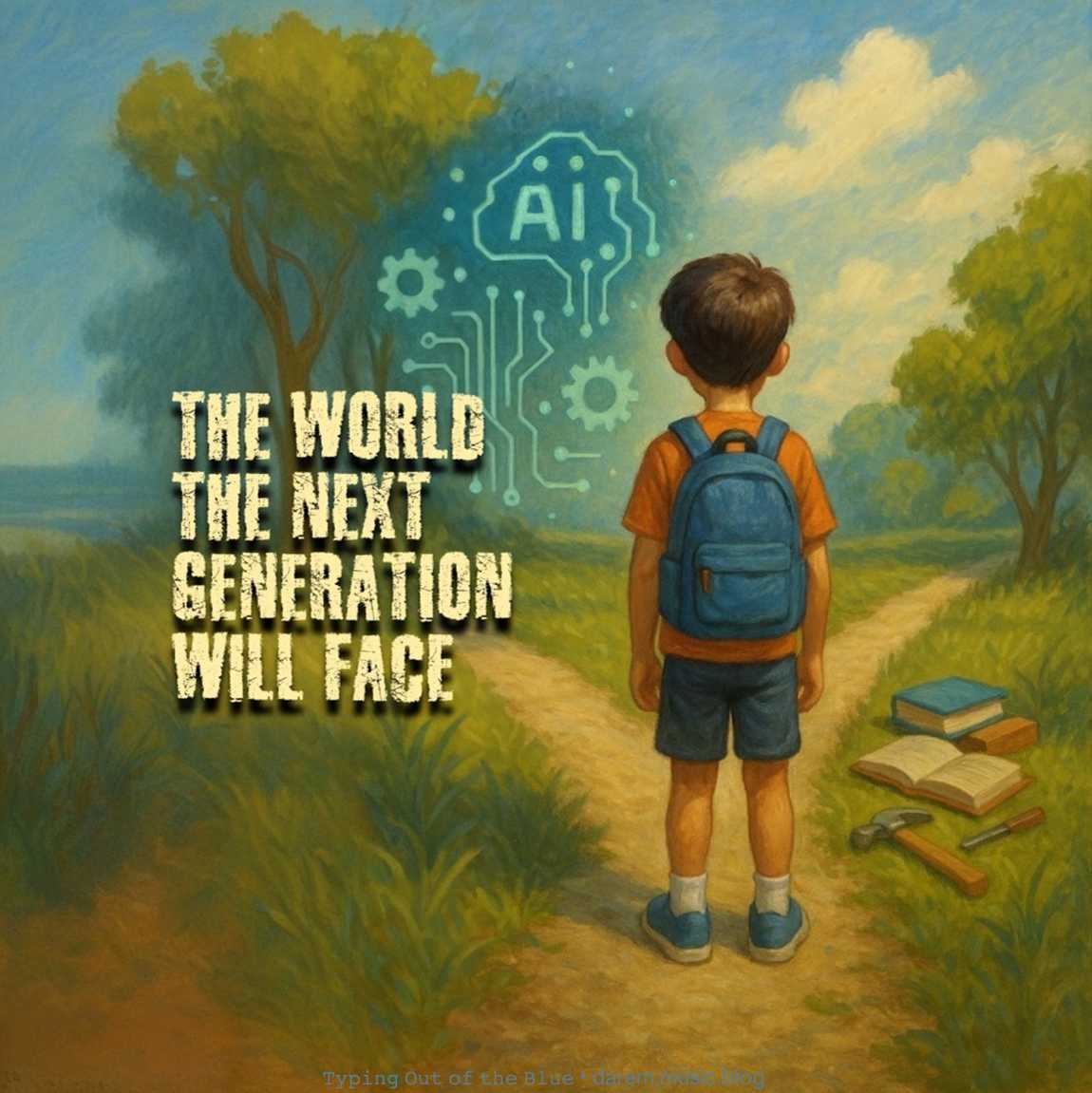
The World the Next Generation Will Face

Technology is changing how work is done, creating new roles and new skills for the next generation.

The world they’ll grow up in won’t look exactly like the one we know now—not because everything will disappear—but because everything is being rearranged.

Based on recent global reports from the World Economic Forum and McKinsey, by 2030, almost one-third of the tasks inside today’s jobs will be reshaped by automation, not erased.

By 2027, nearly half of all workers will need new skills to stay relevant. That’s how fast the shift is moving.

And honestly, schools and traditional systems are still slow. The change feels like a train that already left the station, and many people are still looking for the timetable.

But the point isn’t fear.
The point is clarity.

The future belongs to people who can learn fast, adjust fast, and stay flexible in a world that refuses to slow down.

What Skills Will Matter?

As AI takes over repetitive tasks, human skills rise in value. Not the fancy ones—just the real ones:

• Creativity
• Communication
• Problem-solving
• Adaptability
• Working with AI, not against it

Based on the same global studies, these are the abilities machines can’t fully replace because they come from lived experience.

The Jobs That Will Grow

Here’s the part that balances the story: Yes, some jobs will be disrupted—but new ones will grow even faster.

According to these worldwide forecasts, these fields will stay strong by 2030:

Human-Centered Tech

People who guide, review, and align AI systems. The world still needs humans who understand context.

▪︎ Creative Work

Writers, designers, musicians, comic artists, video creators.

Machines can imitate—but they can’t live a life.

And creativity comes from life.

▪︎ Health, Care, and Teaching

Therapists, nurses, teachers, counselors.

Anything that needs human presence will always need humans.

Climate & Sustainability

Solar techs, disaster-planning teams, community-resilience workers.

Especially in the Philippines—climate jobs won’t just grow—they’ll be necessary.

Security

Cybersecurity, fraud defense, emergency response.

When tech becomes smarter, so do the risks.

Systems People

Those who connect apps, automate workflows, and make tools work together.

This is one of the biggest gaps in the country right now.

Strong Soft-Skill Roles

Leaders, project coordinators, negotiators, community builders.

People follow people—not machines.

The Real Advantage

The safest future isn’t one job. It’s one mindset:

Stay curious.
Stay learning.
Stay ready to shift.

Because in a world filled with intelligent machines, the true competitive edge is still something no AI can copy—a human who knows how to adapt.

PQR (Predictive Quantum Research) • Darem Placer
Generation Alpha Bets includes PQR. Soon on Bandcamp.

⌨ ᴛʸᵖⁱⁿᵍ ᴏᵘᵗ ᵒᶠ ᵗʰᵉ ʙˡᵘᵉ ᵈᵃʳᵉᵐ ᵐᵘˢⁱᶜ ᵇˡᵒᵍ
AI Tech: When the World Moves Fast and the Philippines Stays Slow

AI is reshaping the world quickly, and the Philippines is falling behind.

Other countries are already deep into AI. They build systems that talk to each other. They automate work. They train their people. Their businesses run clean and efficient.

And here we are in the Philippines—still trying to fix the basics. Slow internet. Confusing rules. Companies nervous to try something new. Schools teaching methods that already feel old. Workers who want to learn but have nowhere to train properly.

The world already speaks the language of AI. We are still warming up.

There’s another issue we rarely admit. Schools are now teaching “AI” and “robotics,” but by the time the country’s technology finally catches up, the things students learned today may already be outdated. Old hardware, old modules, and old approaches turn new knowledge into something that cannot be applied. The future moves faster than we prepare for.

So when advanced countries transact with us, they expect speed. They expect clean data. They expect AI-ready systems. And when they see our slow processes and manual steps, they look for partners who can match their pace. It is not personal—it is simply how the modern world works. Time is valuable, and no one rewinds their systems just to accommodate a country that stayed behind.

If we try to adopt AI without fixing the foundation, we look unprepared. AI needs strong internet, modern servers, real cybersecurity, clear regulations, and a workforce trained with current tools—not outdated lessons that no longer fit the moment.

Why the Philippines falls behind:
• slow and unreliable internet
• rules that take too long to update
• school lessons becoming outdated quickly
• workers not trained for new tools
• businesses afraid to try modern systems
• small businesses left without support
• weak protection against online threats
• a mindset that accepts “good enough” even when it’s not

What the Philippines needs to do now:
• faster and more stable internet
• school programs updated every year
• training so workers can keep up
• simple and affordable tools for small businesses
• clear and modern rules for AI use
• stronger protection for personal and national data
• support for local developers creating new solutions
• a mindset that aims higher and keeps improving

This is not about becoming the number one AI nation. It is about not becoming the country everyone avoids in the digital world. If we move now, we stay part of the future. If we wait, the future moves on without us. And the truth becomes impossible to ignore When the World Pauses.

When the World Pauses • Darem Placer

Listen on Apple Music, Apple Music Classical, and YouTube Music

The danger of falling behind is simple: progress won’t stop for us. The message becomes clear in The Quiet Between Piano Notes, and in the few seconds we feel as When the World Pauses.

⌨ ᴛʸᵖⁱⁿᵍ ᴏᵘᵗ ᵒᶠ ᵗʰᵉ ʙˡᵘᵉ ᵈᵃʳᵉᵐ ᵐᵘˢⁱᶜ ᵇˡᵒᵍ