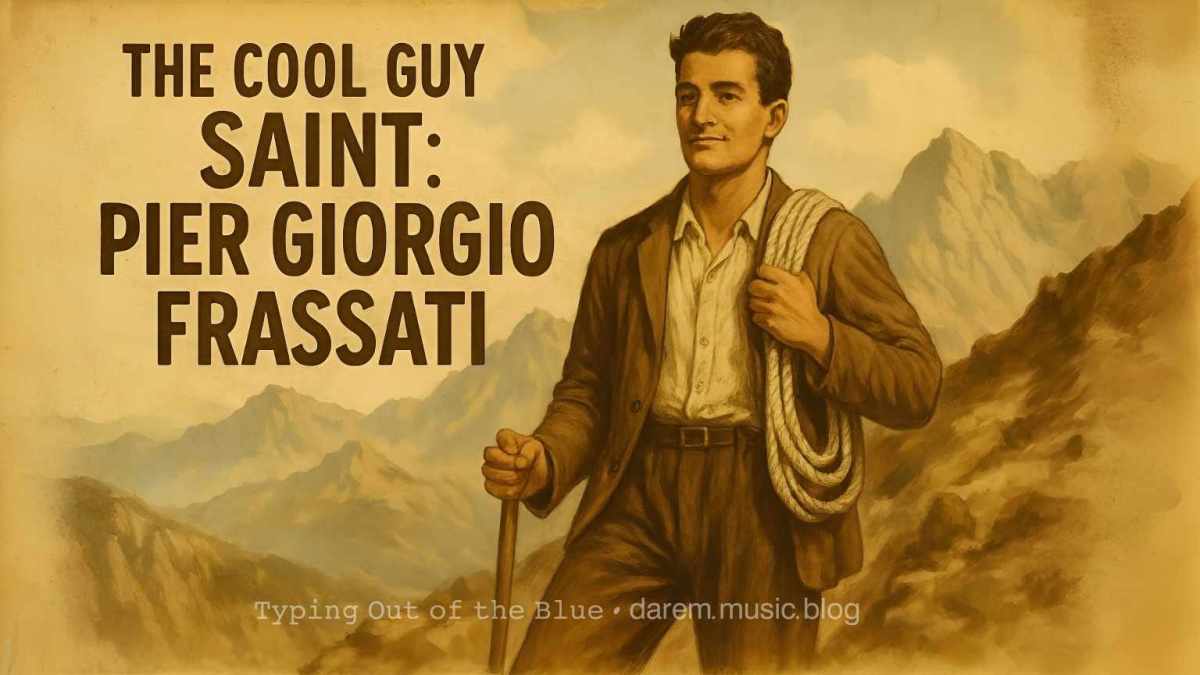
The Cool Guy Saint: Pier Giorgio Frassati

He climbed, laughed, and served with joy. Pier Giorgio Frassati lived faith as a cool guy who turned ordinary days into love for God and others.

Carlo Acutis is called the cool techie saint. Pier Giorgio Frassati is the cool guy saint. Carlo’s story went viral, but Pier’s life is just as alive—a spark of youth that still speaks today.

The Mountaineer

Born in 1901 in Turin, Italy, Pier loved the outdoors. He hiked, skied, and climbed mountains. In old photos, he smiles with ropes on his shoulder. His motto was “Verso l’alto”—toward the heights. For him, every climb was more than sport. It was a way to rise closer to God.

The Barkada (a group of friends)

Pier had a barkada they called the “Tipi Loschi”—the Shady Ones. It was their crew, full of laughter and shared adventures. Pier gave the group its fire: leading them not only to joy, but also to faith and service.

Joyful and Approachable

People remembered him as cheerful and warm, never stiff or distant. He showed that following Christ can be done with joy, with a smile, with an open heart. Holiness didn’t mean being boring—it meant being alive.

Humble in Service

Though born to a wealthy family, Pier chose the simple road. He rode trams, walked long streets, and gave away his allowance to buy food and medicine for the poor. When he died of polio in 1925 at age 24, thousands of the poor came to his funeral. Only then did his family see how far his hidden love had reached.

Pier was not a priest. He lived as a layman, an engineering student, a mountaineer, a friend. His sainthood was built not on titles, but on the way he lived his days—full of faith, joy, and love.

Carlo built websites and wore sneakers. Pier climbed mountains and lifted the poor. Two different paths, one same fire.

On September 7, 2025, they were canonized together by Pope Leo XIV.

𝚃𝚢𝚙𝚒𝚗𝚐 𝙾𝚞𝚝 𝚘𝚏 𝚝𝚑𝚎 𝙱𝚕𝚞𝚎 • 𝖽𝖺𝗋𝖾𝗆.𝗆𝗎𝗌𝗂𝖼.𝖻𝗅𝗈𝗀

Saints • Darem Placer

Listen on Apple Music, Apple Music Classical, and YouTube Music

Chains in Disguise

What connects the slave ships of Cartagena to the hidden chains people carry today? On September 9, one man’s story still speaks louder than silence.

Saint Peter Claver and the Chains That Still Remain

Slavery didn’t disappear—it only changed form. Today, fifty million people live with hidden chains. They clean houses they don’t own, make clothes they can’t buy, and dig minerals for gadgets they will never use. Meanwhile, the rich spend on pleasures while keeping labor as cheap—almost free—as possible.

Centuries ago, the picture was clear and cruel. In the port city of Cartagena, Colombia, slave ships arrived full of men, women, and children. Dragging iron chains and starving, they were pulled out after weeks in the dark. Families were torn apart. Children were branded and sold like objects. Their cries mixed with the voices of buyers counting profit.

Into this walked Father Peter Claver, a Spanish Jesuit priest. He brought food, water, and medicine. He cared for the sick when no one else would. He called the enslaved not property but human beings. He named himself their “slave forever.” He didn’t end the system, but he showed that their lives had value.

In his final years, Father Peter was left weak and sick. Paralysis kept him in bed, and the servant assigned to him treated him harshly and neglected him. The man who had spent his life lifting up the forgotten died almost forgotten himself on September 8, 1654. Yet when he passed, the same city that once ignored him filled the streets to honor him.

On September 9, the Memorial of Saint Peter Claver, we remember him. And in remembering him, we face the truth: slavery never fully ended. The chains look different now, but they still exist.

𝚃𝚢𝚙𝚒𝚗𝚐 𝙾𝚞𝚝 𝚘𝚏 𝚝𝚑𝚎 𝙱𝚕𝚞𝚎 • 𝚍𝚊𝚛𝚎𝚖𝚙𝚕𝚊𝚌𝚎𝚛.𝚌𝚘𝚖

Saints • Darem Placer

Listen on Apple Music, Apple Music Classical, and YouTube Music