
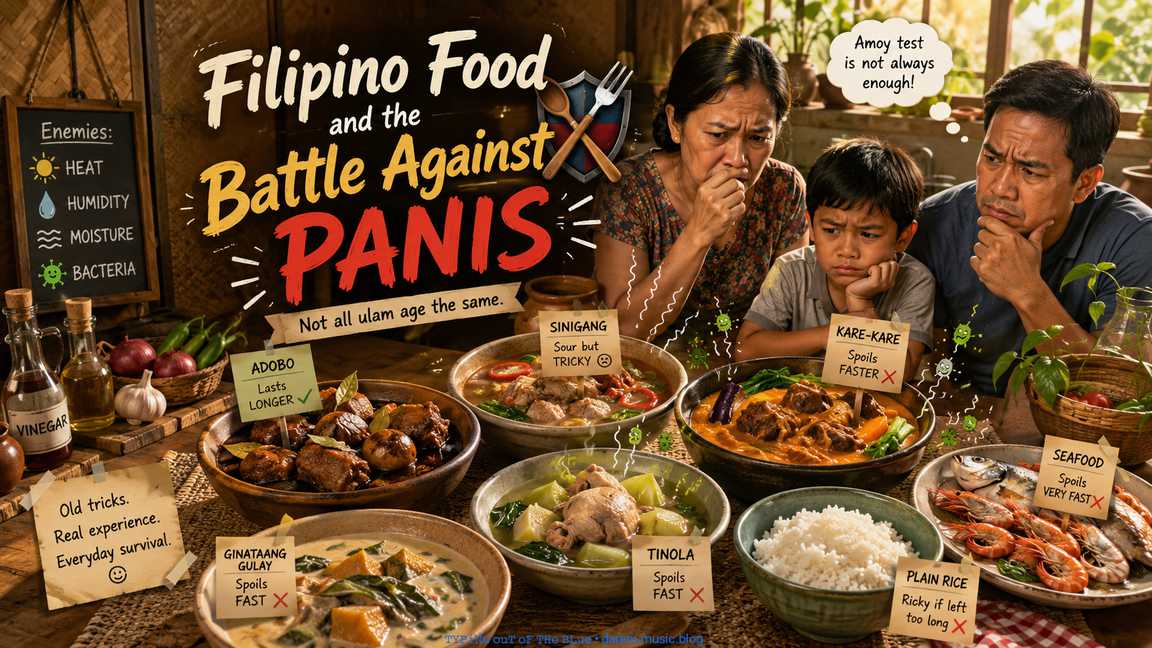
Not all ulam age the same.
Some foods can survive half a day on the table like battle veterans. Others start their farewell tour after just a few hours in Philippine heat. 😁
In a tropical country, food spoilage is normal life science. Heat, moisture, and humidity turn the kitchen into a tiny training camp for bacteria. That is why many old Filipino recipes were built around salt, vinegar, smoke, or sour flavors. Those were not just for taste. They were survival techniques before refrigerators became common.
Here are some Filipino foods that spoil faster than most.
• Ginataang gulay and other coconut milk dishes
• Kare-kare
• Tinola and other soup dishes
• Seafood dishes
• Egg dishes
• Dairy-heavy foods
• Plain cooked rice
These foods spoil faster because they are moist, rich in protein, low in acid, or exposed to warm air for too long.
Some old Filipino households also add a small amount of vinegar to rice or certain dishes to help slow spoilage. That is partly why foods like adobo and paksiw usually last longer than creamy or oily dishes.
Still, vinegar is not magic. A tiny splash will only help a little. It cannot fully protect food left for many hours in hot weather. Also, vinegar does not work well with every dish. Adding vinegar to foods like kare-kare or creamy coconut dishes may just ruin the flavor instead of saving the food. If someone really wants food to last much longer using vinegar, they would need to add a lot more of it. At that point, the ulam might survive longer, but it may also start tasting like accidental sinigang. 😁
Sour foods can also be tricky. Many people associate “maasim” with spoiled food, but dishes like sinigang, adobo, and paksiw are naturally sour from the start. Usually, spoiled sour food does not just become “more sour.” Other warning signs appear too, like:
• strange smell
• bubbling even when not reheating
• slimy texture
• cloudy sauce
• weird aftertaste
• discoloration
Sometimes the smell changes from fresh sour to something sharper and suspicious.
And while the classic Filipino “amoy test” is useful, it is not perfect. Some spoiled food still smells almost normal, especially sour dishes. So if something feels questionable, it is better not to gamble with your stomach. 😅
One of the best ways to slow spoilage is freezing. Almost any cooked food can be frozen if done properly.
Best practices:
• let food cool down before refrigerating or freezing
• divide food into smaller containers
• refrigerate or freeze within about 2 hours
• avoid stuffing giant hot pots beside frozen foods
• use sealed containers with lids
• reheat food thoroughly before eating again
• avoid repeated thawing and refreezing
Very hot food placed immediately into the fridge or freezer can temporarily raise the temperature inside. That can slightly affect nearby foods and reduce cooling efficiency for a while, especially in older or overloaded refrigerators. A giant steaming pot of soup inside a freezer is basically a tiny climate change event for the frozen foods nearby. 😁
Long before food safety became a science lesson, many Filipino kitchens were already practicing their own version of it through experience, observation, and everyday survival.
Sometimes tradition is just chemistry wearing an apron.
Of course, we know the English word for “ulam.”
Viand.
That is the translation commonly taught in Philippine schools, and it is technically correct. Modern dictionaries even list it as a Philippine English term for food eaten with rice.
The funny part is many native English speakers from western countries rarely use the word today. Some may even find it old-fashioned or unfamiliar.
So instead of:
“What is your viand?”
Many English speakers would naturally say:
“What are you having with your rice?”
Hmm… Panis na sinigang? 😁
⌨ ᴛʸᵖⁱⁿᵍ ᴏᵘᵗ ᵒᶠ ᵗʰᵉ ʙˡᵘᵉ ᵈᵃʳᵉᵐ ᵐᵘˢⁱᶜ ᵇˡᵒᵍ
