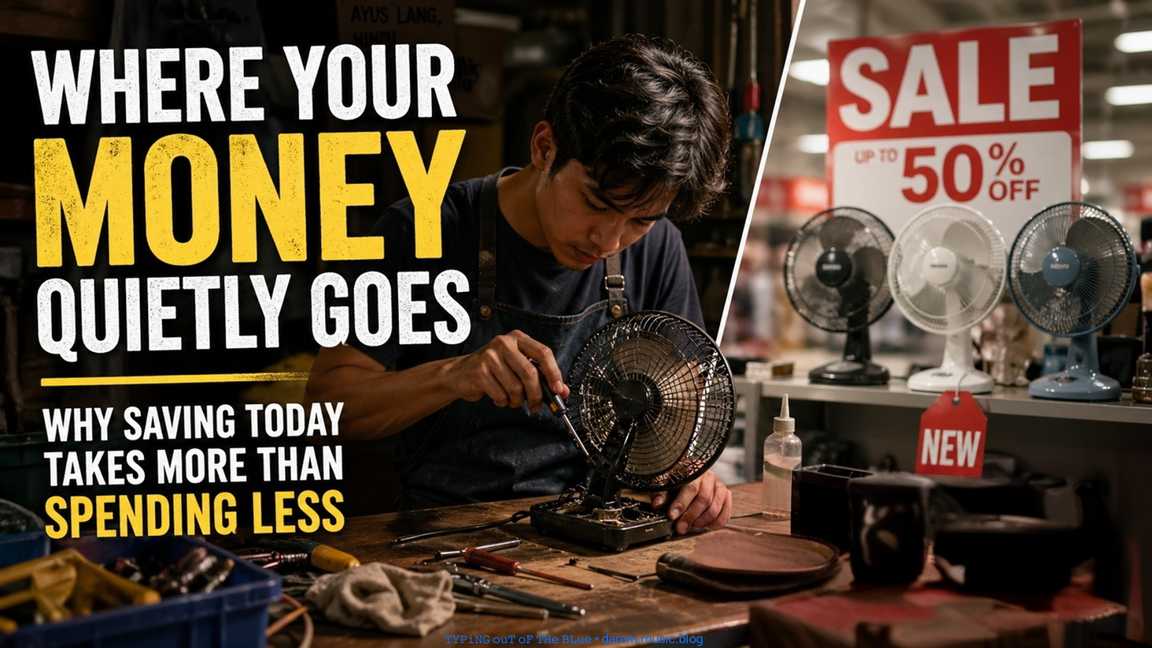
Money today doesn’t disappear loudly. It goes out in small ways—one tap, one click, one “maybe later.”
Here’s how to save without getting tricked:
• A discount is not always savings. It only works if you already planned to buy it. If not, you still spent.
• Buy one take one isn’t always a deal. You save only if you need both. If not, it’s extra.
• Eat-all-you-can (buffet) feels worth it, but you can only eat so much. A simple meal is often cheaper.
• Subscriptions add up. Small monthly fees become a real bill. Cancel what you don’t use.
• Convenience costs money. Delivery and ride-hailing are useful, but not for everyday use.
• Electricity is money. Lights and appliances use power even when you don’t notice. Turn them off.
• Food waste is wasted money. If you throw it away, you already paid for it.
• Spending has triggers. Boredom, stress, or rewarding yourself can lead to impulse buys. Watch it.
• Social pressure can cost you. You don’t need to spend just to go along.
• Small problems get expensive later. Fix them early.
• Repair before buying new. Many things can still be fixed, and it’s often cheaper than replacing.
• Digital spending feels easy. It’s harder to notice. Cash can help you stay aware.
• No plan means more spending. Even a simple limit helps.
Saving today is not about finding cheap things. It’s about knowing when to say no—and accepting that sometimes, saving means giving something up now for something better later.
⌨ ᴛʸᵖⁱⁿᵍ ᴏᵘᵗ ᵒᶠ ᵗʰᵉ ʙˡᵘᵉ ᵈᵃʳᵉᵐ ᵐᵘˢⁱᶜ ᵇˡᵒᵍ