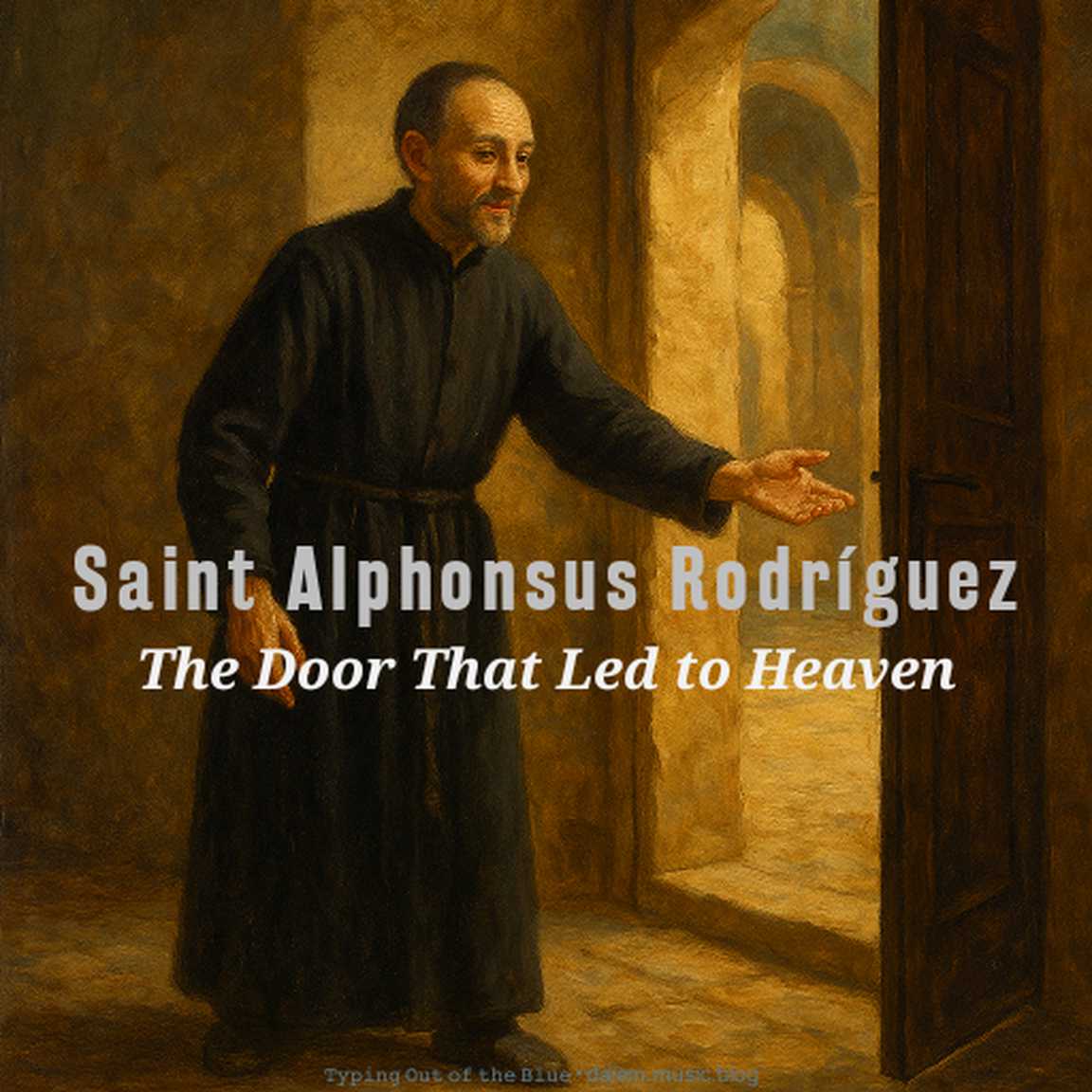
Saint Alphonsus Rodríguez—The Door That Led to Heaven

He turned a lifetime of losses into love—serving at a simple door that opened straight toward Heaven.

Alphonsus Rodríguez was born in Segovia, Spain, in 1532. He came from a simple family who ran a small cloth business. Life seemed fine until everything fell apart—his father died, his business collapsed, and then his wife and children passed away. He was left alone, poor, and unsure of what to do next.

In his brokenness, he looked for God. At 39 years old, he tried to join the Jesuits. But they refused him—too old, too weak, and not educated enough. Most new Jesuits then were still young students, while he was already a man marked by loss. Still, he didn’t give up. He begged to serve in any way, even in the smallest job. Finally, they accepted him as a lay brother. He was assigned to the Jesuit college in Majorca as a doorkeeper.

That was his job for more than forty years—opening doors, greeting people, cleaning halls, carrying messages. But what made him different was how he did it. Each person he met, he saw as Christ Himself. Every knock on the door was a chance to serve God.

He became known not for miracles or grand speeches but for the quiet holiness of daily duty. He gave advice to young men, comforted the troubled, and inspired even future saints who passed through that same door. His secret was simple: doing ordinary things with extraordinary love.

When Saint Alphonsus died in 1617, he left no wealth, no books, no followers—only a legacy that reminded the world that greatness doesn’t need a stage. Sometimes, holiness stands quietly behind a door, waiting to say, “Welcome.”

⌨ ᴛʸᵖⁱⁿᵍ ᴏᵘᵗ ᵒᶠ ᵗʰᵉ ʙˡᵘᵉ ᵈᵃʳᵉᵐ ᵐᵘˢⁱᶜ ᵇˡᵒᵍ
Traces of courage, silence, and sacrifice—this is Saints.

Listen on Apple Music, Apple Music Classical, and YouTube Music
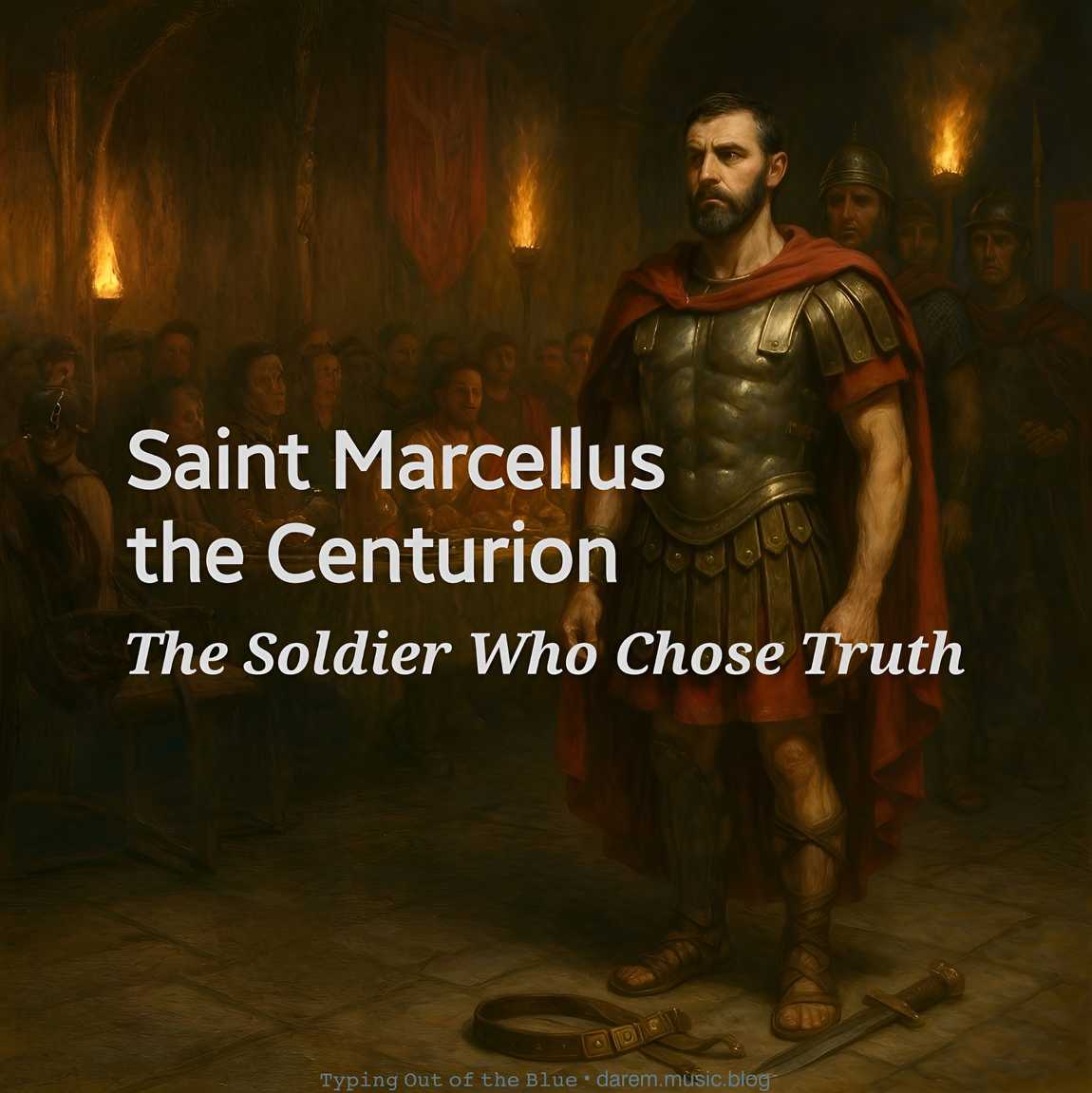
The Soldier Who Chose Truth—Saint Marcellus the Centurion

In a world that worshiped power, one soldier laid down his rank to serve truth that no empire could command.

In the late third century, the Roman Empire ruled most of the world—and expected everyone to worship its gods. Every soldier had to honor the emperor as divine. Refusal meant death.

Marcellus was a centurion—a commander trusted by his men. He wore his armor with pride and obeyed every order. Until one day, at a feast for Emperor Maximian, everything changed.

The hall was filled with light, noise, and celebration. Torches burned, cups were raised, and offerings were made to the gods.

Then Marcellus stepped forward. He unbuckled his command belt, let it drop to the floor, and said,

“I serve Jesus Christ, the eternal King. I cannot serve the gods of men.”

The noise stopped. Soldiers stared. Within minutes, he was arrested and brought before Governor Aurelius Agricolanus in Tangier.

Did you throw away your weapons?” the judge asked.

“I did,” Marcellus replied. “A Christian cannot serve two masters.”

He was sentenced to death and executed in Tangier in 298 AD.

Saint Marcellus died without anger, without fear—just truth. And through that single act, his name outlasted the empire that condemned him.

⌨ ᴛʸᵖⁱⁿᵍ ᴏᵘᵗ ᵒᶠ ᵗʰᵉ ʙˡᵘᵉ ᵈᵃʳᵉᵐ ᵐᵘˢⁱᶜ ᵇˡᵒᵍ

Traces of courage, silence, and sacrifice—this is Saints.

Listen on Apple Music, Apple Music Classical, and YouTube Music