Look around and it’s hard not to notice where the effort goes.
Budgets keep rising. Weapons are upgraded year after year. Technology is refined, tested, perfected. Governments, industries, and analysts speak with certainty—not about if war will happen, but when. It’s treated like an appointment already penciled into the future.
As if war is inevitable. As if it’s the real plan.
Countries train for it. Industries profit from it. Think tanks simulate it. News cycles normalize it. There is preparation after preparation, meeting after meeting, funding after funding. Everything is in place, as though the world is quietly agreeing: If war happens, we’re ready.
That readiness is often mistaken for wisdom. Or maturity.
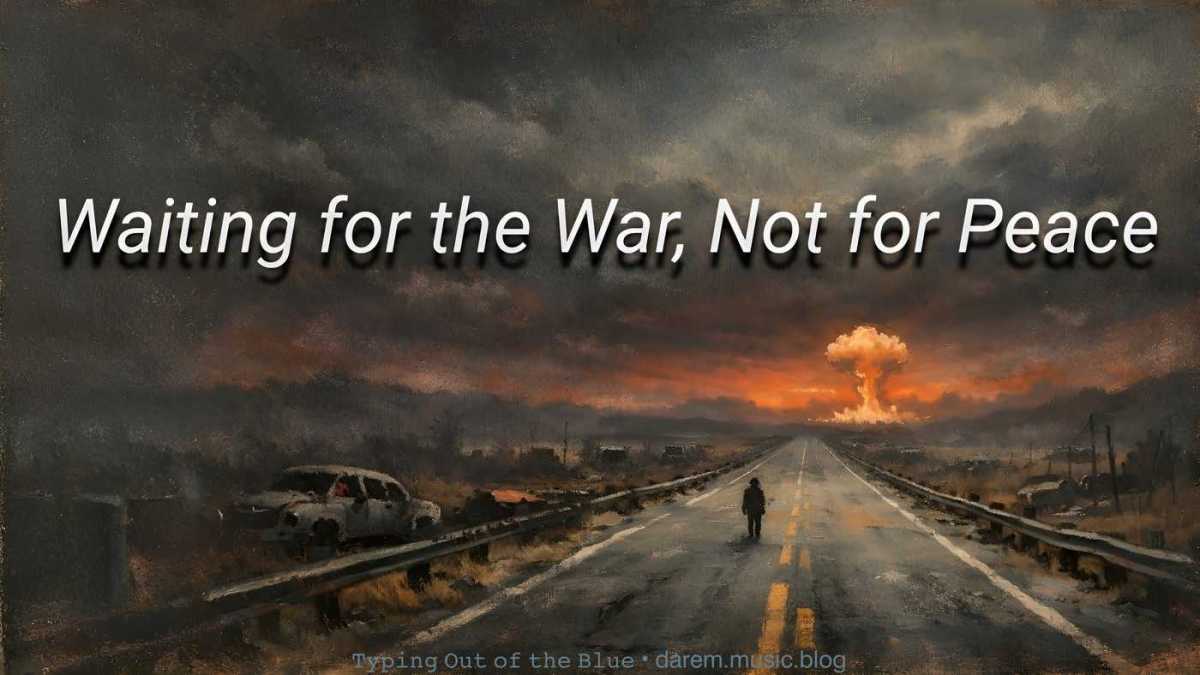
What’s missing is how little energy is spent preparing for peace with the same seriousness. There is no global budget for restraint, no billion-euro fund for understanding, no drills for patience. Instead of building every possible road that avoids war, we keep perfecting the highway straight into it—a literal highway to hell, just like the song by AC/DC.
Then, when war finally ends, we convince ourselves that what comes after is peace.
What usually follows, though, is silence. Not the good kind. Not the healing kind. Silence because cities are empty, because voices are gone, because movement has stopped. Dead people everywhere.
That silence gets labeled peace simply because the noise has ended. But peace is supposed to sound like life continuing. War doesn’t end in peace. It ends in absence.
Absence of lives that should have gone on. Absence of voices that could have argued, disagreed, negotiated, and changed things. Absence of futures that never even had a chance to vote for something better.
If peace only arrives after everything is destroyed, then peace was never the goal. Survival was.
Real peace is built before the first shot is fired. But that kind of work doesn’t get applause. It doesn’t generate headlines or profits. It requires effort that looks boring from the outside—dialogue instead of confrontation, restraint instead of dominance, patience instead of speed.
So we keep choosing the easier path. The louder one. The profitable one. We prepare endlessly for war and act surprised when it finally arrives.
And when it’s over, we point at the silence and say, At least there is peace now.
But peace should sound like people living, arguing, laughing, rebuilding. Not like a pause because no one is left to speak.
Waiting for the War
Written January 6, 2014
I wrote this song back in 2014. I never recorded it. It stayed unfinished, sitting in a notebook, like a thought I wasn’t ready to face. Reading it now, it feels less like a song and more like a confession. Maybe I wasn’t writing about the world at all. Maybe I was writing about myself—about how easy it is to wait, to watch, to prepare for the worst instead of working for something better.
Maybe I was already waiting for the war.
Just waiting for the war.
I don’t really mind, but it’s a bad sign.
You talk about peace, but never make any at all.You say it’s about religion,
about power over nations.Guns that never rust turn people into dust.
Even up high, we shoot the doves in the sky.We sit and wonder why
the world is an endless cry.Just waiting for the war.
⌨ ᴛʸᵖⁱⁿᵍ ᴏᵘᵗ ᵒᶠ ᵗʰᵉ ʙˡᵘᵉ ᵈᵃʳᵉᵐ ᵐᵘˢⁱᶜ ᵇˡᵒᵍ