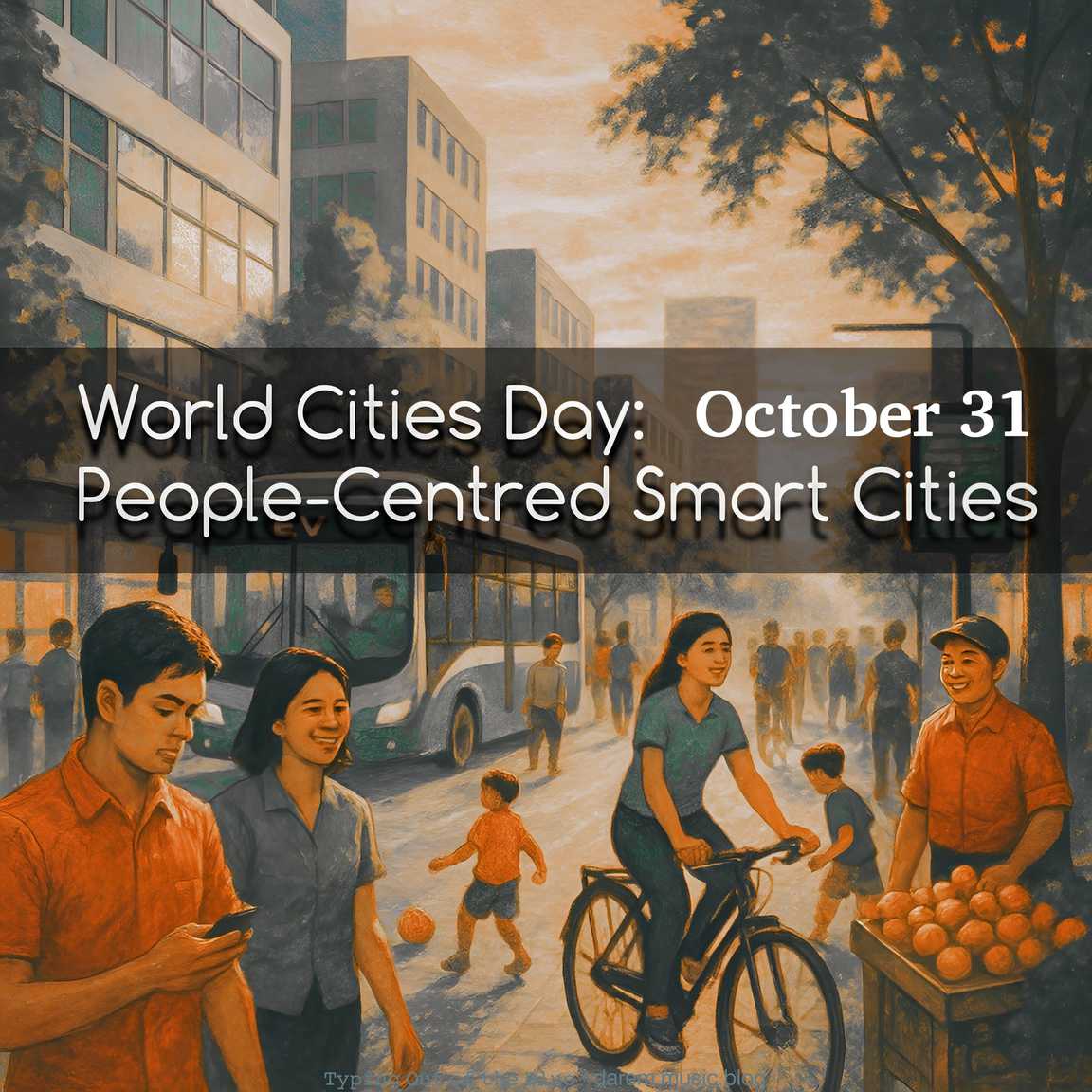
Every October 31, the world marks World Cities Day — a UN reminder that our fast-growing cities must stay livable, fair, and human. The 2025 theme, “People-Centred Smart Cities,” means technology should lift people up, not take their place.
A city isn’t “smart” just because it has apps and sensors. It’s smart when traffic moves because people cooperate, when data helps families find homes, and when digital access reaches even the forgotten corners. True smartness listens before it upgrades.
Across the world, here’s what that looks like:
• Barcelona (Spain) – Locals use small air- and noise-sensing kits to map real-time street data, proving that citizens can be city scientists.
• Seoul (South Korea) – Online sharing hubs let neighbors lend, swap, and post solutions for daily needs — tech meets community.
• Paris (France) – The “15-Minute City” model keeps work, shops, and schools within walking distance—less stress, more life.
• Bogotá (Colombia) – Open-data buses and bike routes help poorer districts connect to jobs and education.
• Quezon City (Philippines) – Smart-traffic systems and disaster-risk maps are being tested with barangay input, keeping planning close to the ground.
The message is simple: smart cities must have wise hearts. Gadgets may power the system, but compassion keeps it alive. Real progress is when technology doesn’t replace people—it remembers them.
⌨ ᴛʸᵖⁱⁿᵍ ᴏᵘᵗ ᵒᶠ ᵗʰᵉ ʙˡᵘᵉ ᵈᵃʳᵉᵐ ᵐᵘˢⁱᶜ ᵇˡᵒᵍ
