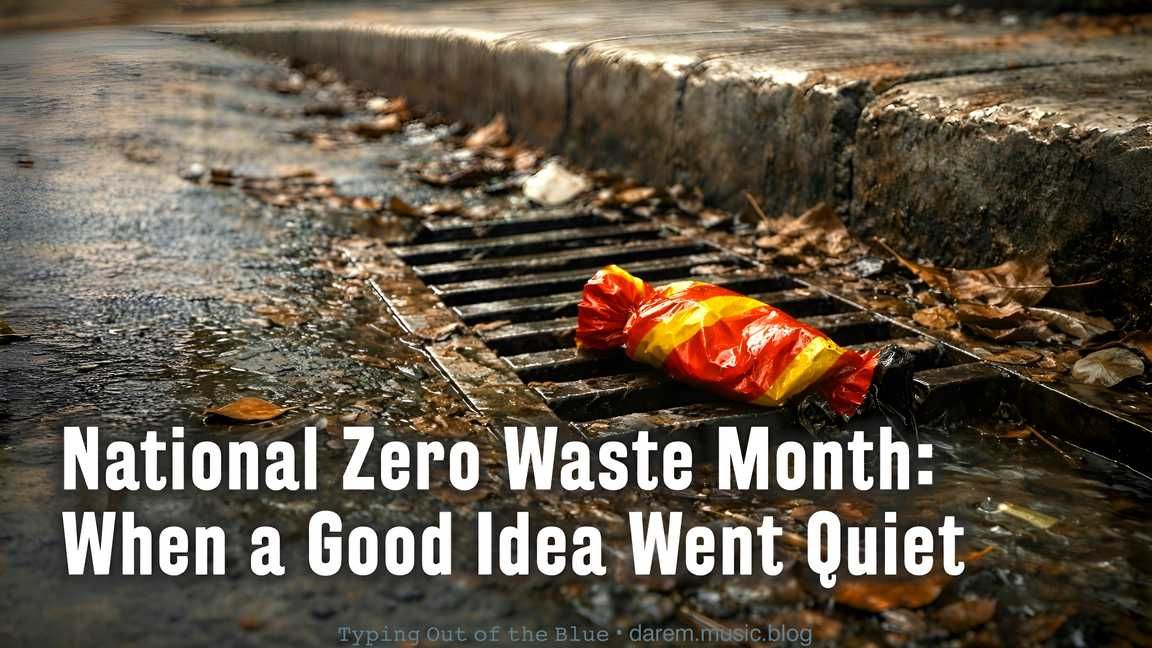
Every January, the Philippines marks National Zero Waste Month. It exists in law and appears in calendars, but most people hardly notice it.
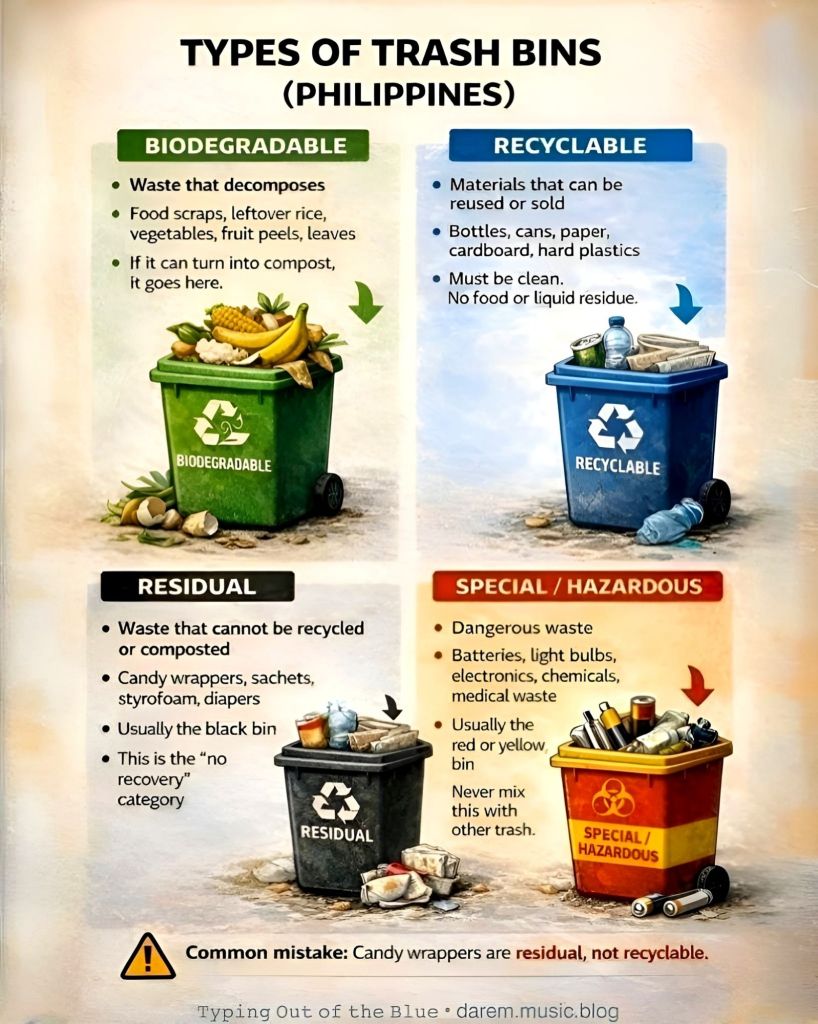
Declared in 2008, it was meant to teach simple habits—reduce, reuse, recycle. Less trash. Cleaner surroundings. For a short time, it worked. Schools did activities. Barangays talked about separating waste. Posters told people where their trash should go.
Then it slowly disappeared.
January is a hard month. After Christmas and New Year, people are tired. There is more trash than usual. Money is tight. Energy is low. This is not the time when people want lectures about changing habits.
Over time, people stopped noticing the month itself. What they notice now is the trash—when it piles up on streets, blocks drains, or smells in the heat. Sometimes it feels like the candy wrapper on the road is more aware of its own existence than the month meant to reduce it.
The name stayed, but the effort became weaker. What remained were reminders on paper. What disappeared was the feeling that January asked people to do something different.
Zero waste was never meant to be symbolic. It was meant to be practical—something done every day. Now it survives mostly as a title. Legal, but not lived.
It was not removed. It was simply left behind.
The idea was not wrong. The timing, and the follow-through, were.
January keeps coming. The trash keeps piling up.
⌨ ᴛʸᵖⁱⁿᵍ ᴏᵘᵗ ᵒᶠ ᵗʰᵉ ʙˡᵘᵉ ᵈᵃʳᵉᵐ ᵐᵘˢⁱᶜ ᵇˡᵒᵍ