
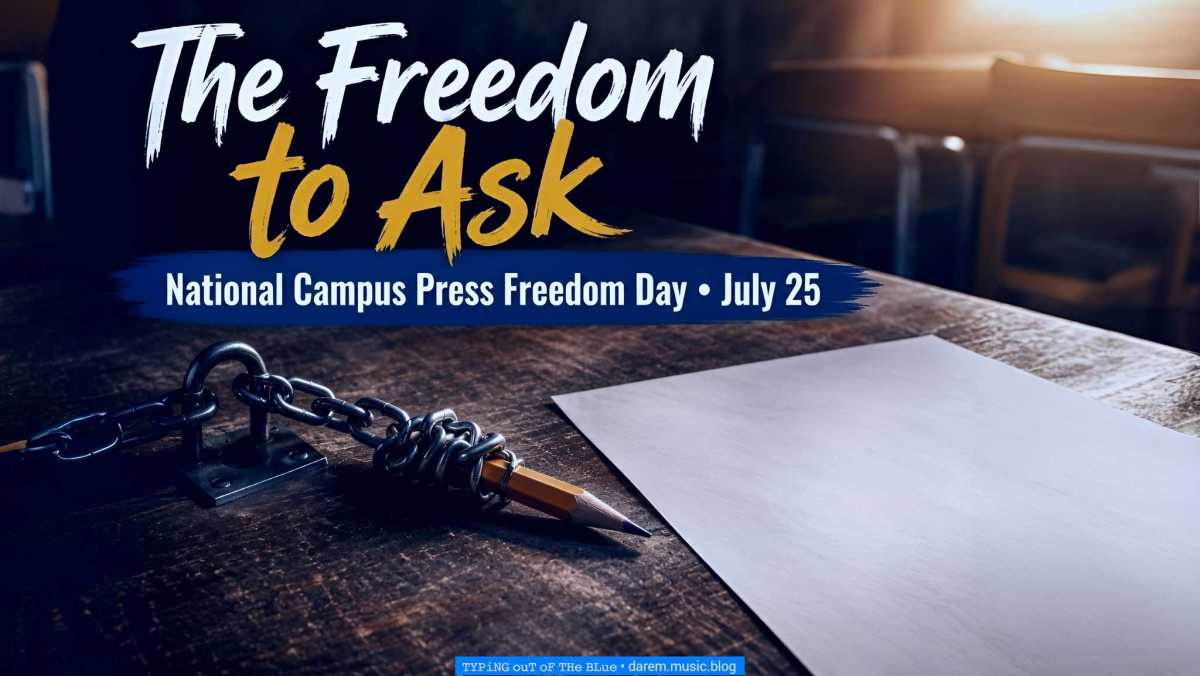
National Campus Press Freedom Day • July 25
A school may have a student publication. But what does freedom look like inside it?
Can student journalists choose which important issues deserve attention?
Can writers have their own voice and style while still respecting the purpose and standards of the publication?
Can they ask questions, interview people, and seek information for a story?
Can students speak to campus journalists without unnecessary pressure or fear?
Who shapes what finally gets published, and how much room do writers have to disagree with those decisions?
If a story questions the school or its leaders, is it judged by whether it is fair and accurate, even when its conclusions may not be welcome?
Can student journalists publish criticism without being bullied, threatened, punished, or treated unfairly afterward? Can readers disagree with them without crossing that line?
When a story is changed or rejected, is there a good reason, such as wrong information, unfair treatment, privacy, or possible harm? Or is it simply too uncomfortable to publish?
Freedom does not mean writers can publish anything they want. A school paper still needs editors, standards, and responsibility.
But if students can only write what is comfortable, familiar, and acceptable to those in authority, one question remains:
How free is a campus press?
⌨ ᴛʸᵖⁱⁿᵍ ᴏᵘᵗ ᵒᶠ ᵗʰᵉ ʙˡᵘᵉ ᵈᵃʳᵉᵐ ᵐᵘˢⁱᶜ ᵇˡᵒᵍ