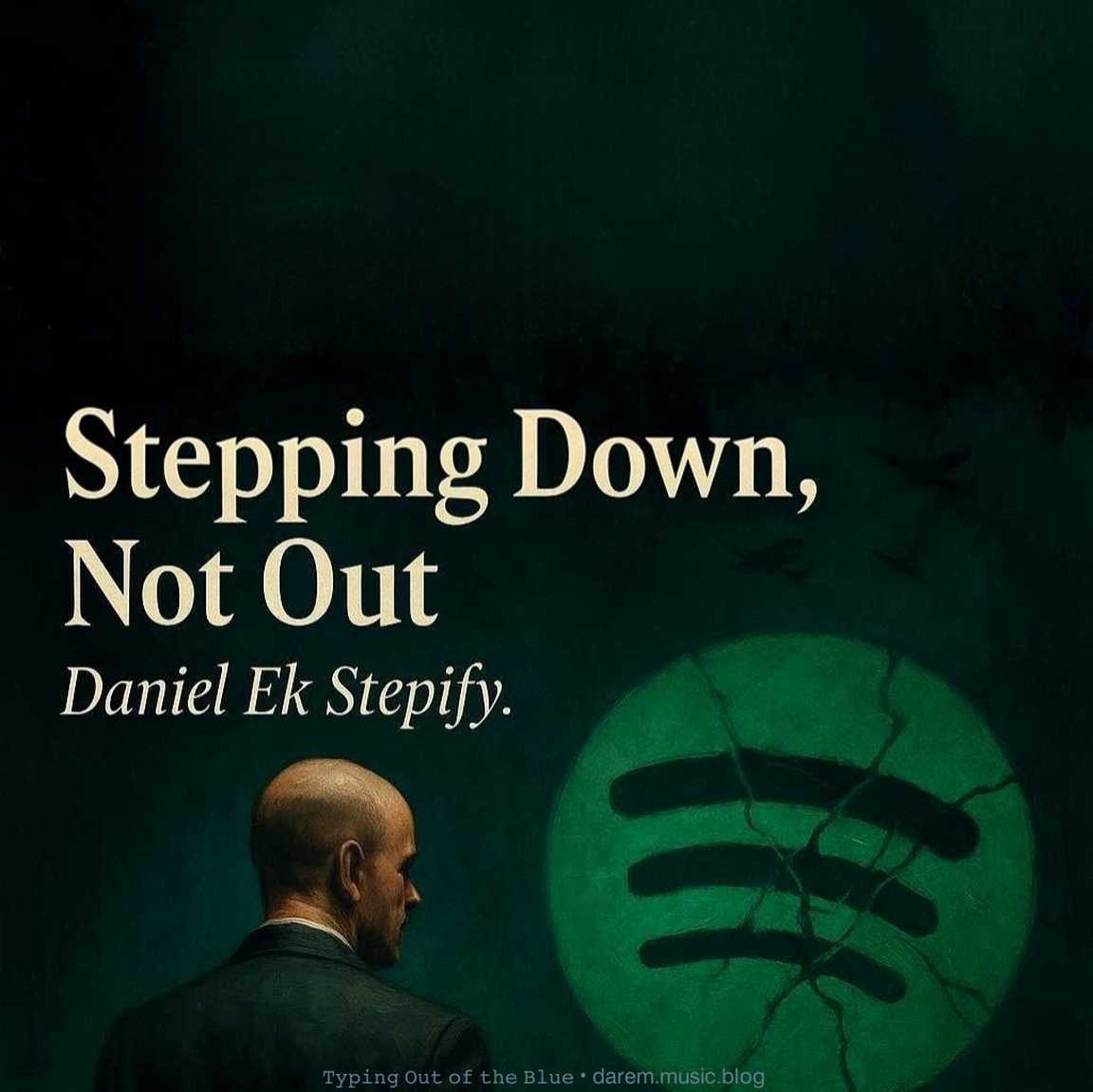
Stepping Down, Not Out

Spotify’s “new era” isn’t a change—it’s a costume. Titles shift, power stays, and the music world still bleeds quietly.

Daniel Ek Stepify.

On September 30, 2025, Spotify announced that Daniel Ek will step down as CEO on January 1, 2026, and transition into the role of Executive Chairman. The company said this move “formalizes how Spotify has successfully operated since 2023.”

Taking his place will be Gustav Söderström and Alex Norström, who will serve as co-CEOs. Söderström handles product and technology; Norström leads business and growth. Both have long worked under Ek’s direction, and both come from tech and business—not from music.

When the change takes effect, Ek will remain in control of Spotify’s broader strategy from a higher seat, still shaping where the company goes next.

For indie artists, that reality doesn’t bring hope. Royalties stay small, and Spotify’s algorithms and playlists still favor major-label artists—the same names recycled across curated lists and discovery feeds. This leadership shuffle? It’s just another headline meant to make people think something’s different.

Spotify started by finding artists first—telling them, “join us, reach the world.” But once the major labels stepped in, the story flipped. The same independent artists who helped build the platform became its ladder—stepped on so the giants could climb higher. The whole “artists first” promise? Just a marketing strategy.

Now Ek’s focus is somewhere else—on Helsing’s CA-1 Europa, the new AI-powered combat aircraft his defense company just revealed. It’s sleek, self-thinking, and it listens better than the artists who made him rich.

He’d rather hear Helsing’s CA-1 than the voices of underpaid artists.

Spotify once promised connection, but it was never about that. It was about conversion—streams to ads, plays to profit. The people making the music get crumbs, while the boardroom keeps getting louder.

Music used to move the world.
Now it’s just another product in the cart.

And this “new leadership”? It’s nothing but PR—meant to lure back those who left and keep fooling those still willing to believe the pitch.

Boycott Spotify. Uninstall Spotify. What’s next—wait for the war?

Just Wait and You Will Still Wait • Darem Placer

Listen on Apple Music and YouTube Music

The Piano Outside includes Just Wait and You Will Still Wait

ᴛʸᵖⁱⁿᵍ ᴏᵘᵗ ᵒᶠ ᵗʰᵉ ʙˡᵘᵉ ᵈᵃʳᵉᵐ ᵐᵘˢⁱᶜ ᵇˡᵒᵍ
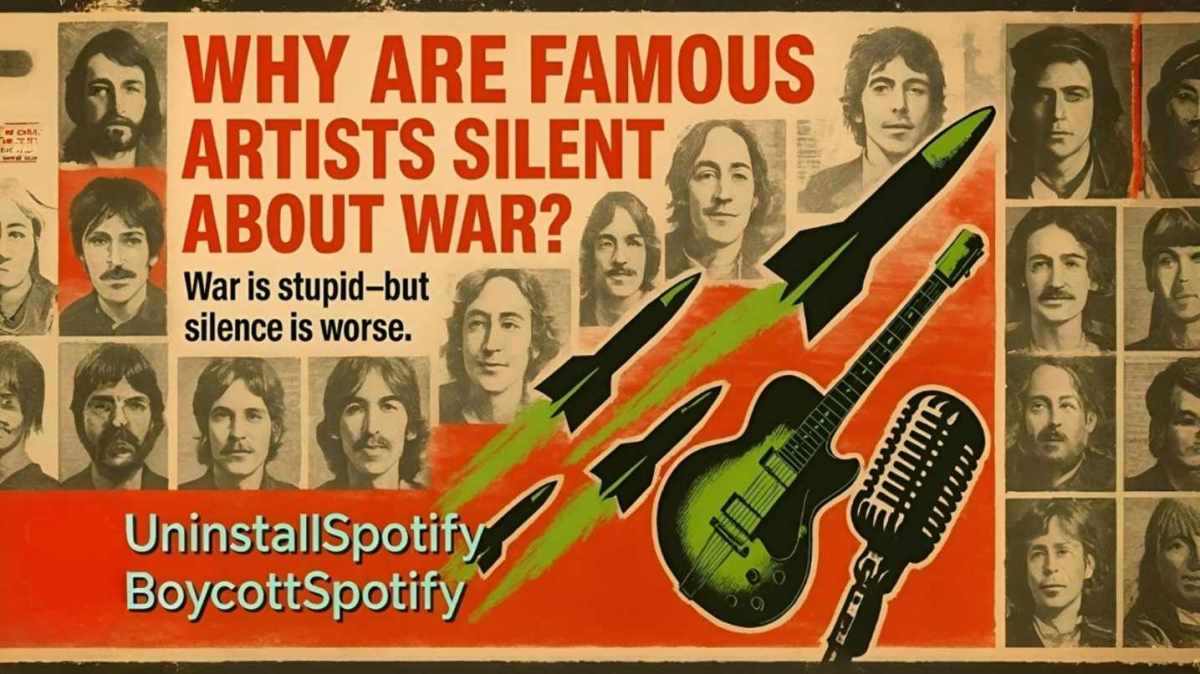
Why are Famous Artists Silent About War

Spotify funds war tech, yet the music of protest plays on in silence. #UninstallSpotify #BoycottSpotify

Spotify’s CEO Daniel Ek is pouring hundreds of millions into Helsing—a defense tech company now building AI-driven weapons: drones, submarines, even fighter aircraft systems. This isn’t just about music streams anymore. It’s about war.

And yet… silence.

The history of music is full of anti-war anthems:

Bruce SpringsteenBorn in the U.S.A. (1984)
-Often misread as patriotic, but actually a critique of war and its aftermath for veterans.

Buffalo SpringfieldFor What It’s Worth (1966)
-Protest song tied to unrest, adopted as a peace and anti-war anthem.

John LennonGive Peace a Chance, Happy Xmas (War Is Over), Imagine
-Timeless peace songs that became global protest anthems.

ChumbawambaJacob’s Ladder (Not in My Name) (2002)
-A folk-driven protest against the “War on Terror” and the invasion of Iraq.

Moby & Public EnemyMake Love Fuck War (2003)
-A protest against the Iraq War, merging electronic music and hip-hop activism.

Bob DylanMasters of War (1963)
-A sharp critique of the military-industrial complex.

Marvin GayeWhat’s Going On (1971)
-A soulful plea for peace, born from the Vietnam era’s unrest.

Creedence Clearwater RevivalFortunate Son (1969)
-Vietnam-era rock anthem against class privilege and the draft.

The DoorsThe Unknown Soldier (1968)
-A psychedelic protest dramatizing the death of a Vietnam soldier.

Pink FloydUs and Them (1973)
-A haunting critique of human conflict and the futility of war.

U2War (1983)
-A whole album themed around conflict, with Sunday Bloody Sunday as its battle cry.

Culture ClubThe War Song (1984)
-A pop hit that openly declared “War is stupid.”

Edwin StarrWar (What Is It Good For?) (1970)
-The bluntest anti-war anthem of its time, shouting “Absolutely nothing.”

Black SabbathWar Pigs (1970)
-Heavy metal’s signature anti-war track, condemning leaders who profit from war.

These weren’t just tracks — they were banners of conviction. They made fans believe these artists stood for something bigger. But today, conviction has become catalog. Protest has turned into background playlists. What changed?

Neil Young once pulled his music from Spotify over COVID misinformation, and it exploded in the media. Now, Spotify’s money is powering future war tech—and still, silence. No outrage. No protest. No PR (Press Release / Public Relations—same ol’ pa-pogi moves). And hey—his music’s back on Spotify. This from the same guy who dropped an entire album called Living with War in 2006. Now he’s on a “Love Earth” 2025 tour, while the Spotify missile is already strapped to him. He sang “rock and roll can never die.” True—rock won’t. People will. As if war matters less than a podcast. Why is that?

When it was good PR, artists took a stand. When it wasn’t, they stayed silent. The anti-war songs of the past still sell, still stream, still streaming on Spotify—yet their silence now only proves how easy it is to package conscience as art, then set it aside when fame and fortune are on the line. Maybe that’s the truth.

#UninstallSpotify #BoycottSpotify

𝚃𝚢𝚙𝚒𝚗𝚐 𝙾𝚞𝚝 𝚘𝚏 𝚝𝚑𝚎 𝙱𝚕𝚞𝚎
𝚍𝚊𝚛𝚎𝚖𝚙𝚕𝚊𝚌𝚎𝚛.𝚌𝚘𝚖