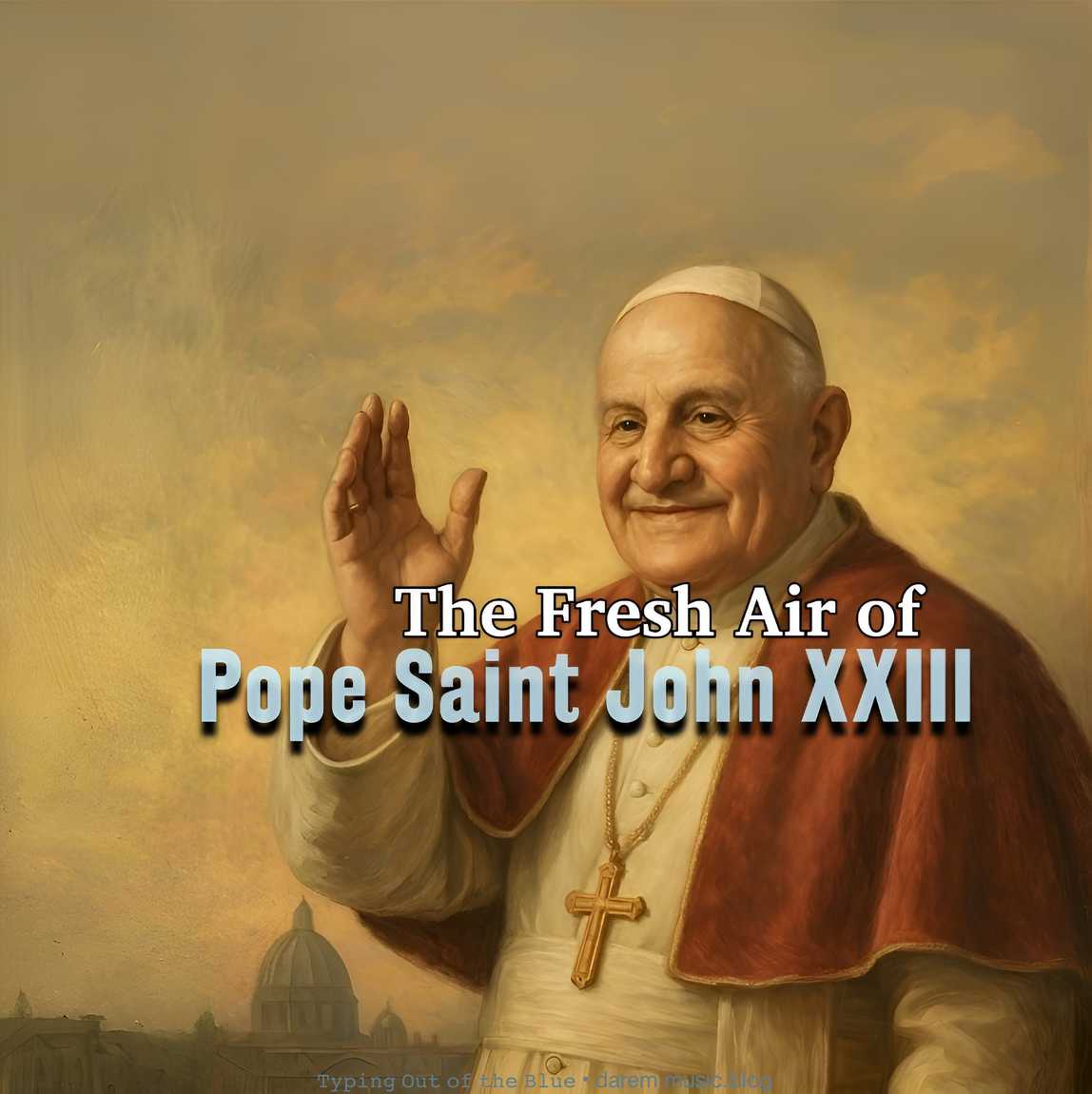
The Fresh Air of Pope Saint John XXIII

He opened the Church’s windows and let the Spirit move again—faith breathing fresh air after years of silence.

Before Pope John XXIII came along, the Church felt… sealed. Like a room that hadn’t been opened for years. The air was heavy with old rules, Latin prayers only few could follow, and a sense of distance between the altar and the people. Faith was sacred, yes—but sometimes too serious, too far from everyday life.

Then came Angelo Roncalli, a simple man with a big heart and an even bigger smile. When he became pope in 1958, people thought he’d just keep things calm. Instead, he opened the windows—literally and spiritually. He said it was time to “let in some fresh air.”

That fresh air became the Second Vatican Council (1962–1965), and suddenly, things began to move.

Mass was finally spoken in languages people could understand—so prayers sounded like home again. Priests faced the people, not the wall. The Church began talking to the world instead of talking about it. Love became the language, not fear. And holiness didn’t stay in the hands of priests—it was shared with everyone.

The Church started to breathe again.

It became warmer, simpler, more alive. That “fresh air” wasn’t rebellion—it was renewal. A reminder that faith isn’t supposed to be locked inside a museum. It’s meant to live, to move, to grow with time.
U Need Fresh Air • Darem Placer
Without Without includes U Need Fresh Air

Listen on Apple Music and Apple Music Classical

⌨ ᴛʸᵖⁱⁿᵍ ᴏᵘᵗ ᵒᶠ ᵗʰᵉ ʙˡᵘᵉ ᵈᵃʳᵉᵐ ᵐᵘˢⁱᶜ ᵇˡᵒᵍ

Virtual Jesus: Silence, Curiosity, and the Strange New World of AI Faith

Curiosity met silence-breaking answers as AI entered faith—reminding people of God in the strangest way.

When people pray, they often meet silence. Faith has always asked us to wait, to trust, to listen in the quiet. But today, something unusual appeared: a Virtual Jesus booth in Switzerland, and even an AI-led church service in Finland. Suddenly, the silence feels broken—there are instant answers, like chatting with God through a screen.

Many people lined up out of curiosity, not desperation. Some walked out touched, others walked out weirded out. That’s the fuss: for the first time, technology pretends to speak as Jesus.

Is it replacing priests and pastors? Not yet. The booth was an art experiment, the service was a demo. But it does reveal something deep: people crave conversation with the divine. They want responses, not just silence.

Critics say it’s shallow, generic, even dangerous. But let’s be honest: even Bible studies today often rely on Google or AI for notes. Theologians debate, small groups share personal opinions, and most people research with the same tools—just dressed in tradition. Depth doesn’t come from the source, but from the heart that receives it.

Think about how we’ve researched through the years:

• Library days — one encyclopedia could limit your world.

• Google days — endless links, you pick what feels right.

• AI days — neat summaries, but unpopular views get erased.

It’s like food from a stranger: don’t swallow everything, test first. Wisdom is not in the tool, but in discernment.

And here’s a reality check: the AI Jesus booth in Lucerne, Switzerland was never meant as a permanent confessional. It was created by a Catholic parish team with artists and tech researchers, designed as a conversation starter—not as sacrament, not as blasphemy. By late 2024, it was already taken down. But the idea didn’t die: other experiments keep surfacing, like the AI-led Lutheran service in Finland or online “Jesus chatbots” appearing around the world.

And maybe that’s the secret gift here. An AI Jesus, as strange as it sounds, didn’t really pull people away from God. If anything, it pushed them closer. It reminded them of faith, sparked questions, and maybe even opened space for prayer again.

So yes, it’s weird. Yes, it’s risky. But if it leads someone back to wonder about God, then maybe even a machine can point toward heaven—just not replace it.

ᴛʸᵖⁱⁿᵍ ᴏᵘᵗ ᵒᶠ ᵗʰᵉ ʙˡᵘᵉ ᵈᵃʳᵉᵐ ᵐᵘˢⁱᶜ ᵇˡᵒᵍ
Praying Without Words, the album is on Apple Music and YouTube Music.