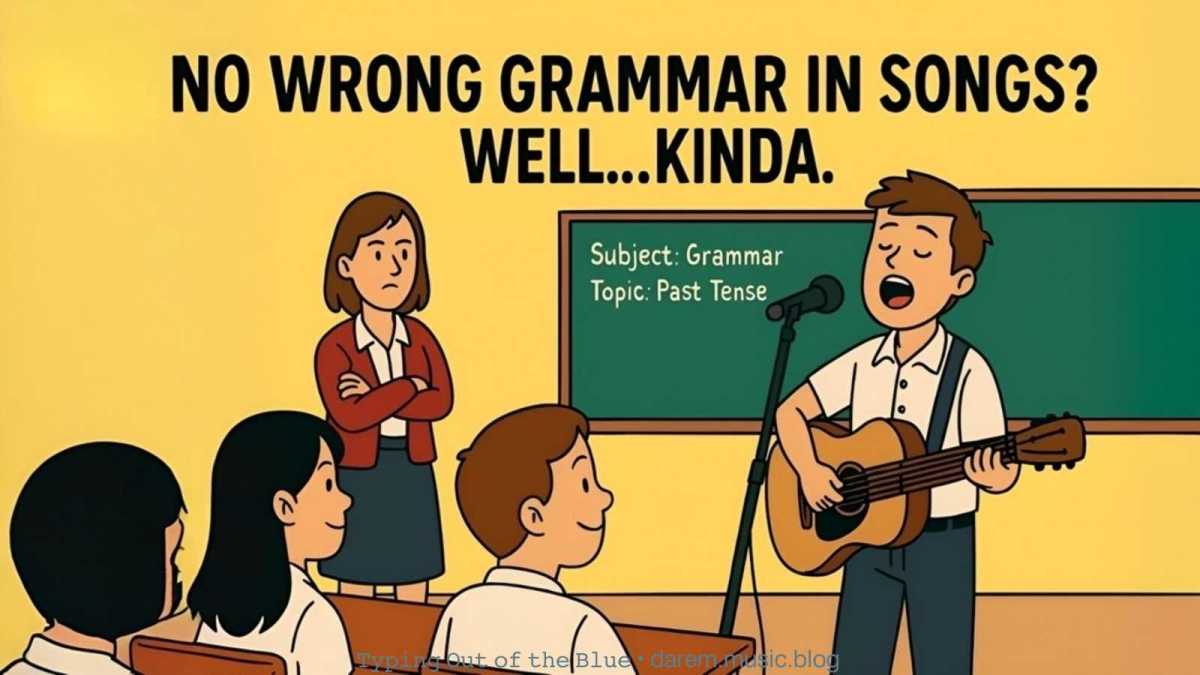
No Wrong Grammar in Songs? Well…Kinda

Songs break grammar rules all the time—but in music, emotion beats textbooks every time.

There are no strict grammar rules in lyric writing. Songwriters can switch tenses, repeat words, invent lines, or even ignore sentence structure—because songs aren’t made to follow textbooks. They’re made to capture something real in just a few minutes.

In one short song, you can fit the past, present, and future. So even if it’s “wrong” by grammar standards, it can still sound right in music.

Check these real lines:

“She don’t know she’s beautiful” – Sammy Kershaw
It should be doesn’t, but don’t hits harder—simpler, rawer.

“I can’t get no satisfaction” – The Rolling Stones
Double negative, yes—but it adds frustration. You feel the longing.

“We was just kids when we fell in love” – Ed Sheeran
Technically were, but was feels more nostalgic, more real.

“Ain’t no sunshine when she’s gone” – Bill Withers
Ain’t isn’t formal, but it’s soulful. There isn’t just doesn’t hit.

“I seen it all” – Kanye West
It should be I’ve seen, but I seen sounds streetwise and confident.

“You was my best toy” – Adrian Gurvitz
Correct is you were, but you was gives a laid-back, bluesy feel.

Songs like these don’t follow grammar rules—they follow emotion.

But don’t take it too far.

Just because it works in a song doesn’t mean it’s okay in conversation, recitation, or a report. Not everything that sings well sounds good in real life.

Lyrics are freedom. You can say anything in a song—and it still works.

But if you’re not planning to sing it, better say it right.

ᴛʸᵖⁱⁿᵍ ᴏᵘᵗ ᵒᶠ ᵗʰᵉ ʙˡᵘᵉ ᵈᵃʳᵉᵐ ᵐᵘˢⁱᶜ ᵇˡᵒᵍ
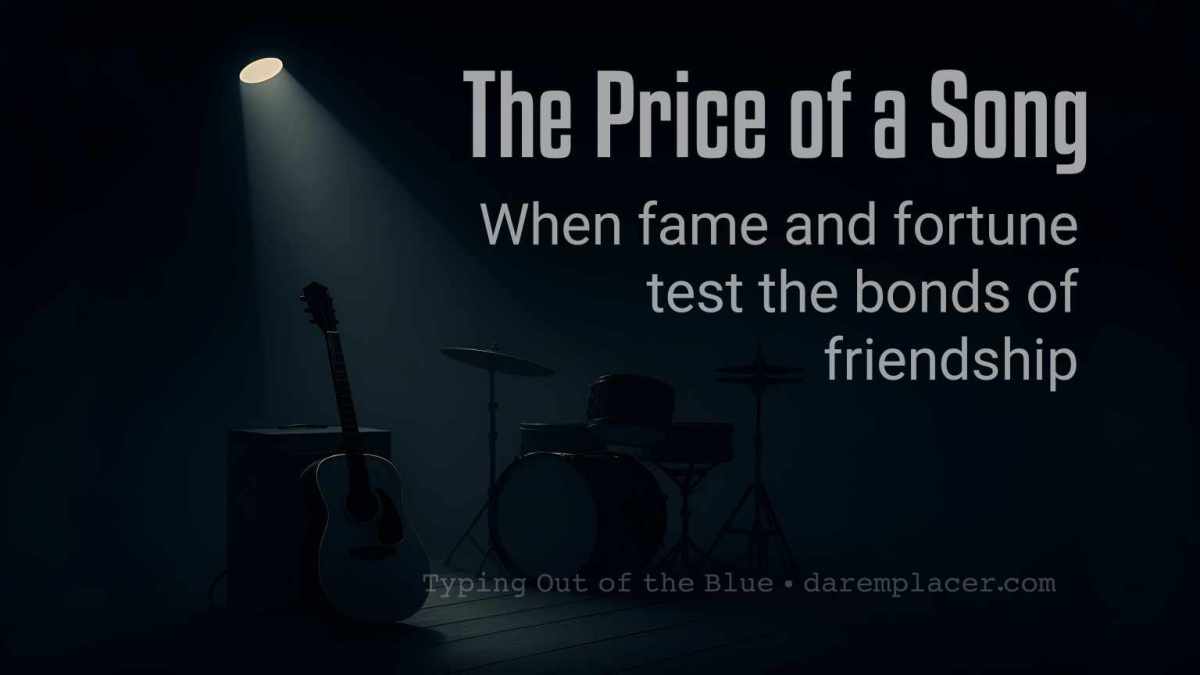
The Price of a Song

They began as kids chasing noise and friendship. But when one song turned into fame and fortune, the music that bound them together became the very thing that tore them apart.

When fame and fortune test the bonds of friendship

At the start, a band is just a bunch of kids chasing noise. They play in cramped bars thick with cigarette smoke, sometimes for free, sometimes paid in beer and fries. They laugh about wrong notes, borrow each other’s gear, and dream of nothing more than the next gig. Music is friendship, pure and raw—a heartbeat shared through amplifiers.

Then lightning strikes. One song clicks. A record deal follows. Suddenly, their names are on posters, fans scream the lyrics back at them, and their track is climbing charts. They’ve become famous—a band the world now watches, but no longer just their own.

But fame brings fortune, and fortune brings questions. The same riffs and drum fills that once felt like gifts now look like debts unpaid. Who really “wrote” the song? Who deserves the biggest slice of the pie? That carefree brotherhood on stage slowly turns into cold meetings with lawyers, contracts replacing handshakes.

And this is the sad twist: the music that gave them everything also planted the seed of division. What once was just a jam for fun turns into a legal battle for millions. Maybe it was always inevitable. Because in the end, bands aren’t just playgrounds—they’re businesses. And nothing tests friendship like money. Nothing hurts more than realizing the friendship was the first thing lost.

𝚃𝚢𝚙𝚒𝚗𝚐 𝙾𝚞𝚝 𝚘𝚏 𝚝𝚑𝚎 𝙱𝚕𝚞𝚎 • 𝚍𝚊𝚛𝚎𝚖𝚙𝚕𝚊𝚌𝚎𝚛.𝚌𝚘𝚖