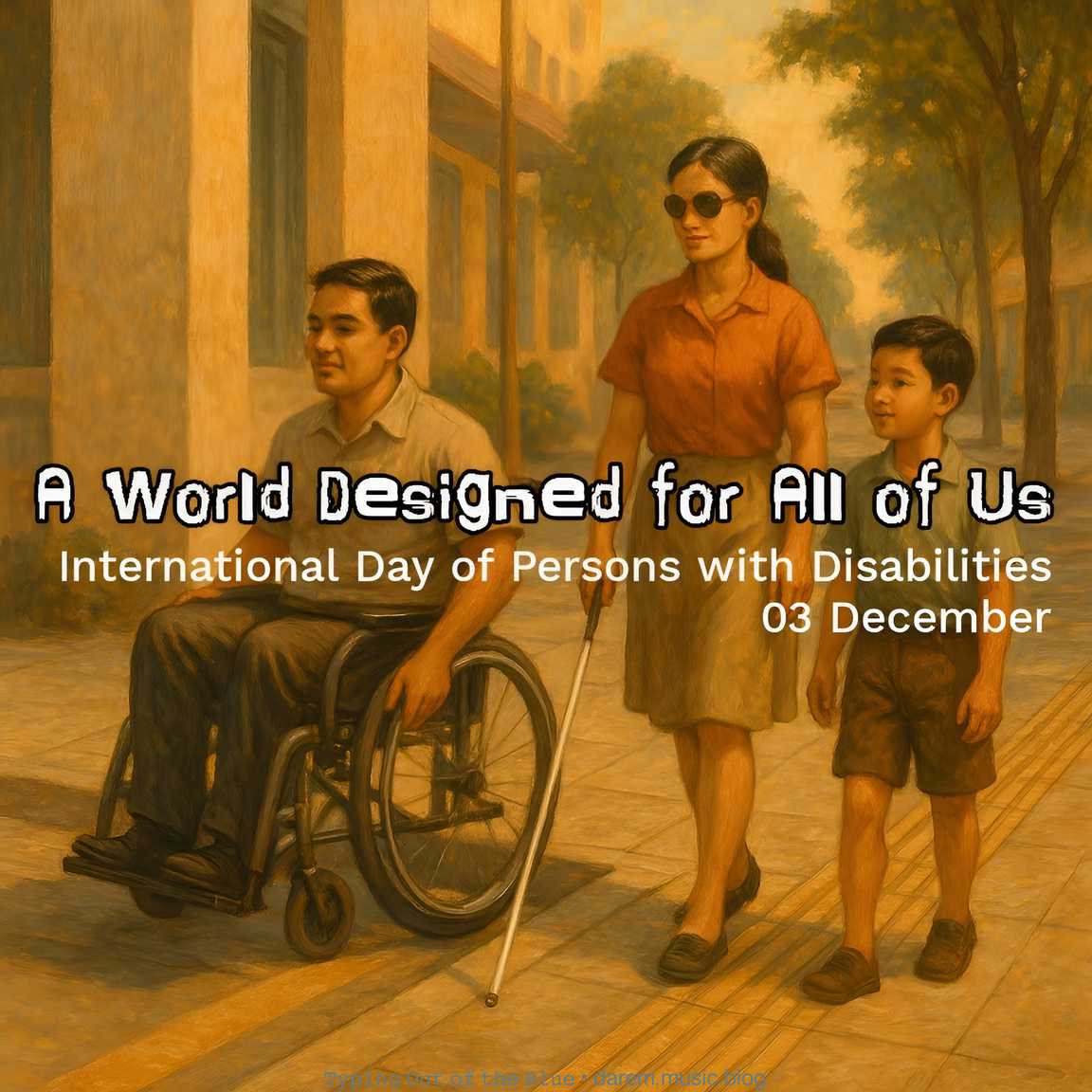
A World Designed for All of Us

A better world begins when no one is pushed aside. Remove the barriers and life becomes more human for everyone.

International Day of Persons with Disabilities • 03 December

Sometimes you notice small things that shouldn’t be difficult at all—a path that ends too soon, a doorway that feels too narrow, a setup that forgets certain people exist. And then you realize persons with disabilities deal with this every day, not once in a while.

Many of them are not asking for anything grand. They just want the world to work the same for them as it does for others—a bus they can board without trouble, a building they can enter without feeling like a problem, a routine that doesn’t turn into a battle.

What stands out is how much they still manage to do, even with all the small barriers that add up. You see someone taking their time, adjusting their path, finding a way—and you know the world could have made it easier, but didn’t.

Real progress starts in quiet places: a design that thinks ahead, a space that doesn’t force someone to struggle, a choice to include people before the inconvenience shows up.

When the world finally removes these old obstacles, life changes—not only for persons with disabilities, but for everyone. Things become smoother, calmer, more human. You start to see how much better life feels when no one is pushed to the side.

It isn’t about lifting people up. It’s about not holding them down.

A world that works for more people becomes a world that works better, period.

Maybe the real change begins when we stop expecting people to push through barriers that never needed to exist. Life doesn’t have to feel this Fragile.
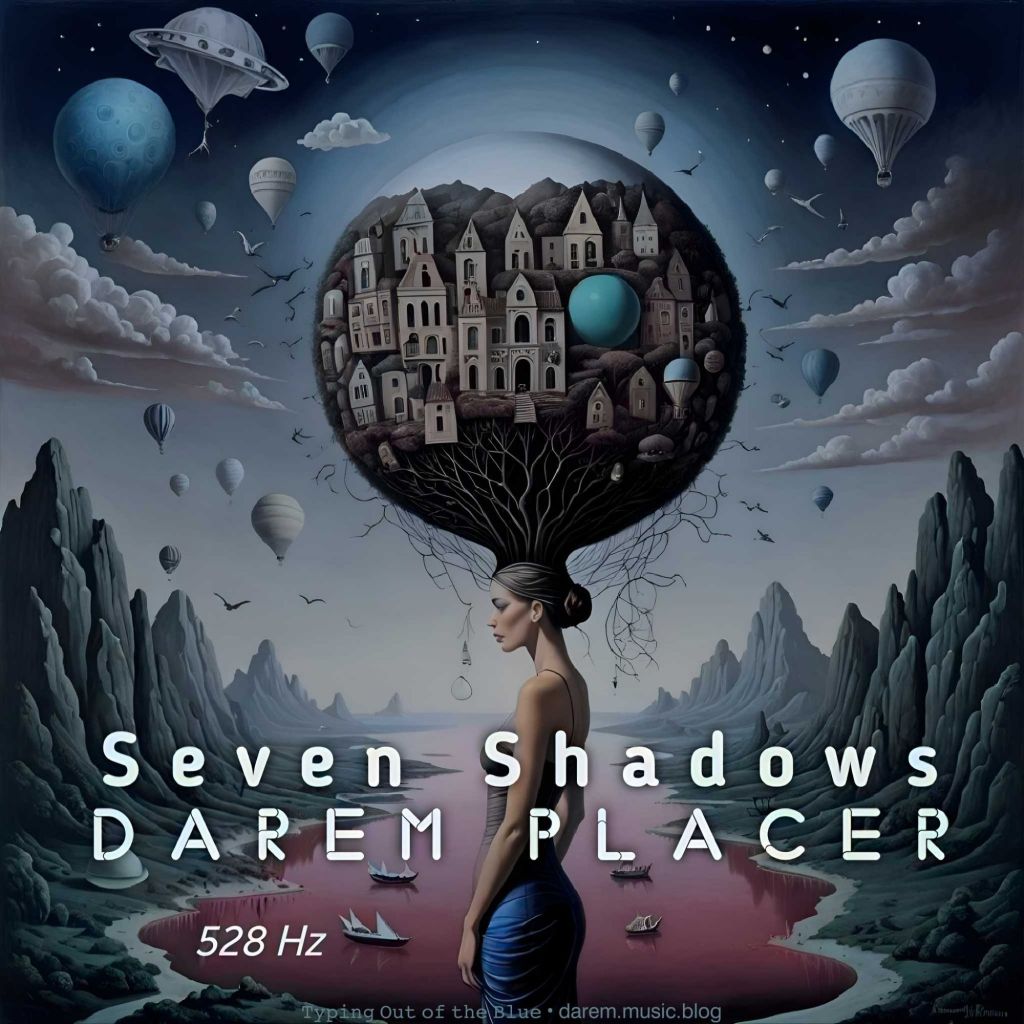
Fragile • Darem Placer
Seven Shadows includes Fragile

Listen to Seven Shadows on Apple Music, Apple Music Classical, and YouTube Music

ᴛʸᵖⁱⁿᵍ ᴏᵘᵗ ᵒᶠ ᵗʰᵉ ʙˡᵘᵉ ᵈᵃʳᵉᵐ ᵐᵘˢⁱᶜ ᵇˡᵒᵍ
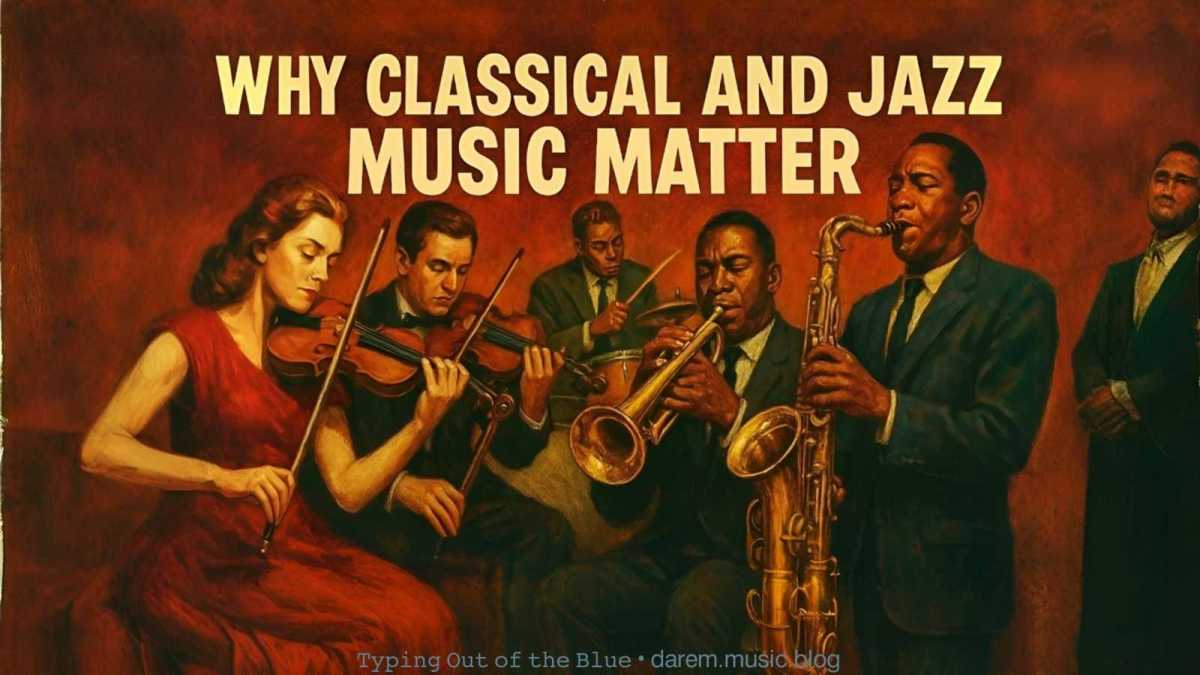
Why Classical and Jazz Music Matter

Behind every note is more than music—it’s memory, courage, and change. Two genres show why it still matters today.

Music has many sides—two of the most powerful are classical and jazz. One feels like a world built with care, the other feels like freedom let loose. They may be different, but both remind us of the same thing: music can still touch our hearts.

You don’t need to play an instrument to feel it. Classical and jazz carry emotions we all know—hope, longing, surprise, and courage.

Classical music has been around for centuries. Beethoven, Bach, and many others created works that still speak today. Their music feels timeless—every note carefully shaped, yet full of life. It’s the kind of sound that stays with you no matter how much time has passed.

Jazz came later, and it broke open the rules. Born in African-American communities, it let musicians play from the heart. Miles Davis, John Coltrane, and others turned each performance into something new. Jazz feels alive because it’s not about perfection—it’s about the moment.

Put together, these two styles show why music matters. Classical holds on to tradition, while jazz opens doors to change. Both connect us, inspire us, and carry the spirit of being human.

And if you’d like to hear how I echo these traditions in my own way, here are two of my tracks: Chorale in C Major for Choir, Harpsichord, and Orchestra from the album Classical Haze, and Depths of Silence from the album Seven Shadows.

ᴛʸᵖⁱⁿᵍ ᴏᵘᵗ ᵒᶠ ᵗʰᵉ ʙˡᵘᵉ ᵈᵃʳᵉᵐ ᵐᵘˢⁱᶜ ᵇˡᵒᵍ