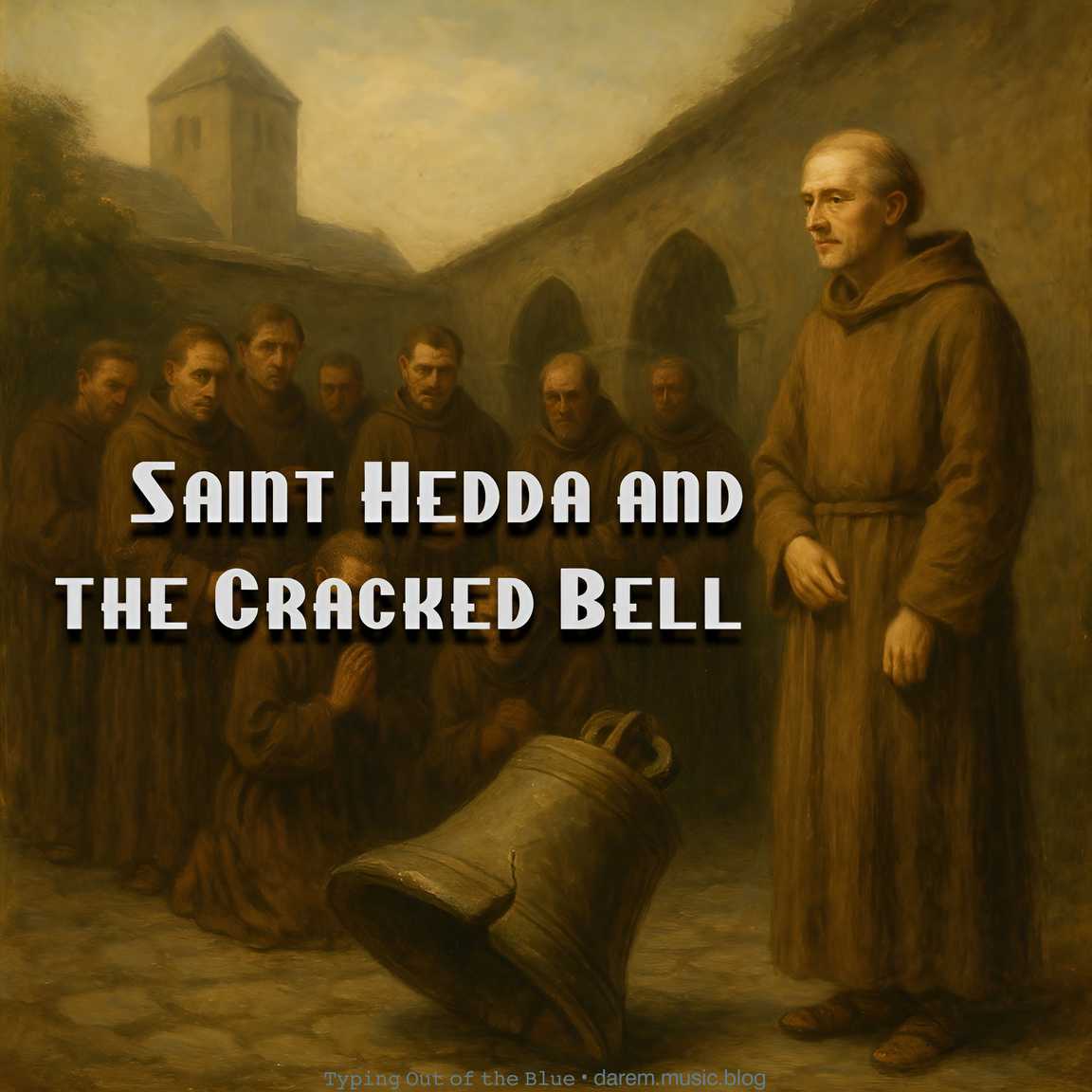
Hedda lived in 7th-century England, a time when the Church was still young and many small communities were learning how to pray, how to live together, and how to follow the faith in a steady way. He became the Bishop of Winchester, known for being calm, gentle, and patient. People trusted him because he stayed steady even when things around him were messy.
There’s this story—an old monastic tradition—that people told to show what Hedda was like.
One day, the monks ran into a problem. Their big bell cracked. When they rang it, the sound was irritating—sharp, loud, and just wrong. It threw off the whole rhythm of the place. The bell mattered because it guided their day, so everyone felt uneasy.
The monks asked Hedda what to do. He just said, “Bring the bell to the chapel. We’ll pray.”
They carried it in. Hedda prayed a short and plain prayer. Then they all went back to their day.
The next morning, they rang the bell again. Still irritating. Still broken.
But something shifted. The monks arrived faster. They paid more attention. The rough sound somehow pulled them together, like it reminded them to act as one community even when the moment wasn’t comfortable.
A few days later, a man from a nearby village heard about their cracked bell. He felt bad for them and donated a new one. No big story. Just kindness.
The monks later joked, “Hedda didn’t fix the bell. He fixed us.”
And that was Hedda—calm, steady, and good at bringing people together in small, natural ways.
⌨ ᴛʸᵖⁱⁿᵍ ᴏᵘᵗ ᵒᶠ ᵗʰᵉ ʙˡᵘᵉ ᵈᵃʳᵉᵐ ᵐᵘˢⁱᶜ ᵇˡᵒᵍ

Listen on Apple Music, Apple Music Classical, and YouTube Music