
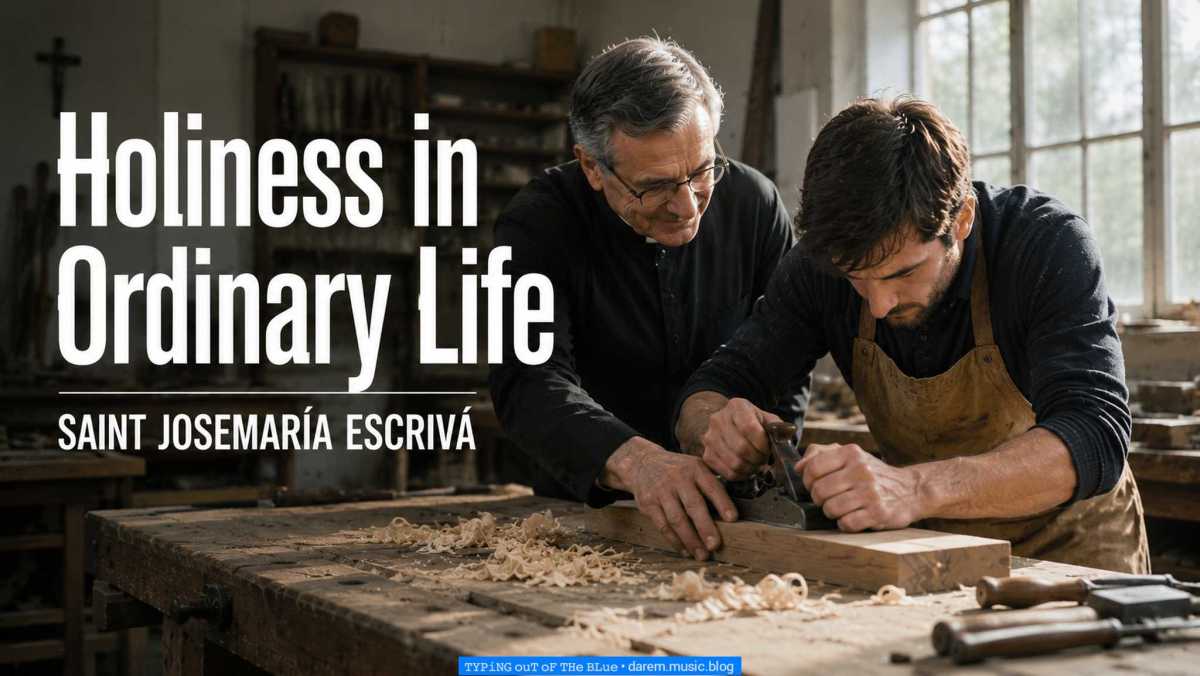
Born in 1902, Josemaria Escriva was a Spanish Catholic priest who founded Opus Dei in 1928. Opus Dei, which means “Work of God,” emphasizes that every Christian is called to holiness, not only through prayer and worship, but also through ordinary life, especially our work and daily responsibilities. Father Josemaria believed that we do not need to leave the world to find God. We meet Him right where we are.
According to Father Josemaria, holiness is not reserved for priests, nuns, or people who spend hours in monasteries. It is something all of us are called to pursue.
God is already present in ordinary life. As we go about our day, we can encounter Him through the way we live, love, and serve.
Work: We do our jobs with competence, honesty, and love. A teacher teaches well. A carpenter builds carefully. A musician creates beauty without vanity. Our work becomes an offering to God.
Family responsibilities: Caring for children, honoring our parents, preparing meals, forgiving a spouse, or patiently listening to a family member are all acts of love that can become holy when done for God.
Social duties: Being truthful, paying our debts, helping our neighbors, keeping our promises, treating coworkers with respect, and serving society faithfully are also ways of living the Gospel.
Father Josemaria often summarized this spirituality in three ideas:
1. Sanctify our work. Offer it to God.
2. Grow in holiness through it. Let it shape virtues like patience, humility, diligence, and charity.
3. Lead others closer to God through it. Be a quiet witness by the way we live, not merely by what we say.
This is not about pretending every task is exciting. Washing dishes is still washing dishes. Filing paperwork is still paperwork. The difference is the intention we bring to it. When we do even the most ordinary tasks with love, excellence, and offer them to God, they can become a prayer.
This echoes Colossians 3:23:
“Whatever you do, work at it with all your heart, as working for the Lord.”
For Saint Josemaria, holiness is not mainly about where we are. It is about how we live where God has already placed us. The office, classroom, kitchen, workshop, farm, hospital, or concert hall can all become places where we encounter God.
Let’s keep learning the saints’ way—day by day.
⌨ ᴛʸᵖⁱⁿᵍ ᴏᵘᵗ ᵒᶠ ᵗʰᵉ ʙˡᵘᵉ ᵈᵃʳᵉᵐ ᵐᵘˢⁱᶜ ᵇˡᵒᵍ