Why the Church honors Adam and Eve as saints in early Christian tradition.
Yes. In Catholic tradition, Adam and Eve are honored as saints.
Not through a formal canonization. That system did not exist yet. This recognition comes from the earliest layers of Church memory.
They are honored for a simpler reason.
They fell. They repented. They were not cut off from God’s plan.
The Church believes that Christ’s saving work reaches back to the very beginning of humanity. Redemption does not start partway through history. It starts at the start. Adam and Eve are part of that redemption.
Their names appear in the Roman Martyrology, the Church’s official list of saints and blessed remembered throughout the liturgical year. They are traditionally commemorated on December 24, the day before Christmas. The timing is deliberate. The first humans are remembered just before the birth of the Savior.
Adam and Eve were not saints because they were perfect. They were saints because failure was not the end of their story.
When fear ruled the hills, one priest walked alone into danger—carrying nothing but faith strong enough to change everything.
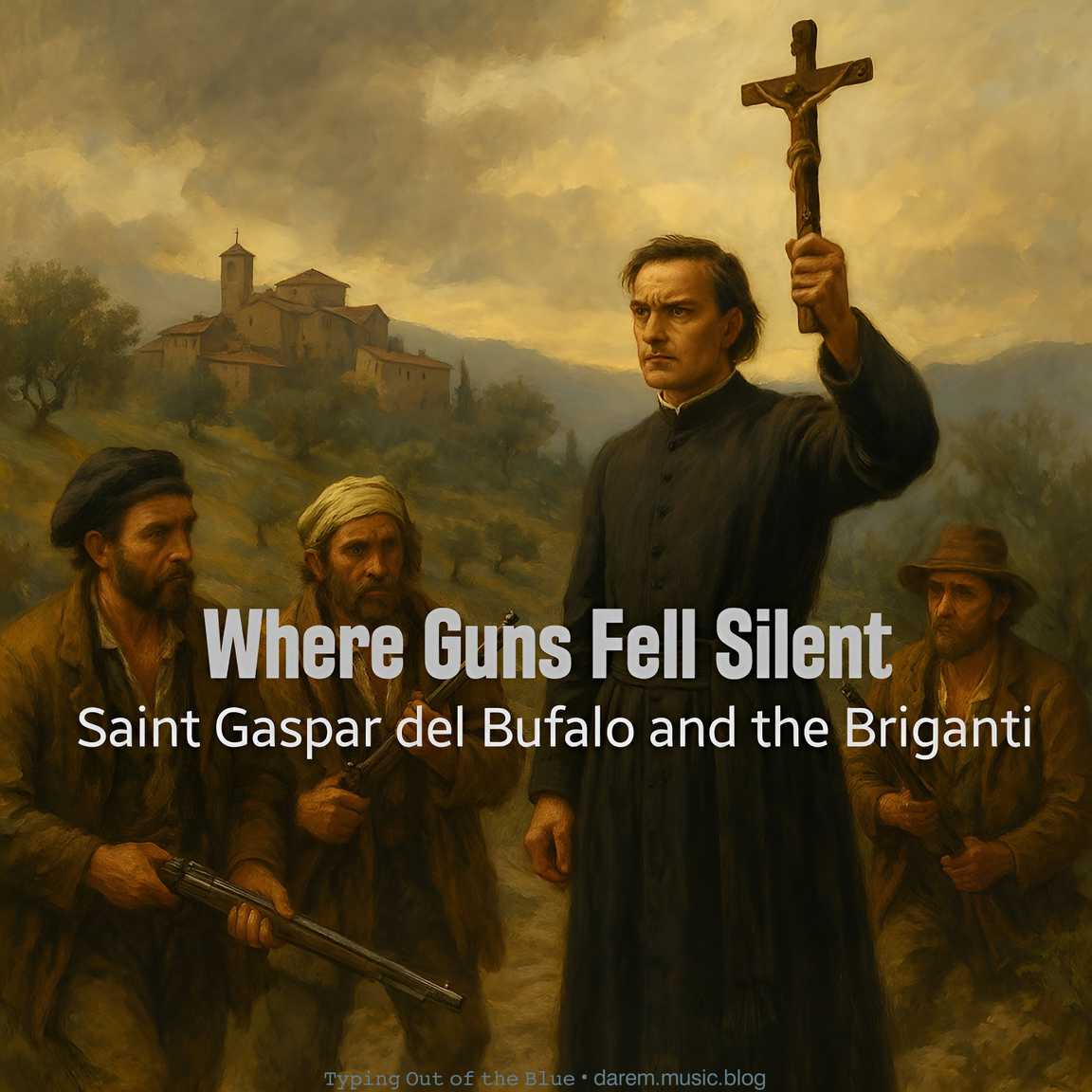
Saint Gaspar del Bufalo and the Briganti
The hills of Sonnino were soaked in fear. In 1821, the briganti—Italian outlaws who haunted the mountains—ruled the winding roads and narrow tracks that twisted through the hills. They ambushed travelers, burned farmhouses, and killed anyone who stood in their way. The Papal States had lost control. Soldiers were tired, people were broken, and even priests refused to go near those towns.
Sonnino, a small hill town in central Italy’s Lazio region, sat high among olive groves and rocky slopes. Its narrow stone paths wound between old walls, and thick forests hid the shadows of men who lived by the gun. It was so lawless that the government once thought of destroying it completely, just to end the violence.
Then came one man with no sword—Father Gaspar del Bufalo.
Born on January 6, 1786, the Feast of the Epiphany, his full name was Gaspar Melchior Balthazar del Bufalo, after the Three Wise Men who followed the star to Christ. Like them, he too followed a light into dark places.
He wasn’t sent with guards or soldiers. He carried only a crucifix and a fierce belief that mercy could reach even the hardest hearts. Locals called him mad. “You’ll never come back alive,” they warned. But Father Gaspar still climbed the hills.
When the briganti saw him, they mocked him. Some cursed, others raised their muskets just to test his fear. But he didn’t move. He stood in the cold wind, his crucifix lifted high, and said, “The Blood of Christ was shed for you too.” The words broke through more than any weapon could.
He didn’t argue. He listened—to their stories of hunger, war, and betrayal. He spoke of forgiveness like it was something real, not impossible. Then he left… and came back again. And again.
Weeks turned to months. A few of the men began to trust him. Some confessed their sins, others returned what they’d stolen. The mission house he built became a place of peace in the same hills that once echoed with gunfire.
The authorities couldn’t believe it. The violence faded—not through force or fear, but through one priest’s courage to believe that even the cruelest hearts could be redeemed.
Saint Gaspar del Bufalo didn’t win by fighting. He won by enduring.
And sometimes, that’s how true victories look—quiet, patient, and soaked not in bloodshed, but in mercy.
Based on historical accounts and missionary records about Saint Gaspar del Bufalo’s 1821 missions among the briganti of Sonnino, Italy.