Around AD 95, during the rule of the Roman emperor Domitian, John was the last of the Twelve Apostles.
Christian groups had spread across the Roman Empire. Many believers refused to worship the emperor and spoke openly about Jesus as Lord. This was seen as a threat to Roman order. John was known for that message, and he did not stop teaching it.
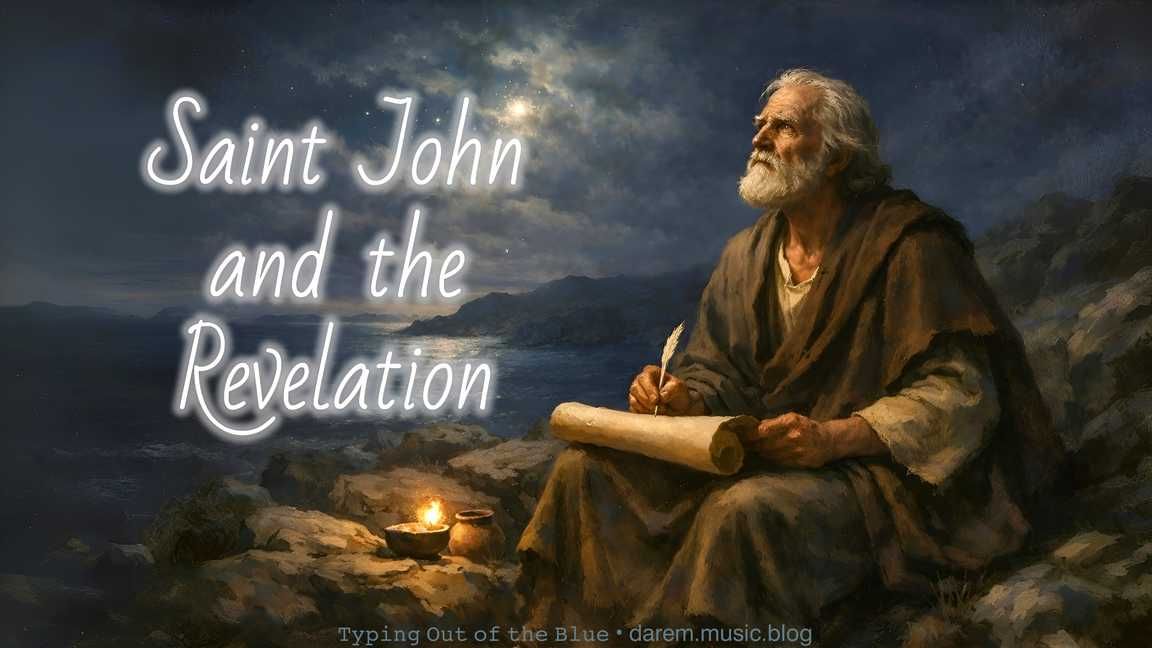
Instead of killing him, the authorities chose exile. John was sent to Patmos, a small rocky island used to keep people away from cities and public life. He could not leave. He was cut off from churches, friends, and normal routines.
That is where the Book of Revelation begins.
While living on Patmos, John spent his days in prayer and quiet endurance. On one Lord’s day, while fully awake and praying, he experienced visions. He heard a voice, saw scenes, and was shown things beyond his own time. He was told to write what he saw.
John did not write explanations. He wrote descriptions. Again and again, he uses phrases like “I saw something like…” or “it appeared as…”. This shows that he was trying to describe things he did not have clear names for. John lived in the first century, and his language came from that world.
When someone sees something unfamiliar, the human response is to compare it to what is already known. So when John saw future realities, he described them using images from his own time. This is why Revelation is filled with symbols.
Over the centuries, people have tried to read Revelation in a literal way. Timelines were created. Predictions were made. Each generation believed it had found exact meanings, and each generation reached different conclusions. What remains steady is not the speculation, but the message.
Revelation was written for believers living under pressure. It reminded them that history is not random, that faithfulness matters, and that evil does not have the final word. John was not asked to explain the future. He was asked to witness and to write.
Whatever the images point to in detail, the direction is clear. Be ready. Stay faithful. Live awake.
That is the heart of the Revelation.
⌨ ᴛʸᵖⁱⁿᵍ ᴏᵘᵗ ᵒᶠ ᵗʰᵉ ʙˡᵘᵉ ᵈᵃʳᵉᵐ ᵐᵘˢⁱᶜ ᵇˡᵒᵍ