Multitasking: Then and Now

We learned to do more at once, but forgot how attention worked in the first place.

For those who’d rather listen.

Multitasking feels normal today. We work, reply, think, plan, and worry at the same time. Even when we rest, our mind is still busy. This feels modern and efficient. But it was not always this way.

In early human life, people did many things in a day, but not many things in their mind at once. When they hunted, they focused only on the hunt. When they made fire, they focused only on the fire. Their survival depended on full attention. One mistake could be fatal. Focus was not a skill they learned. It was natural.

They could walk while watching for danger or eat while staying alert, but their attention always had one center. Survival came first. Everything else waited.

In the modern world before automation and screens, multitasking existed, but it had limits. Factory workers repeated one system again and again. Office workers handled one paper at a time. Craftsmen finished one object before starting another. At home, people combined tasks only when needed, like cooking while watching children.

What kept people balanced back then was how hard it was to switch tasks. To change work, you had to move your body. You had to stop one thing before starting another. That slowness protected their mind. When work ended, it truly ended.

Then technology changed how we work.

Automation and digital tools slowly removed that friction. You can open many tasks at once without effort. Notifications interrupt without warning. Work follows people home. Rest is replaced by scrolling. The mind keeps switching, even when the body is still.

This is why many people feel tired without doing heavy physical work. The exhaustion comes from constant switching, not from effort.

So which is better, the past or today? It depends.

The past was better for the human mind. Today is better for speed and scale.

Before, work was slower, but people were more whole. Now, work is faster, but attention is divided.

The mistake is thinking we have to choose one time period. A better choice is using modern tools with old rules.

Do one main task at a time. Finish it. Then stop.

Multitasking is not always bad. But when it becomes constant, it drains focus and energy.

Progress is not doing more at once. Progress is knowing when to slow down.

⌨ ᴛʸᵖⁱⁿᵍ ᴏᵘᵗ ᵒᶠ ᵗʰᵉ ʙˡᵘᵉ ᵈᵃʳᵉᵐ ᵐᵘˢⁱᶜ ᵇˡᵒᵍ

Digital Albums by Darem Placer on Bandcamp
Listen. Support. Buy. Download.

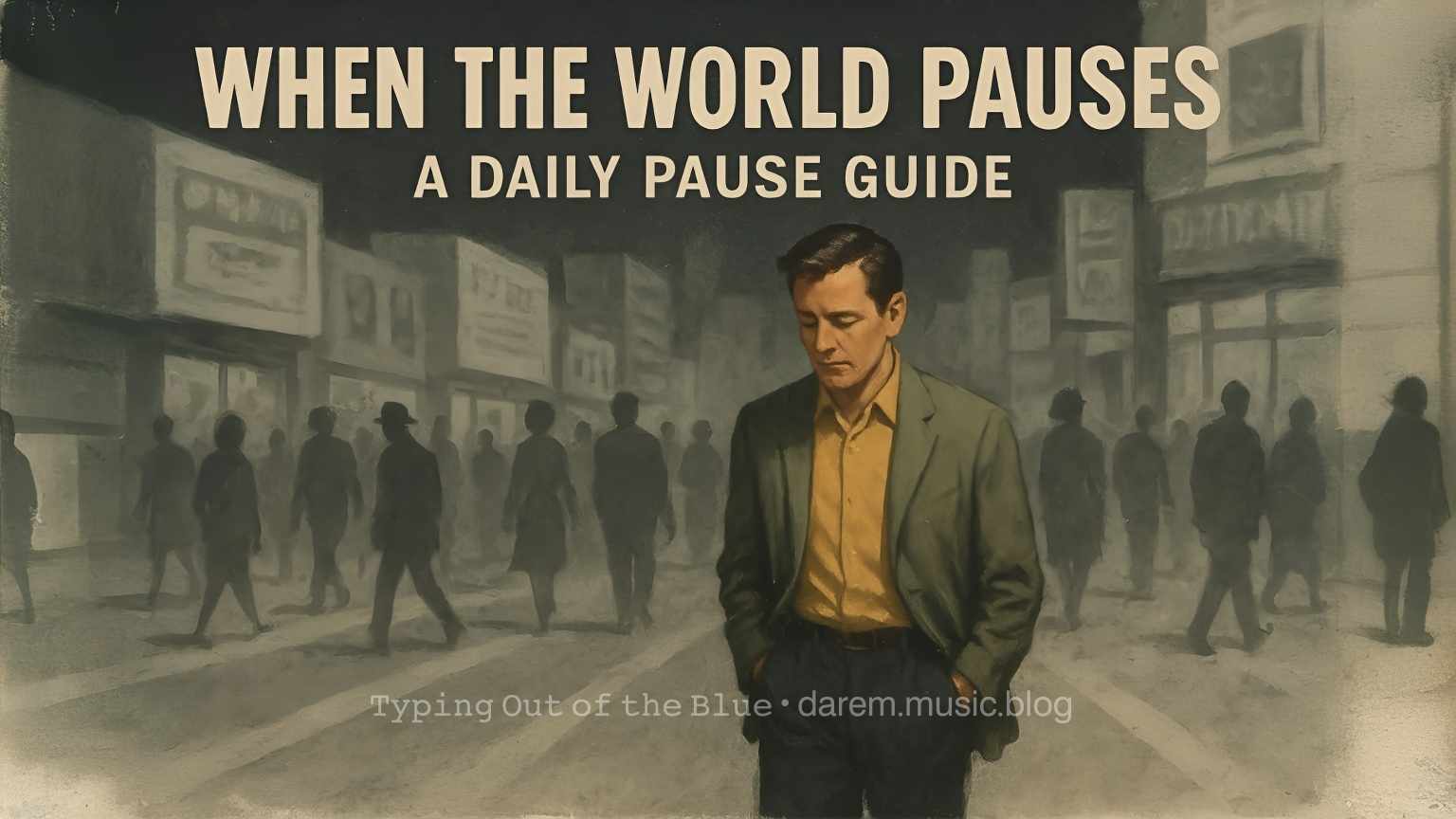
When the World Pauses

We wait for the world to pause, but it never does. What if the change starts with your own pause, day by day?

A daily pause guide

There was a man who kept moving. Work, noise, screens, endless lists. He thought busyness meant he was alive. Important. Needed.

But the pace never stopped. The more he ran, the less he felt. He smiled less, slept less, cared less. The colors around him faded into gray. Each day looked the same, each night heavier than the last.

On paper, his life looked fine. He was organized, always checking boxes. But his list was shallow—all about business, work, and trade.

He told himself he didn’t want the world to pause. If it stopped, he might lose his deals, his profit, his momentum. So he kept running.

Yet the faster he moved, the emptier he felt. It was like eating food that looked rich and expensive but tasted bland. So he tried more, bought more, chased more, hoping the next one would finally bring back the flavor he longed for. But every bite was the same—unsatisfying, empty.

What he was missing wasn’t out there. It was the missing taste of life. And without it, everything turned gray.

Like most people, he waited for the world itself to pause—for life to slow down on its own. But the world never did. And by the time he noticed, he was already drained, hollow, running on nothing.

That’s where his story ended—dark and unfinished. Because without pause, anyone can lose themselves.

But it doesn’t have to end that way.

Most people only stop once in a while. A yearly look back, maybe during birthdays or New Year. But by then, too much is forgotten. The bad slips away without being corrected. The good doesn’t matter—it’s not about keeping score. And the neutral days? They disappear without a trace.

That’s why a yearly check isn’t enough. Correction delayed is correction lost.

Daily Pause Guide

Think of it like a businessman’s to-do list. In business:

🔳 If something loses money, cut it.

🔳 If something works, keep it and grow it.

🔳 If it adds nothing, scrap it—don’t waste space.

Life works the same way. At the end of each day, pause for a few minutes and flash backnot your deadlines or tasks, and not your vacations or Netflix binges, but how you treated people and how you spent your time doing good deeds.

🔳 BadWhat did you do that shouldn’t be repeated? Cut it. (Did you hurt someone with words or actions?)

🔳 GoodWhat did you do that mattered? Keep it and do more. (Did you help, encourage, or make someone’s day lighter?)

🔳 NeutralWhere did you simply didn’t care enough, letting the hours pass without meaning? Replace it with something better.

Then reset for tomorrow. It’s efficient, practical, and keeps you from wasting your own time.

Because here’s the truth: When the world pauses, nothing grows. But when you pause in a busy world, that’s when good begins.

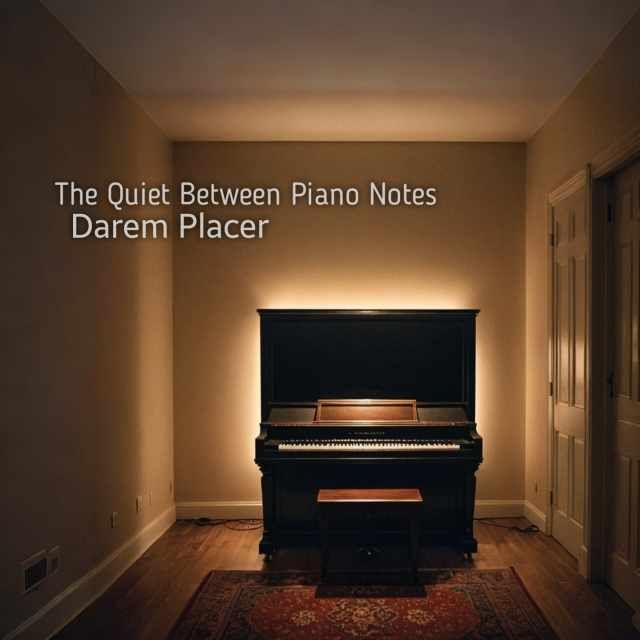
“When the World Pauses” —from the album The Quiet Between Piano Notes
In the quiet between piano notes, silence unfolds, revealing the beauty in stillness and the thoughts left unheard.

Listen on Apple Music, Apple Music Classical, and YouTube Music

𝚃𝚢𝚙𝚒𝚗𝚐 𝙾𝚞𝚝 𝚘𝚏 𝚝𝚑𝚎 𝙱𝚕𝚞𝚎 • 𝖽𝖺𝗋𝖾𝗆.𝗆𝗎𝗌𝗂𝖼.𝖻𝗅𝗈𝗀