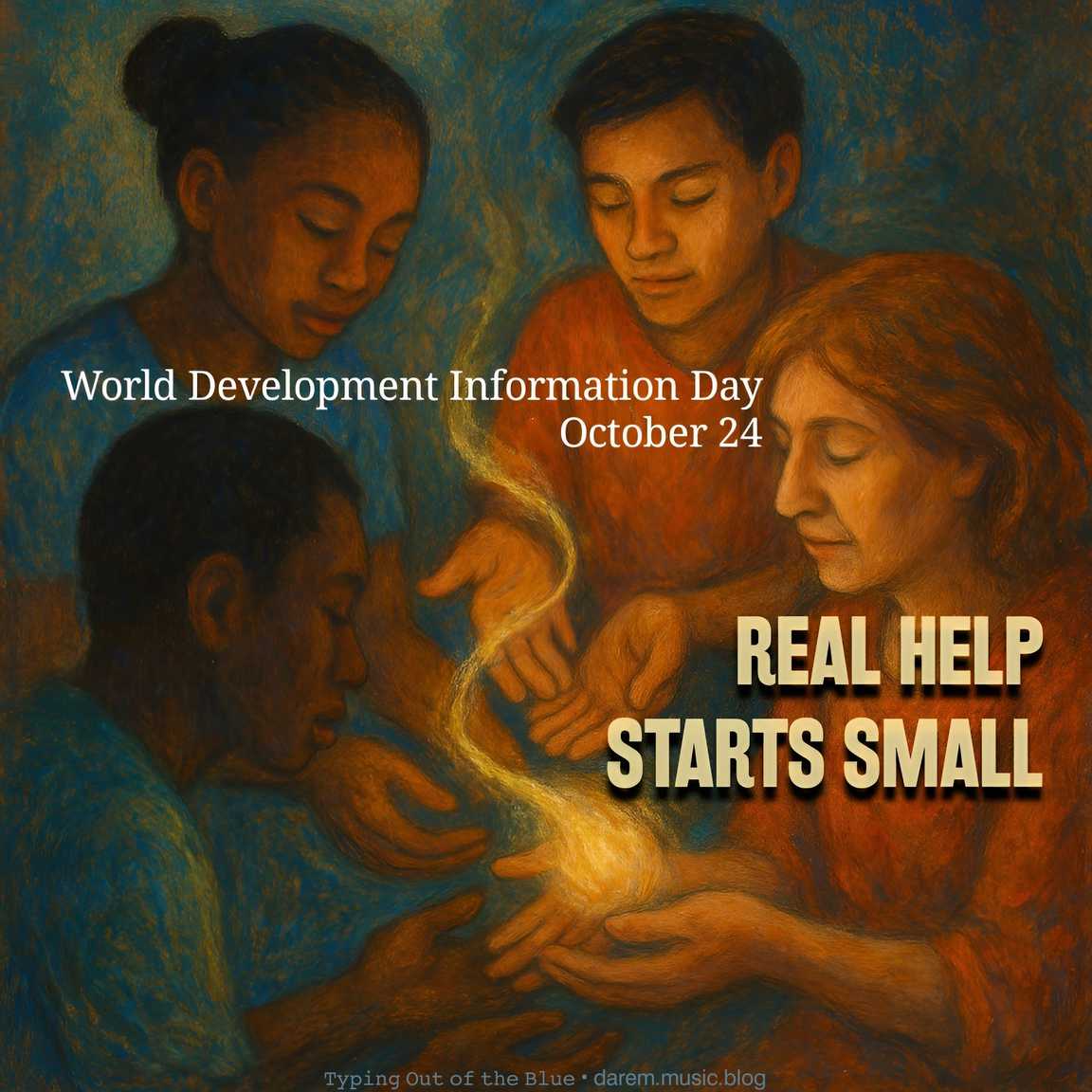
Real Help Starts Small

Real development starts with small acts—sharing what you know, helping others connect, and choosing empathy over noise.

World Development Information Day

Every October 24, the world talks about “development.” Big word, right? But strip away the speeches, and it’s really about one thing—helping people live with a little more hope and a little less struggle.

So how can a regular person—someone just trying to get by—actually help?

Teach what you know. Maybe you’re good with phones or computers. Show your neighbor how to make a document, apply online, or check real news. That’s development right there—sharing what school or experience taught you.

Share your connection. Got Wi-Fi? Maybe let a student nearby use it for an hour. It might be their only shot at submitting homework or researching a project.

Be part of the fix, not the noise. When you post online, share facts, not rants. Spread something useful. Misinformation keeps people poor longer than lack of money.

Support local. When you buy from small sellers or honest workers, you help real families. That’s the kind of “economic growth” that makes sense.

Give time, not just money. Volunteer, tutor, or simply listen to someone’s story. Awareness grows when compassion does.

Live with empathy. Poverty isn’t laziness—it’s lack of access. Education isn’t just books—it’s opportunity. The more we understand that, the fairer life becomes.

Development doesn’t always need a global plan. Sometimes it begins when one person decides to care—and keeps caring, quietly but consistently.

⌨ ᴛʸᵖⁱⁿᵍ ᴏᵘᵗ ᵒᶠ ᵗʰᵉ ʙˡᵘᵉ ᵈᵃʳᵉᵐ ᵐᵘˢⁱᶜ ᵇˡᵒᵍ
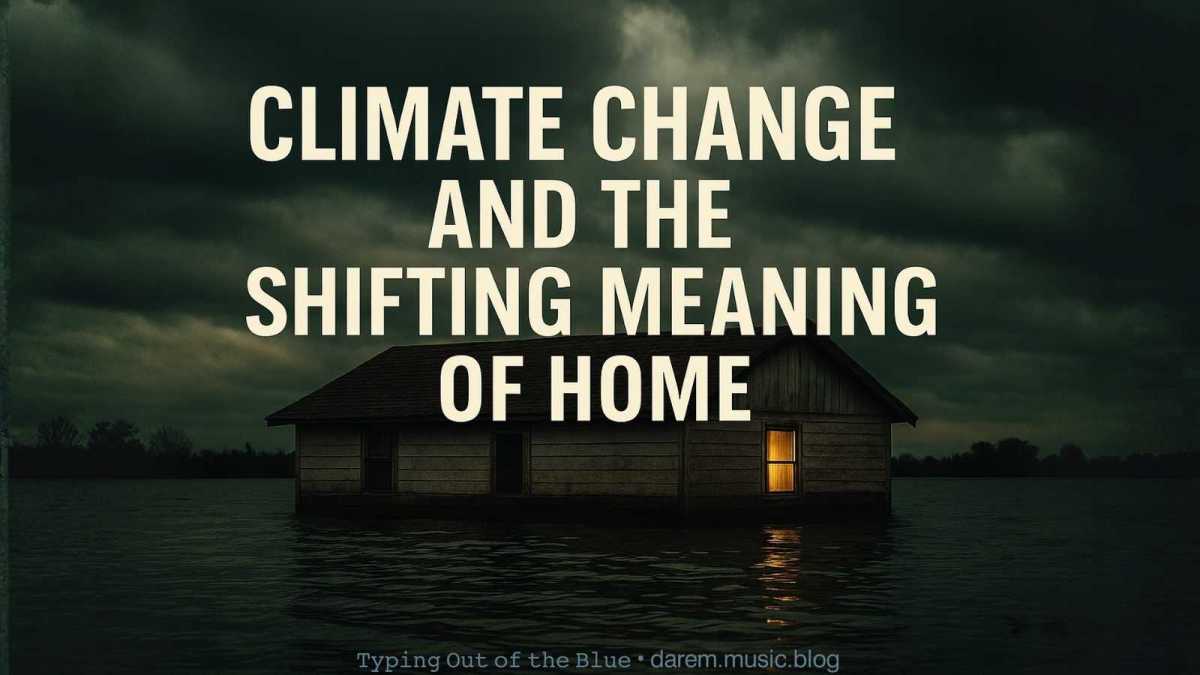
Climate Change and the Shifting Meaning of Home 🏠🌦️

When storms rise and lands sink, the question is simple: who gets to leave, who stays, and what counts as home?

Climate change doesn’t just flood coasts or burn forests. It shakes something deeper—our sense of home. For some, home becomes a memory. For others, a cage.

It’s not always the poorest who move.

The middle class are the ones most likely to leave. The very poor can’t, the very rich can adapt. But the middle class? They risk the little they have, chasing a safer life somewhere else.

Many want to escape but can’t.

Imagine your land turns dry, your crops die, storms keep knocking your house down. You’d want to leave, right? But with no money, no chance, you’re trapped. They call it involuntary immobility—but really it just means heartbreak, watching your world collapse while you stand powerless.

People try to run toward safer ground.

Most dream of moving to places with less climate danger. But borders, walls, and visas say no. So even when survival calls, politics locks the door.

This is bigger than borders.

By 2050, refugee camps may face twice as many days of deadly heat. Picture kids trying to sleep when the air itself can kill. Tuvalu already made a deal with Australia because their islands are sinking. But one nation’s lifeboat won’t save the ship—we need everyone rowing.

Migration can also be renewal.

Leaving isn’t always loss. Sometimes it builds new communities, sparks new economies, even mixes cultures in fresh ways. Migration can be survival, but also rebirth.

Staying put can be courage.

Not everyone who stays is stuck. Some stay because they refuse to surrender their roots. They guard graves, temples, songs—proof that storms can wash away walls, but not spirit.

Climate change is what pushes people to move—or traps them where they are. The answer isn’t only about visas or borders. The answer is to face climate change itself. If we act, we protect not just homes, but the right of every person to keep calling a place home.

Add your name. Add your voice. Show them we care.

👉 Sign the Petition https://action.earthday.org/our-power-our-planet-renewable-energy-petition

It’s OUR home. 🏡🌍

ᴛʸᵖⁱⁿᵍ ᴏᵘᵗ ᵒᶠ ᵗʰᵉ ʙˡᵘᵉ ᵈᵃʳᵉᵐ ᵐᵘˢⁱᶜ ᵇˡᵒᵍ
👉 Download Sky-Low on Bandcamp

💿 Just type 0 if you want to download the album for free.

Sky-Low
“Sky-Low” is not just an album—it’s an awareness campaign about climate change and a challenge to protect our planet.