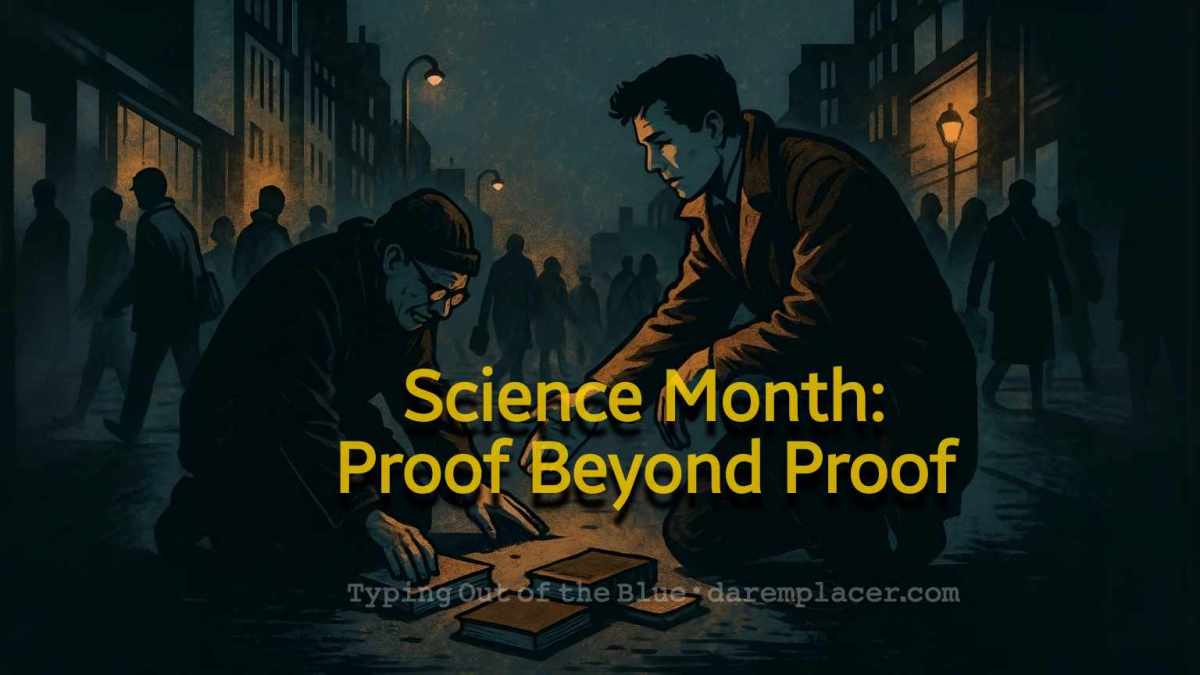
Science Month: Proof Beyond Proof

September is Science Month in the Philippines—a time of experiments and proof. But what about the things that can’t be tested in a lab?

In the Philippines, September is Science Month—a whole month set aside for experiments, projects, and discoveries. It’s one of the longest science celebrations in the world; in many other countries, science is usually given only a week. Waw, one whole month for science!

But ever noticed? There’s no Soul Month. Not even a Soul Week. (Okay fine, there’s All Souls’ Day—but that’s for remembering the dead, not for celebrating the soul alive in us.) Because the soul does not need experiments. You cannot place love on a scale, or hold forgiveness in a flask, or trap kindness in a microscope’s lens.

Science Month is all about proof—solid, visible, repeatable. We measure the stars, we count the cells, we ask the questions of how.

Science is for the material world. But the soul exists within us—here in this life, and beyond it. And the proof of the soul is seen in people: in kindness freely given, in forgiveness quietly offered, in love that refuses to end.

It’s like digital money—you don’t see it or touch it, but you know it’s real because it works. The soul is the same: unseen, yet undeniable in the way it changes lives.

That is why those social experiments on kindness feel hollow. Kindness is not a trick. It is not a show. The true soul needs no stage. Its proof is quiet, but it changes the world.

Science can measure the effects of kindness, and faith can teach about the soul—but the deepest proof is found in how we live it.

Science Month reminds us of discovery, of the gift of knowing the how. But the soul whispers the why. While science experiments end, the soul never stops. The soul lives in us, and beyond us.

𝚃𝚢𝚙𝚒𝚗𝚐 𝙾𝚞𝚝 𝚘𝚏 𝚝𝚑𝚎 𝙱𝚕𝚞𝚎 • 𝚍𝚊𝚛𝚎𝚖𝚙𝚕𝚊𝚌𝚎𝚛.𝚌𝚘𝚖
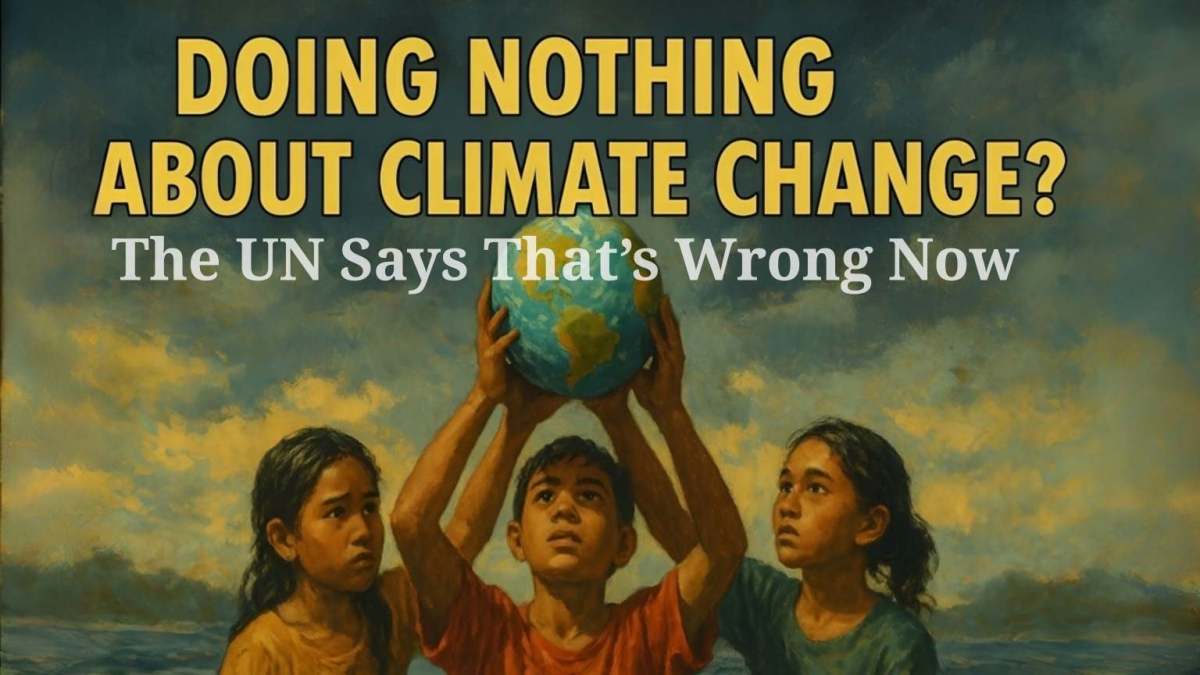
🌍 Doing Nothing About Climate Change?

The world’s top court just ruled that ignoring climate change is no longer neutral—it’s wrong. From Pacific Island students to the Philippines, the message is clear: fighting climate change is everyone’s duty, and now, it’s also a legal issue.

The UN Says That’s Wrong Now

On July 23, 2025, the International Court of Justice (ICJ)—the world’s top legal referee—made a historic call:

🗣️ “You can’t ignore climate change. If you do nothing, that’s already wrong.”

🌡️ What is climate change?

The Earth is heating up because of too much pollution. This extra heat messes with the weather—causing stronger typhoons, heavier floods, longer droughts, and food shortages.

The main cause: fossil fuels like coal, oil, and gas. Burning them for cars, factories, and electricity releases carbon dioxide (CO₂), which traps heat like a giant blanket around the planet.

⚖️ What did the court say?

• Countries must reduce pollution, cooperate, and protect nature.
• A clean and healthy environment is now recognized as a human right.
• Doing nothing—or still backing fossil fuels—is a legal failure.

This ruling strengthens nearly 3,000 climate lawsuits worldwide, especially cases against big polluters.

🌴 Who started this?

Not rich nations, but students from the Pacific Islands who saw their homes slowly sinking under water. With the support of Vanuatu, their call for help reached the UN—and now the whole world has to listen.

🇵🇭 What about the Philippines?

We’re not the big polluters—only about 0.3% of global emissions come from us—but we get hit the hardest with typhoons, floods, and heat. That’s why the Philippines supported the ICJ opinion, urging major polluters to help vulnerable countries like ours.

💥 What happens next?

• No more excuses—every country must act.

• Stricter climate laws and fewer fossil fuel projects may follow.

• Big polluters could face pressure to pay damages.

• Climate talks like COP30 in Brazil will likely get tougher.


You can’t damage the planet and hide. And you can’t sit back and do nothing either.

The world just made it clear: fighting climate change is everyone’s duty—and now, it’s also a legal issue.

𝚃𝚢𝚙𝚒𝚗𝚐 𝙾𝚞𝚝 𝚘𝚏 𝚝𝚑𝚎 𝙱𝚕𝚞𝚎
𝚍𝚊𝚛𝚎𝚖𝚙𝚕𝚊𝚌𝚎𝚛.𝚌𝚘𝚖