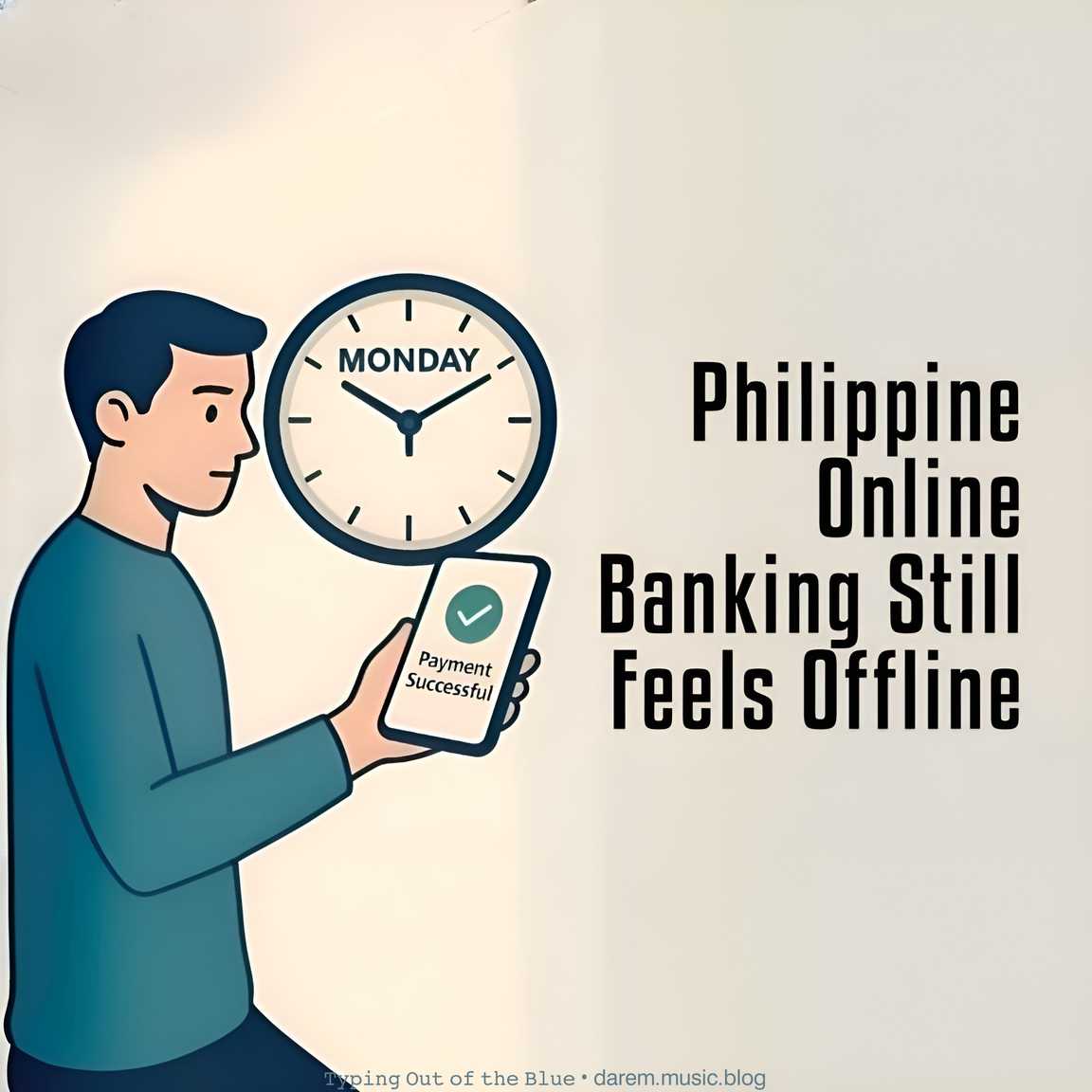
Online banking in the Philippines looks modern, but the rules behind it still follow old habits. You pay your credit card on a Saturday, the app says “successful,” but the bank counts it on Monday. You transfer money instantly, but the posting still waits for the next working day.
It feels digital on the outside, but traditional on the inside.
Daily Problems People Experience
• Weekend payments don’t count.
Even if the app confirms your payment, it is still marked as “Monday.”
• Cut-off times still exist.
If you pay after a certain hour, it moves to the next day.
• Some transfers post fast, some post slow.
There is no guaranteed timing.
• You can still get late fees even when you paid on time—because the bank did not count the weekend.
• Cash-in limits confuse people.
They change depending on the bank or the partner app.
These are small problems, but together they make digital banking feel unreliable.
How Other Countries Do It
Singapore
Money moves any time—day, night, weekend, or holiday. Almost everything is real-time.
Japan
Banks upgraded their systems so transfers work 24/7.
Hong Kong
Their payment system posts money instantly at all hours.
United States
Many banks still use “business days,” but online credit card payments usually post the same day—even on weekends.
Europe
Most European countries use a system where money can move across borders in seconds.
In short:
Other countries follow digital time.
The Philippines still follows office time.
Why the Philippines Works This Way
• Many banks still use older computer systems.
• Posting schedules were created many years ago and were not updated.
• Upgrading systems is expensive.
• Weekend rules protect banks from errors.
• Banks earn from late fees caused by weekend delays.
It is the result of a slow transition to modern systems.
Pros and Cons Today
Pros (mostly for banks)
• Easier to manage risk
• No need to upgrade systems quickly
• Simple rules for their staff
• Stable income from late fees
Cons (for customers)
• Payments made on weekends are counted late
• People feel unsure about posting times
• Budgets become harder to plan
• Trust drops when digital feels slow
• People still worry about cut-off hours even in online apps
Most of the inconvenience goes to the customers, not the banks.
Who Really Gains From the Current Setup?
Banks benefit more because they can keep the old system running with fewer changes.
Customers just adapt—even if the rules no longer match the technology.
Where the Philippines Should Move Forward
If money moves instantly, then the rules should follow instantly.
A modern system should have:
• 24/7 posting, not only on business days
• No weekend penalties
• Clear timestamps
• One standard system for all banks, not different rules everywhere
• Customer-first rules, not institution-first rules
Other countries have already reached this stage.
The Philippines is slowly getting there—but still has a long way to go.
⌨ ᴛʸᵖⁱⁿᵍ ᴏᵘᵗ ᵒᶠ ᵗʰᵉ ʙˡᵘᵉ ᵈᵃʳᵉᵐ ᵐᵘˢⁱᶜ ᵇˡᵒᵍ
