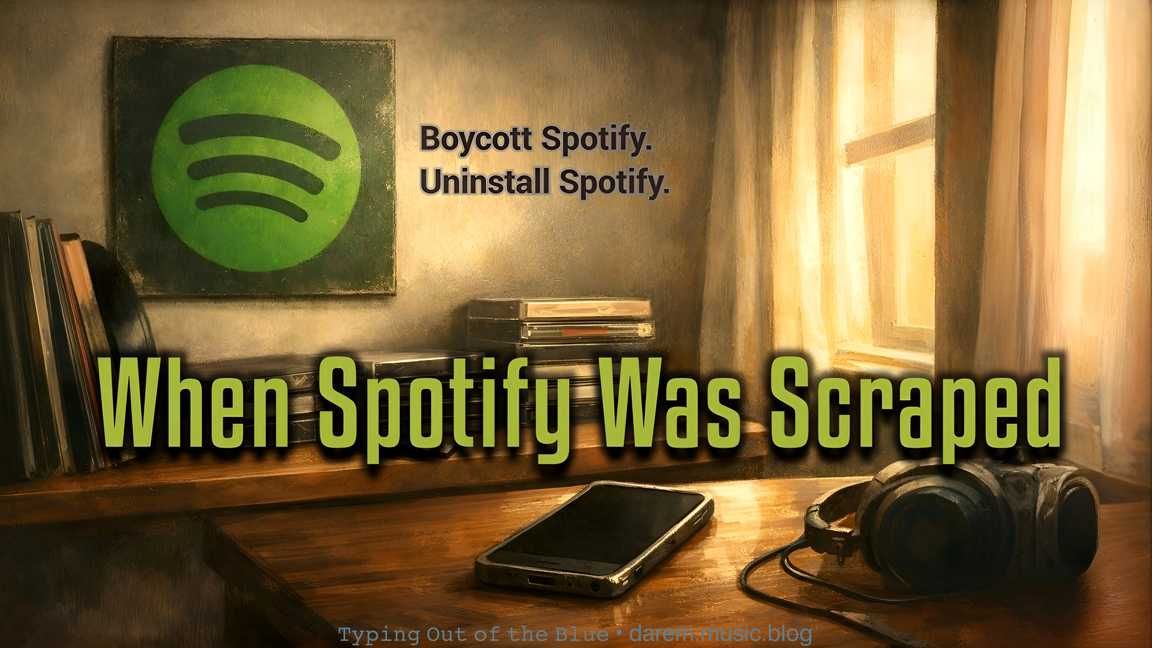
When Spotify Was Scraped

Streaming promised convenience, but scraping proved it didn’t end piracy—it only reshaped it.

A hacktivist group calling itself Anna’s Archive recently claimed it scraped almost the entire Spotify catalog—around 86 million tracks, covering roughly 99% of all music streams on the platform. Not removed. Not deleted. Just copied, at massive scale.

They framed it as preservation. An archive. Almost like a Wikipedia offline dump—but for music.

And that comparison is tempting. Wikipedia openly allows full database dumps. Knowledge is meant to be shared, copied, preserved. No royalties. No artists losing income. No complicated middle ground. Music is different.

Every track has a creator behind it. A livelihood. Rights. Royalties—small as they already are. So while Wikipedia sharing feels clean, music sharing is messy. Someone always pays the price, and it’s usually the artist.

Still, the scrape exposed something uncomfortable.

Spotify is known for being one of the most paranoid platforms. Locked-down accounts. DRM. Aggressive bot detection. AI-driven defenses against fraud, fake streams, and abuse. And yet, it still happened. Which makes you wonder what was really being protected.

It feels like a platform busy securing war defenses—AI battles, data battles, behavior battles—while missing the obvious truth. If music is streamable, it is copyable. There is no firewall against sound.

It’s like a house with every door locked, even the CR, but the windows left open—because people still need air. Access is the window. Streaming is the window. And scraping simply climbed through it.

Streaming was supposed to solve piracy. No more downloading. No more hoarding MP3s. Just press play and move on. But instead of killing piracy, it only reshaped it. From individual downloads to automated harvesting. From one song to entire catalogs.

And this is where regret enters.

Because when everything is rented, nothing is yours. You don’t own the music. You don’t keep it. You don’t pass it on. You can’t ask an artist to sign your phone. You can’t hand down a playlist. You can’t keep a song when a platform changes its rules or disappears.

That’s why physical media is quietly coming back. Vinyl. Cassette. CD. Even simple MP3 files. Not because they’re trendy, but because ownership matters.

A record can be signed. A CD can age with you. An MP3 works offline, free from algorithms and policy shifts. Streaming promised convenience, but people want permanence.

In the end, Spotify didn’t solve piracy. It just closed one door and opened another—leading people back to physical media, digital files, and the human need to keep what they love.

Some things shouldn’t be rented forever. Some things deserve to stay.

Boycott Spotify.
Uninstall Spotify.
Support Bandcamp artists.
Install Bandcamp.
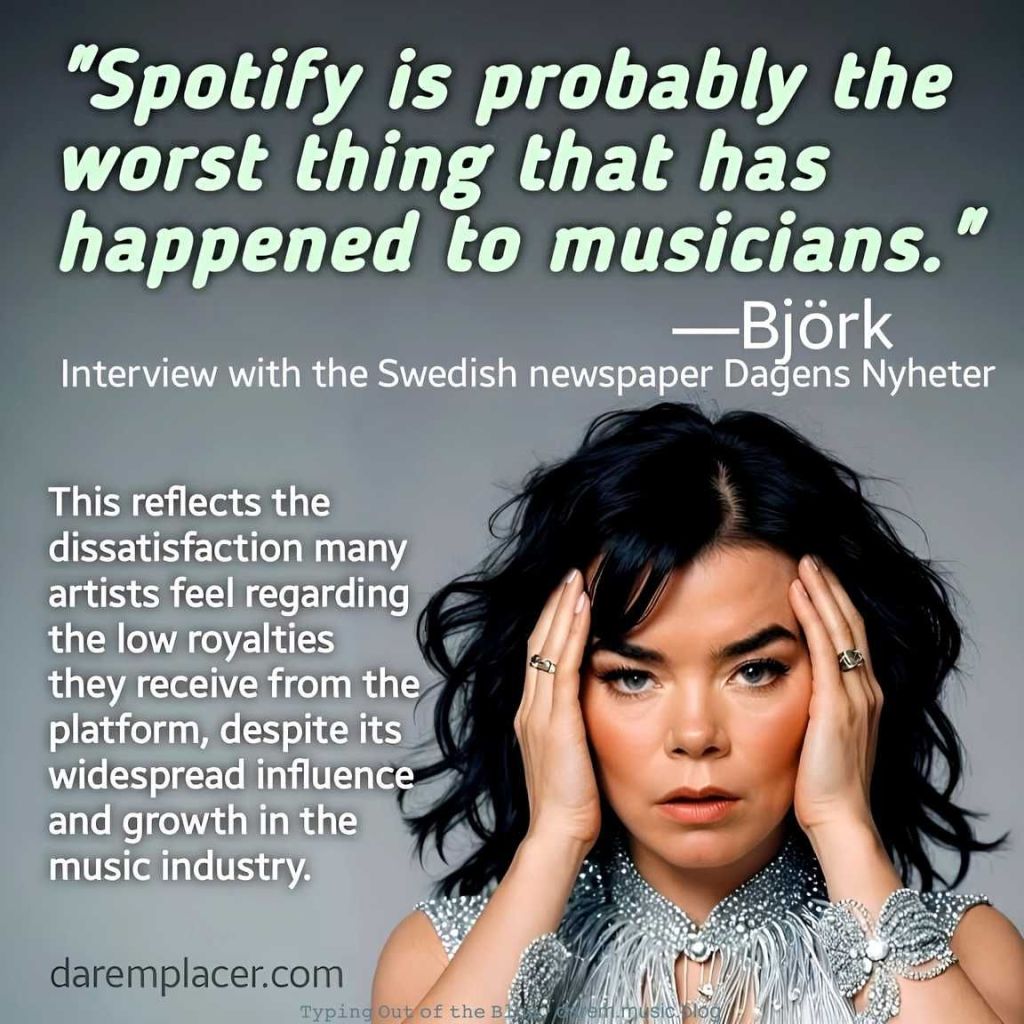
⌨ ᴛʸᵖⁱⁿᵍ ᴏᵘᵗ ᵒᶠ ᵗʰᵉ ʙˡᵘᵉ ᵈᵃʳᵉᵐ ᵐᵘˢⁱᶜ ᵇˡᵒᵍ
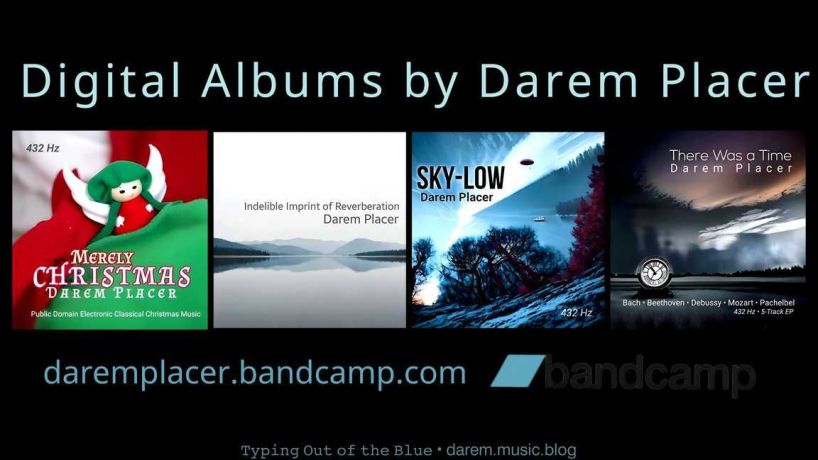
Digital Albums by Darem Placer on Bandcamp
Listen. Buy. Download.

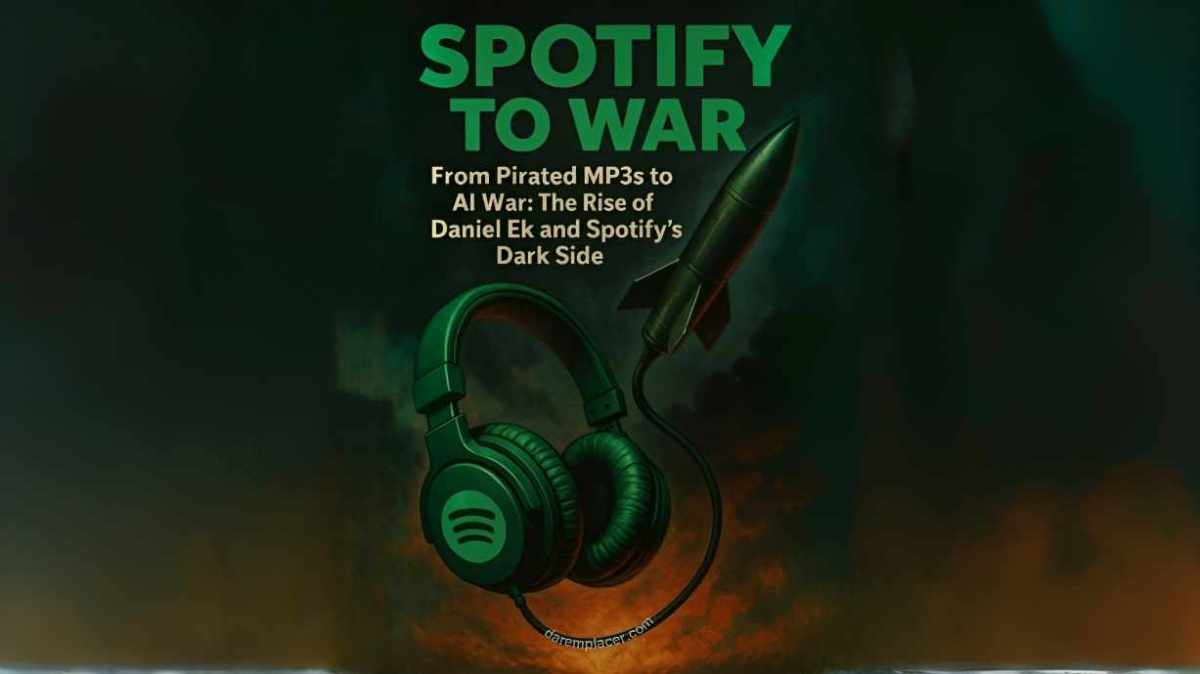
Spotify to War

From pirated MP3s to AI war—Spotify’s journey is more than music. This article traces how Daniel Ek built Spotify, how artists were left behind, and how billions now flow into military tech.

Uninstall Spotify • Boycott Spotify

From Pirated MP3s to AI War: The Rise of Daniel Ek and Spotify’s Dark Side

Most people see Spotify as just music—your playlist, your road trip, your daily background. But behind the app is a history of piracy roots, low pay for artists, and Daniel Ek earning billions that now flow into AI weapons.

🎧 Spotify Started With Piracy (2006–2008)

  • 2006 – Daniel Ek was 23 when he co-founded Spotify in Sweden with Martin Lorentzon.
    • He grew up in the piracy generation, also downloading MP3s illegally.
    • His idea: “You can’t stop piracy. Make something easier than piracy.”
  • 2008 – Spotify launched. Users no longer owned music—once you stop paying, everything is gone.

🎵 One Stream, Almost No Pay

  • Artists earn around €0.003 ($0.0032 / ₱0.18) per stream, far lower than Apple Music.
  • 2024 – Spotify set a 1,000-stream rule: songs under 1K plays in a year earn nothing.
  • 2019 – Ek claimed making music now costs “close to zero,” ignoring real expenses like instruments, software, and studio time.
  • 2023–2025 – Spotify playlists were filled with simple tracks under fake names and later AI-generated songs, paying less to real musicians.

⚠ Scandals and Issues

  • Spotify once tried to access user photos and contacts for playlists and social features, raising privacy concerns until it scaled back.
  • 2022 – Spotify refused to drop Joe Rogan after COVID-19 misinformation, even as artists like Neil Young left in protest.
  • 2023 – Spotify cut 1,500 jobs while Ek sold shares and made millions.
  • 2025 – UK age-check rule: users had to provide facial scans or IDs for explicit content, sparking privacy backlash and VPN use.
  • Ek sold $340M (₱18.8B) worth of Spotify stock, while artists still struggle.

💣 From Music Money to Military Tech

  • 2025 – Ek invested €600M (~$693M / ₱38B) into Helsing, an AI military company where he is Chairman.
  • Helsing builds AI-powered defense systems.

🎶 Indie Exodus from Spotify (2025)

A growing wave of indie artists are leaving Spotify over Ek’s investment in military AI.

  • Deerhoof said: “We don’t want our music killing people.”
  • Xiu Xiu called Spotify a “garbage hole violent armageddon portal.”
  • King Gizzard & the Lizard Wizard shouted “Fuck Spotify” and pulled their entire catalog.
  • Godspeed You! Black Emperor also removed their music from streaming platforms, including Spotify.
  • Hotline TNT joined the boycott in August 2025.
  • Other artists and labels like Kalahari Oyster Cult, David Bridie, Leah Senior, Skee Mask, and Charlie Waldren (Poolroom) pulled their tracks too.
  • The group UMAW called Ek’s move “warmongering.”

🎧 The Money Trail

Your playlist → Spotify profit → Daniel Ek → AI weapons.

Sources: Bloomberg, Financial Times, Forbes, Billboard, Music Business Worldwide, TechCrunch, BBC, NY Times, The Guardian, Pitchfork, The Fader, SF Chronicle, News.com.au, Indian Express.

Note: This article only connects public facts. The picture is yours to see.

𝚃𝚢𝚙𝚒𝚗𝚐 𝙾𝚞𝚝 𝚘𝚏 𝚝𝚑𝚎 𝙱𝚕𝚞𝚎
𝚍𝚊𝚛𝚎𝚖𝚙𝚕𝚊𝚌𝚎𝚛.𝚌𝚘𝚖