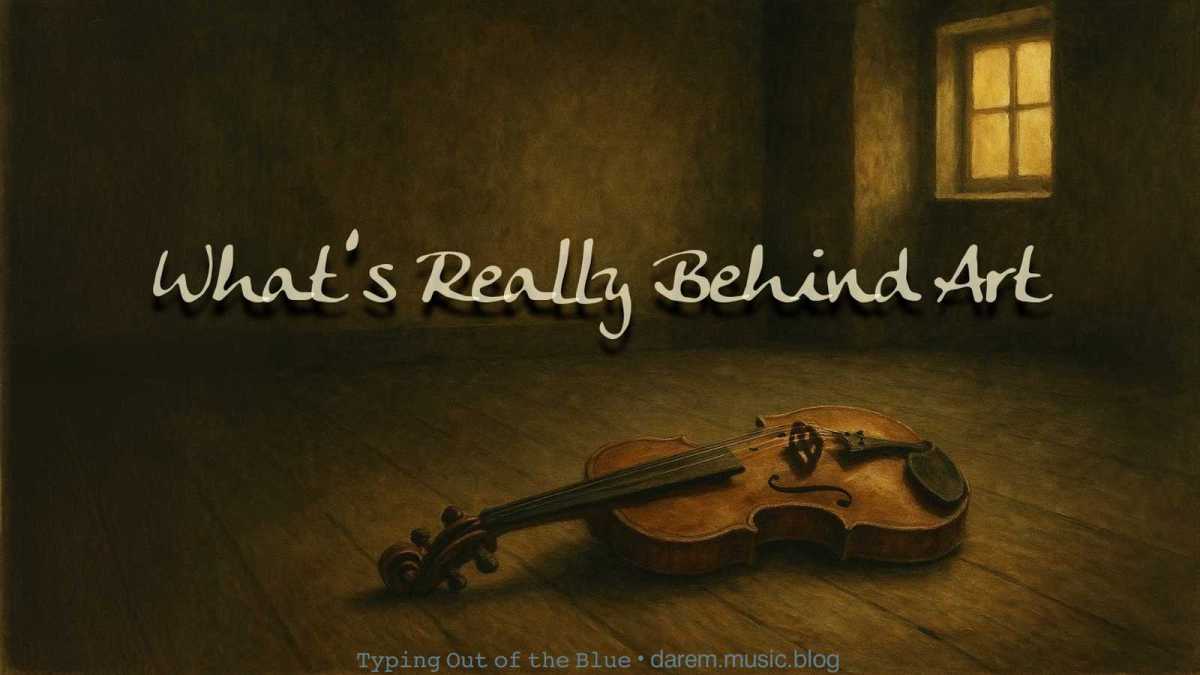
Once upon a time, artists painted until their hands bled and their stomachs starved. Van Gogh, for example, created over 900 paintings yet sold only one during his lifetime—The Red Vineyard—and that sale didn’t even come from him hustling on the streets. It was his brother Theo, an art dealer, who kept trying to place Vincent’s work in galleries. The truth is, Van Gogh wasn’t built for marketing. He wasn’t chasing profit. His art was too raw, too ahead of its time, and the world wasn’t ready.
The same could be said for many others: Schubert wrote over 600 pieces of music but lived and died poor, Beethoven carried more debts than applause. They didn’t treat their gift as merchandise. Their art wasn’t a product to scale—it was a fire that burned whether anyone cared or not.
Back then, when you asked a child:
“What do you want to be when you grow up, and why?” the answers carried soul.
“I want to become a doctor, to heal the sick.”
“I want to become a teacher, to shape young minds.”
Now? The script has changed.
“I want to be like Taylor Swift—rich and famous.”
The why has been lost. The purpose swallowed by the spotlight.
This is what hides behind art today: performance dressed as meaning. Statements crafted for headlines. Activism turned into branding. Music released like products on a shelf.
“Look at me, I sacrificed.” “Look at me, I took a stand.” But when the money comes, the cause they claimed to fight for fades away like icing on a cake.
And here’s the truth:
Real art doesn’t need a press release. Real art doesn’t have to tell you it’s profound. It simply exists, unpolished, burning, inconvenient, alive. You can feel it in your gut before you can explain it with words. That’s the difference between something created to be consumed and something created because it had to be born.
So the question is no longer “What do you want to be when you grow up?”
The real question is: “Why do you create at all?”
Because the spotlight dies when the crowd disappears. But fire, real fire, keeps burning even when no one is watching.
ᴛʸᵖⁱⁿᵍ ᴏᵘᵗ ᵒᶠ ᵗʰᵉ ʙˡᵘᵉ ᵈᵃʳᵉᵐ ᵐᵘˢⁱᶜ ᵇˡᵒᵍ