Walking Toward People

A leader who chose the road over comfort, showing how real service reaches people where they are.

In the 1500s, some people moved quietly, but when they did, entire systems began to shift. Turibius was one of them.

He started as a lawyer in Spain. Then suddenly, he was appointed Archbishop of Lima and quickly ordained for the role. No long preparation. No slow rise. Just a calling that came fast.

Instead of settling into a desk, he chose the road. He traveled across Peru—through mountains, forests, and long distances—to reach people who had little access to the Church. Presence mattered more than comfort.

He learned local languages so people could truly understand, not just hear.

At a time when power could easily become control, we see a different way. Service over status. People over position. We are reminded that what we are given is meant to be lived, not kept.

His way stayed simple.

We can be used even while still growing. Sometimes, growth happens while we are already walking the path. And whatever role we are given—even if it comes suddenly—it becomes real in how we show up for others.

Saint Turibius of Mogrovejo did more than lead. He walked toward people. And we are invited to do the same.

Let’s keep learning the saints’ way—day by day.

⌨ ᴛʸᵖⁱⁿᵍ ᴏᵘᵗ ᵒᶠ ᵗʰᵉ ʙˡᵘᵉ ᵈᵃʳᵉᵐ ᵐᵘˢⁱᶜ ᵇˡᵒᵍ

People•Darem Placer

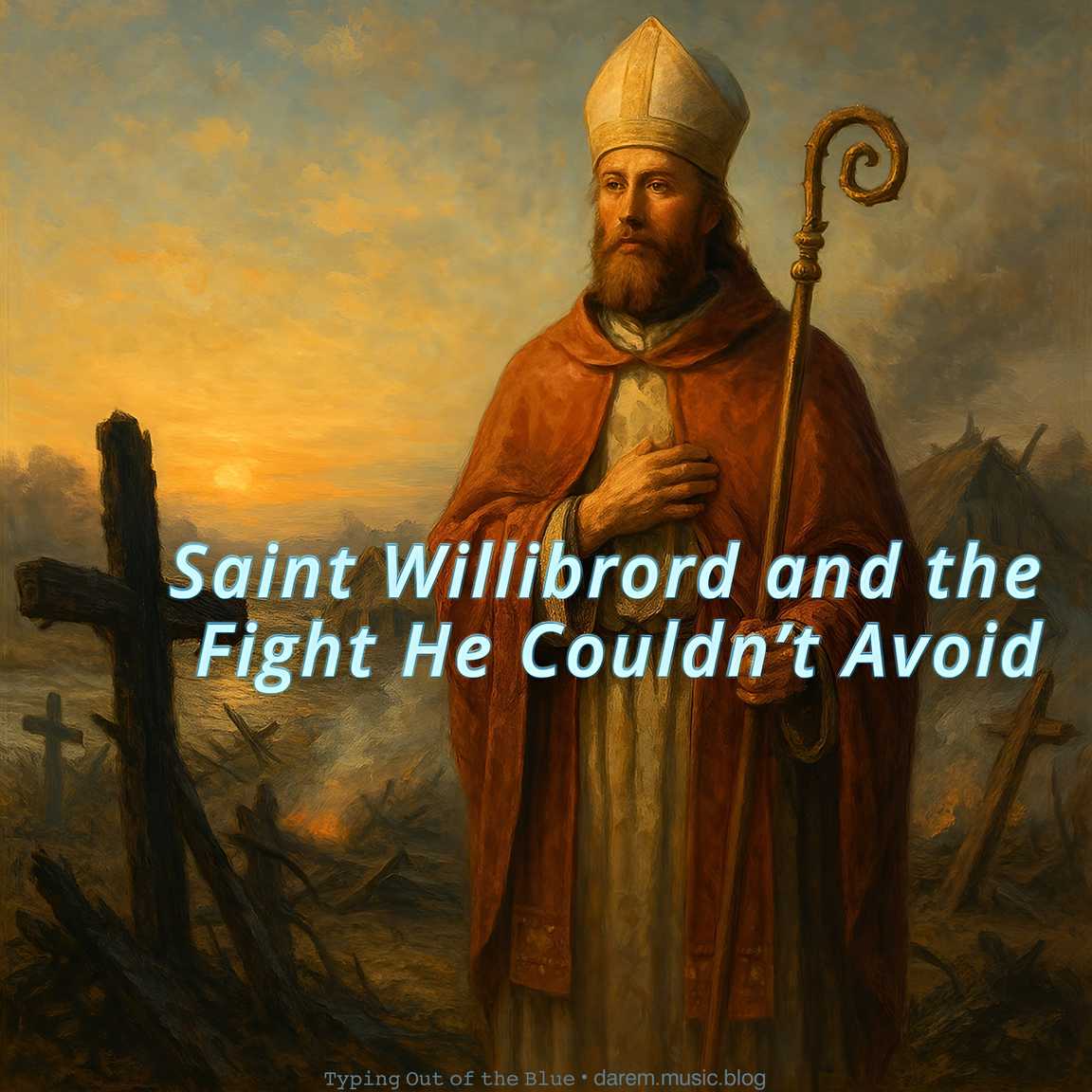
Saint Willibrord and the Fight He Couldn’t Avoid

From England to Frisia, he spread faith with courage, facing the king’s resistance and rebuilding in hope.

Around the year 690 AD, Bishop Willibrord went from Northumbria, England to Frisia, a region that is now part of the Netherlands, with a clear goal—to share his faith and bring peace to people who didn’t know Christ yet. For some time, his mission grew fast. He built churches, trained new believers, and found support from the Frankish leaders, the rulers of a powerful early kingdom that covered parts of today’s France, Belgium, and western Germany, who ruled nearby.

But not everyone welcomed him. The Frisian ruler, King Radbod, saw his work as a threat. He believed Bishop Willibrord’s faith would destroy their old ways and weaken his rule. So he started fighting back. Churches were burned, monks were forced to leave, and years of work disappeared almost overnight.

Bishop Willibrord could have given up, but he didn’t. He went back to Echternach, in what is now Luxembourg, where he rebuilt quietly. He continued teaching, sending new missionaries, and preparing for better times. After King Radbod’s death, Bishop Willibrord returned and started again—patiently, without anger, and with stronger faith than before.

He learned that doing what’s right doesn’t always mean winning fast. Sometimes, you lose everything first before the truth takes root.

That’s what made Saint Willibrord’s mission stand out. He didn’t fight with hate or pride. He fought with patience, prayer, and endurance. And in the end, his quiet strength changed a nation.

⌨ ᴛʸᵖⁱⁿᵍ ᴏᵘᵗ ᵒᶠ ᵗʰᵉ ʙˡᵘᵉ ᵈᵃʳᵉᵐ ᵐᵘˢⁱᶜ ᵇˡᵒᵍ
Traces of courage, silence, and sacrifice—this is Saints.

Listen on Apple Music, Apple Music Classical, and YouTube Music