He turned prayer into healing—writing hope on paper so small, yet strong enough to carry faith through centuries.
Saint Frei Galvão and the Healing of Trust
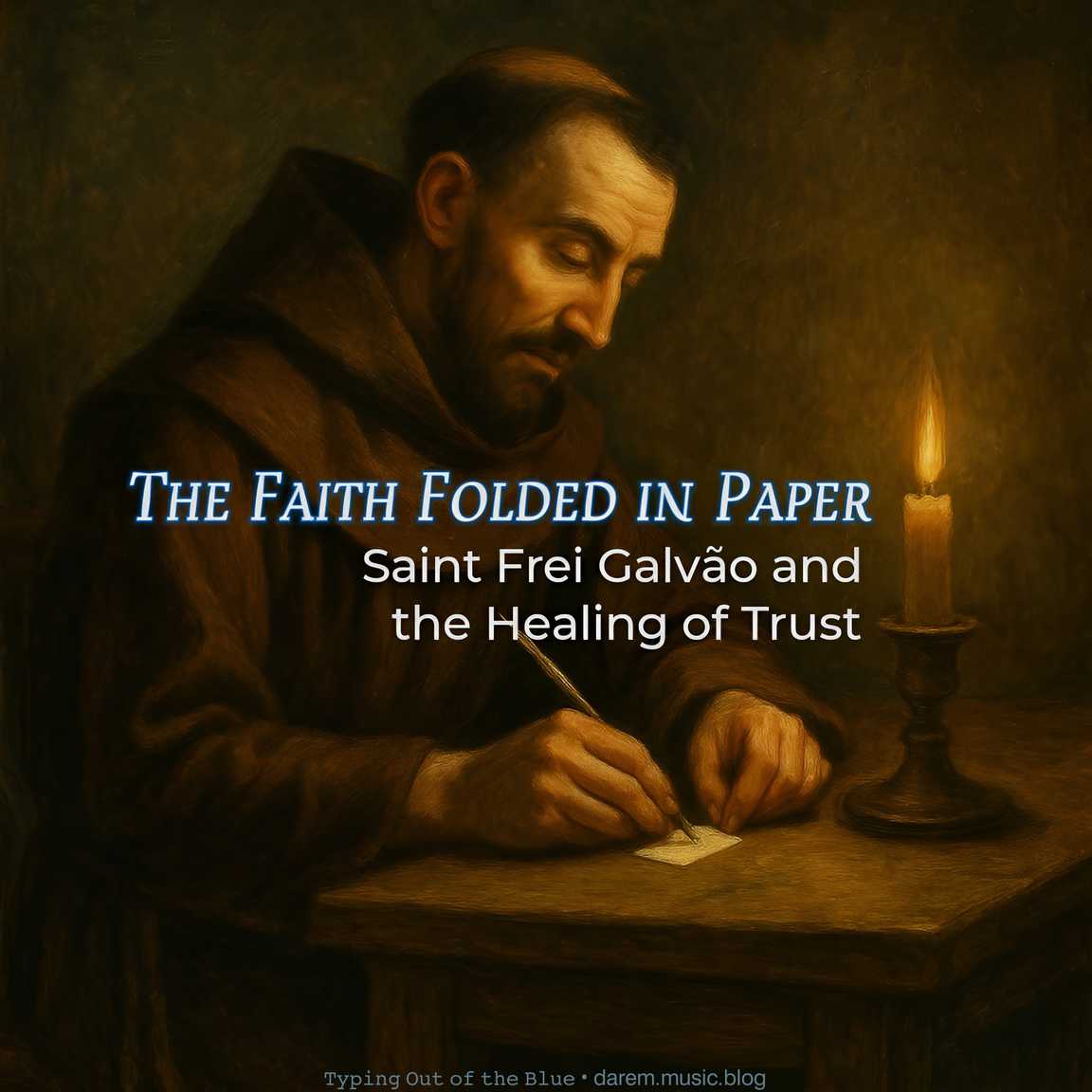
In the late 1700s, in the quiet streets of São Paulo, Brazil, a Franciscan friar named Frei Galvão found a humble way to turn faith into healing. One day, a woman in unbearable pain came to him for help. With no medicine to give, he prayed, wrote a short Latin invocation to the Virgin Mary on a slip of paper barely the size of a fingernail, folded it three times—Father, Son, and Holy Spirit—and handed it to her. She swallowed the tiny paper, and soon, she recovered.
The prayer read:
“Post partum, Virgo, inviolata permansisti. Dei Genitrix, intercede pro nobis.”
(“After childbirth, O Virgin, you remained undefiled. Mother of God, intercede for us.”)
Word spread through Brazil. People came from everywhere asking for those folded prayers. They weren’t charms or cures; they were signs of faith—small enough to hold, strong enough to heal.
Centuries later, the tradition still lives. At the Monastery of the Light in São Paulo, nuns still write the same prayer, fold it the same way, and give it to anyone who asks. The miracle isn’t in the paper—it’s in the trust that something so small can reach Heaven, just as Saint Frei Galvão once believed.
A US pilot tried to bomb San Giovanni Rotondo in 1943. What he saw in the sky stopped him—and saved the town forever.
Padre Pio in the Sky
It was 1943, the height of World War II. Italy was still tied to the Axis powers, and American planes flew across the skies with orders to bomb key sites. During one mission over San Giovanni Rotondo, a US pilot lined up his target. But as he prepared to release his load, something impossible happened.
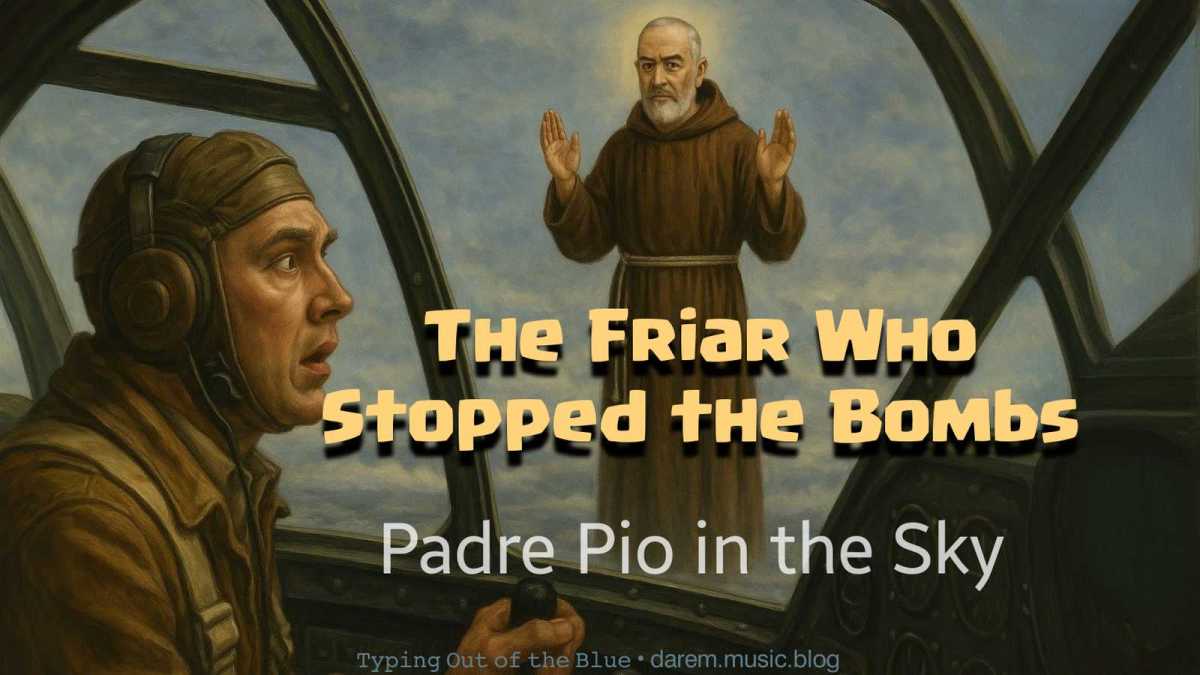
A figure appeared in the air. It was a friar—floating as if standing on solid ground, hands raised in a gesture that stopped the pilot cold. He wore a simple brown Capuchin robe, his beard framing a calm but steady face. No wings, no halo, no glowing lights. Just a friar, ordinary in appearance yet blocking the path. The pilot pressed the controls, but nothing happened. Shaken, he turned his plane back.
The Pilot’s Return
When the fighting in Italy ended in 1944 and the country had switched sides, American soldiers were stationed there. Many heard locals talk about a friar who had saved their town. Curious, that same US pilot visited the monastery at San Giovanni Rotondo. The moment he saw Padre Pio, he stopped in his tracks. It was the same friar he had seen in the sky.
The Face of Padre Pio
Padre Pio, born Francesco Forgione, was a Capuchin friar and Catholic priest, known for his prayer, the stigmata he carried for fifty years, and countless miracle stories. Thin and bearded, in the simple brown robe of his order, he looked nothing like a soldier. Yet to those pilots, he was stronger than their bombs.
(Today he is venerated as Saint Pius of Pietrelcina, canonized in 2002, though the world still remembers him simply as Padre Pio.)
The Mystery of Bilocation
The story became one of the most famous accounts of bilocation—a person appearing in two places at the same time. Padre Pio never left his monastery, yet pilots swore they saw him above their planes. And the fact remains: San Giovanni Rotondo was never bombed during the war.
Testimonies That Spread
That pilot was not the only one. Other airmen gave similar reports of a friar blocking their missions. Friars in the monastery recalled visits from soldiers who confirmed what they had seen. For the townspeople, there was no doubt: Padre Pio’s prayers had protected them.
Belief and the Church
The Catholic Church does not demand anyone to believe this story. Unlike Padre Pio’s stigmata—well documented and studied—these events remain testimony passed on in faith. Still, the Church has never dismissed them as nonsense. They remain part of his legacy, open for reflection.
For some, it’s only a legend. For others, it’s a miracle. Either way, Padre Pio’s life shows how prayer can protect and how faith can be stronger than war.