When Not Eating Is Actually Good

Not eating isn’t always bad. Sometimes your body just needs a pause, not another plate. Learn how fasting really works.

We all grew up thinking we had to eat three times a day—breakfast, lunch, dinner. Miss one and people said you’d get weak. But that rule didn’t come from nature. Someone just made it up, and everyone went with it. Nobody even asked why.

Back in the 1700s, people simply ate when they got hungry—plain and real. Farmers ate after long days—hunters after a good catch. No clocks yet. No rules. Then came the 1800s—factories took over, and the bell started running people’s lives more than hunger did.

By the 1900s, cereal brands joined the game. They said breakfast was “the most important meal of the day.” Catchy line. Sold boxes. It wasn’t really about health—just a smart business move.

These days, science says your body doesn’t actually care much about time. When you give it space—what people now call intermittent fasting—your system fixes itself. Clears leftovers, steadies sugar, makes room to breathe again. It’s not starving. It’s letting your body catch up.

Still, fasting’s not for everyone. If your stomach’s weak or you’ve got ulcers or low sugar, don’t push it. Hunger pain isn’t strength—it’s your body saying, “slow down a bit.”

Try it this way:

• Not hungry? Then skip it. You’re fine.

• Hungry? Eat. Don’t wait too long, or you’ll attack the food like it’s been missing all day.

• Keep water near. Sip when you want.

• Eat real food when you do.

• Rest, too. If you barely slept or your head’s too tired, fasting won’t do you any good.

Skipping a meal once in a while’s okay. Your body could still be working on the food from earlier. You don’t need to chase every rule people made up. Just listen.

⌨ ᴛʸᵖⁱⁿᵍ ᴏᵘᵗ ᵒᶠ ᵗʰᵉ ʙˡᵘᵉ ᵈᵃʳᵉᵐ ᵐᵘˢⁱᶜ ᵇˡᵒᵍ
Pros of Hyperthyroidism (and Why It’s Not All Good)

Hyperthyroidism might seem like an energy boost at first—but that speed can come with a heavy price later on.

Health Insight

Hyperthyroidism is generally seen as a medical condition requiring treatment, but there are a few effects that some people might perceive as advantages—at least temporarily or from a certain point of view. However, to be clear: these aren’t truly good things overall, just possible short-term effects that might appear before the condition worsens or causes complications.

Here are some “pros” that are sometimes experienced:

Faster Metabolism

Many people with hyperthyroidism burn calories more quickly, which can result in weight loss without any effort.

More Energy (At First)

Some individuals feel more alert, active, or mentally sharp, especially during the early stages—like they’re always “on” or “wired.”

Sharper Mental Clarity (Early Stages)

Some people find their thoughts flowing faster and ideas forming more easily—almost like being “in the zone.”

Increased Heat Tolerance

Some people feel warmer and sweat more easily—this can be a “plus” in cold environments or climates.

Improved Skin (Short Term)

Increased blood flow might give a temporary rosy glow or smoother skin, though this effect usually doesn’t last long.

Possible Mood Boost (Temporarily)

Some experience euphoria, confidence, or an intense drive—almost like a natural high. But this can later turn into anxiety or irritability.

Enhanced Reflexes

The body’s heightened alertness can make reactions a bit quicker, sometimes improving coordination or physical response time.

Elevated Motivation

An overactive metabolism can also increase motivation and drive—making people more eager to move, work, or create.

Better Circulation

Increased blood flow can make hands and feet feel warmer and even reduce cold-induced numbness.

Easier Wake-ups

People often feel less sluggish in the morning since their system’s already running fast—even before coffee.

Important Note

These benefits are typically temporary and often lead to negative effects over time, such as muscle loss, heart strain, anxiety, or bone issues. So even if there seem to be “benefits,” hyperthyroidism remains a serious medical condition that requires monitoring and proper treatment.

Closing Thought:
Balance—not speed—is what keeps the body truly in tune. ⚖️

Personal Note:
I’m not a doctor. I’m just trying to understand and accept my own hyperthyroidism in a positive way—and maybe help others see it that way too.

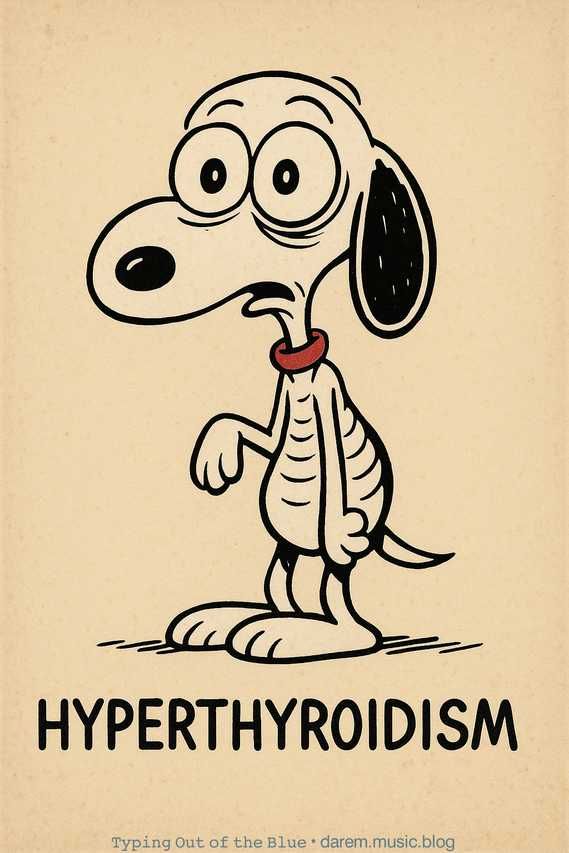
Snoopy, according to AI—when your thyroid throws a rock concert.

Sometimes, healing isn’t about slowing down—it’s about finding rhythm again—like Returning to an Old Beginning.

Returning to an Old Beginning • Darem Placer
The Piano Outside includes Returning to an Old Beginning

Listen on Apple Music and YouTube Music