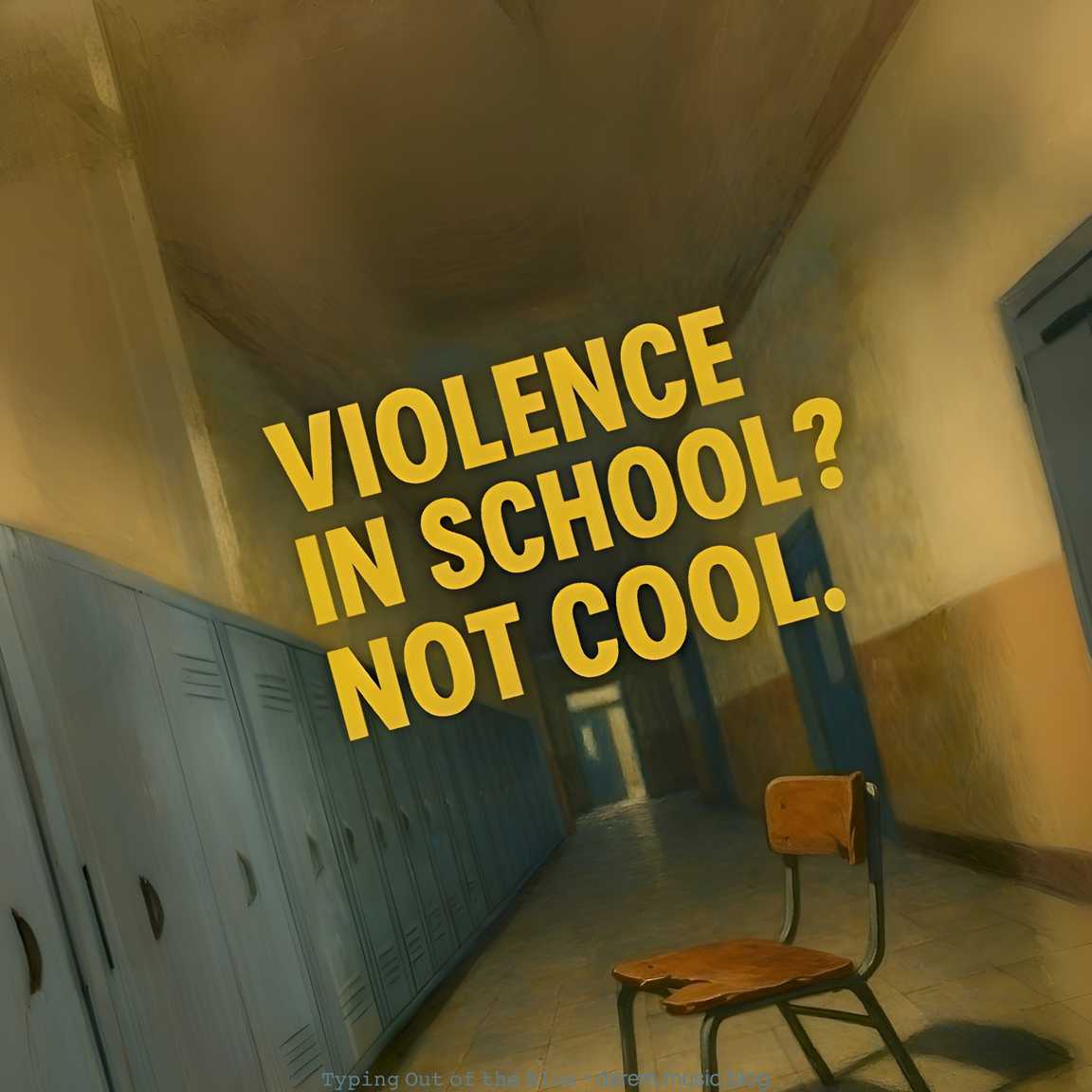
Violence in School? Not Cool.

Even one violent act can silence laughter for years—choose the kind of strength that lets others feel safe again.

Violence in school isn’t bravery. It isn’t power. And it’s definitely not cool. It’s a cowardly act that destroys lives, breaks trust, and leaves scars that don’t fade—on victims, classmates, teachers, and families alike.

The Real Aftermath

When violence strikes on campus, the headlines may fade fast—but the pain and fear linger for years. Friends lose friends. Teachers lose students. Families lose loved ones.

And for anyone thinking of doing it—whatever “cool” dramatic moment you’re imagining doesn’t happen. What follows is shock, disgust, and rejection from everyone. Instead of respect, you get isolation. Instead of power, you lose control of your life. You don’t become a legend—you fall into a living hell of your own making.

Violence Doesn’t Earn Respect

Hurting others isn’t strength—it’s weakness. Real strength is walking away from a fight, asking for help when things get heavy, or standing up to protect someone being hurt. That’s what earns real trust and genuine respect—not weapons, not threats.

How to Stop Yourself Before It’s Too Late

If you ever feel like you’re about to snap—angry, hopeless, or ready to hurt someone—here’s how to pull back:

Pause and breathe – Step away to cool down.

Talk to someone you trust – A friend, teacher, counselor, or family member. Even if you think they won’t get it, speaking up helps.

Write it down – Putting your thoughts into words makes them easier to control.

Find a safe outlet – Sports, exercise, music, art—anything that releases energy without hurting anyone.

Ask for help early – Saying “I’m not okay” is a brave step toward real solutions.

Hurting others won’t heal what’s hurting you. It might make you feel powerful for a moment, but you’ll lose everything that could have made your life better. Real strength is solving problems without destroying anyone—including yourself.

How the Whole School Can Help Prevent Violence

Safe spaces for everyone – So students can speak up when something feels wrong.

Early action on conflicts – Resolve issues before they grow.

Campus watch culture – Look out for each other and recognize warning signs early.

Highlight everyday heroes – Celebrate kindness, courage, and compassion as what’s truly cool.

Choose the Path That Builds, Not Breaks

Every student leaves a mark—through actions, words, and choices. You can be remembered for making others feel safe, valued, and supported—or throw it all away in a single act of harm.

You always have another choice. No matter how heavy things feel, there are people and ways to help you carry it. Talk to someone who listens without judgment. Your life can still go somewhere good—and you deserve to see that day come.

Violence will never be cool. Protecting your classmates, friends, and community will always be.

ᴛʸᵖⁱⁿᵍ ᴏᵘᵗ ᵒᶠ ᵗʰᵉ ʙˡᵘᵉ ᵈᵃʳᵉᵐ ᵐᵘˢⁱᶜ ᵇˡᵒᵍ

Forgiving the Tortured Torturer’s Torturer • Darem Placer

Listen on Apple Music and Apple Music Classical
Without Without includes Forgiving the Tortured Torturer’s Torturer

Stress: Cause, Effect, or Just an Excuse?

Stress isn’t always the villain. Could it be the way we deal with it that decides whether it poisons us or fuels us?

We blame stress for almost everything—headaches, sleepless nights, even getting sick. But is stress really the culprit behind poor health? Or is it just a word we throw around whenever life feels heavy?

Stress is tricky. On one side, it’s mental—worries, deadlines, pressure. But the mind doesn’t keep it locked inside. The body answers back: faster heartbeat, tense muscles, restless nights. Science calls it cortisol, fight-or-flight, and when it lingers too long, that’s when health cracks.

Stress Begins in the Mind

Two people can face the same challenge, but react differently:
One stays calm: “I can handle this.”
Another panics:This is the end!”

That perception flips the switch. The brain decides if something is a threat, then calls the body to arms—heart races, muscles tighten, cortisol floods the system. Over time, constant worry leads to anxiety, mood swings, mental fog, and sleepless nights. Stress is psychological, but it never stays only in the head—it drags the body with it.

Cortisol: Ally or Enemy?

Cortisol isn’t evil by itself. It’s the body’s stress hormone, designed to help us react fast, stay alert, and keep energy flowing. Without it, we can’t survive. But if cortisol stays high every day, it wears us down—weakening immunity, draining energy, and messing with the heart.

The flip side? Having cortisol that’s too low is also dangerous. Cortisol regulates blood pressure, metabolism, and even the sleep–wake cycle. When it drops too much, people can face extreme fatigue, dizziness, low blood pressure, and in severe cases, life-threatening adrenal problems.

Fire and Firefighter

Think of it this way:
• Stress = the fire.
• Cortisol = the firefighter.

When a fire breaks out, the firefighter comes rushing in—essential, lifesaving. But if there’s fire every single day, the firefighter never gets to rest. Too much water flooding the house becomes part of the damage too. That’s what chronic stress does with cortisol.

Turning Down the Alarm

The key isn’t to erase cortisol, but to balance it. Sleep resets it. Exercise tames it. Prayer, deep breathing, and time with friends lower it. Even laughter and a walk outdoors can bring it down. The goal is control: let cortisol rise when needed, then let it fall back.

Beyond Stress Alone

Even so, we can’t blame everything on stress. Genes, habits, food, and even the air we breathe all play their part. Stress might pull some strings, but it’s not the puppet master of everything.

So maybe the real question is this: Is stress the villain, or is it how we deal with it? Can stress be fuel instead of poison?

At the end, two roads stand open:
• Let stress dictate your health.
Or face it, manage it, and turn it into strength.

Which one will you take?

𝚃𝚢𝚙𝚒𝚗𝚐 𝙾𝚞𝚝 𝚘𝚏 𝚝𝚑𝚎 𝙱𝚕𝚞𝚎 • 𝖽𝖺𝗋𝖾𝗆.𝗆𝗎𝗌𝗂𝖼.𝖻𝗅𝗈𝗀