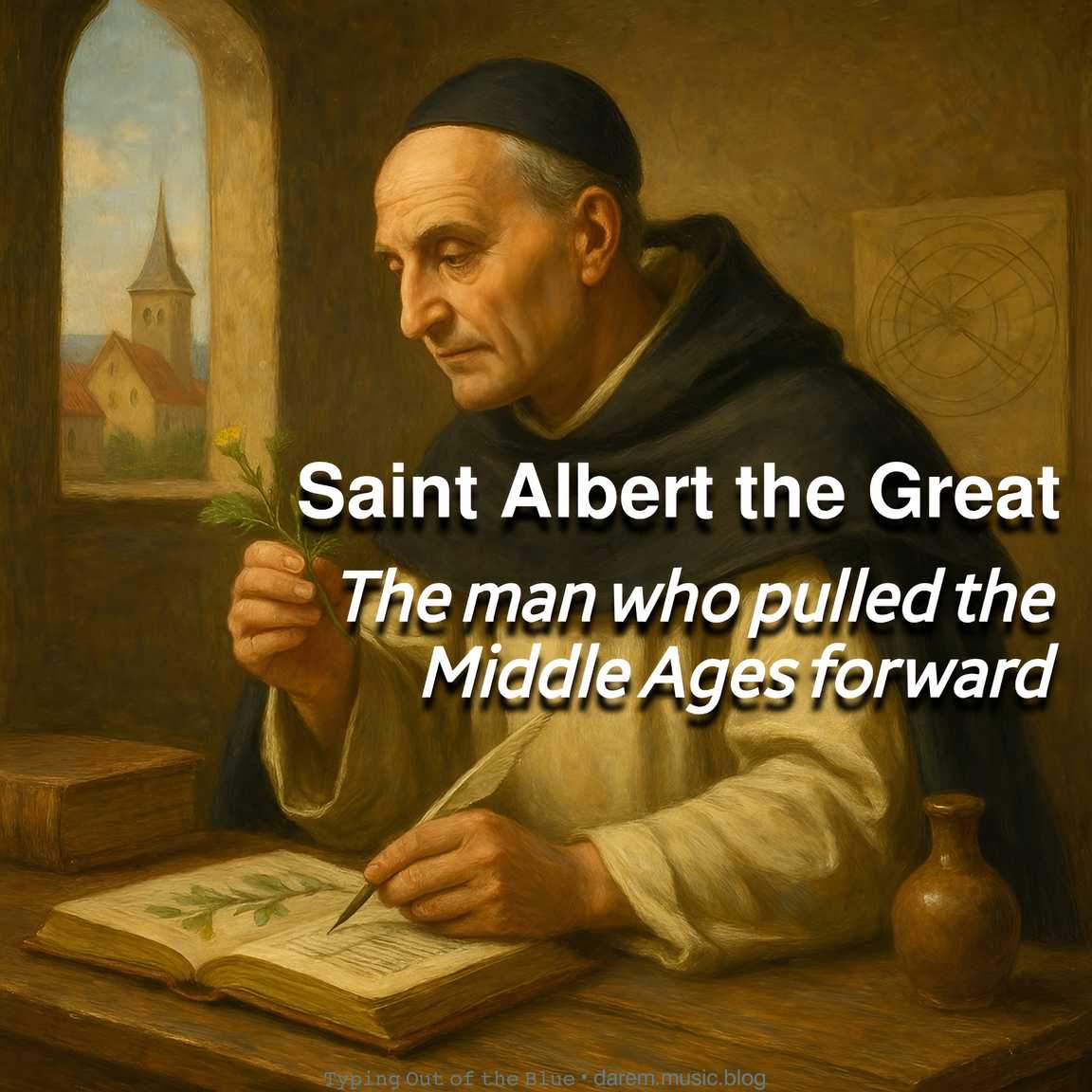
Albert was born around 1200 in Lauingen, Germany, at a time when many people were scared of anything new. Studying nature felt risky. Even looking at the stars too closely could make others think something was wrong. Most wanted a simple faith with no questions.
Albert didn’t accept that.
He read Aristotle even when people said it was unsafe. He believed the world should be studied because God made it. While others argued about small ideas, Albert observed plants, animals, rocks, and light. He wrote some of the first clear science books in Europe.
He didn’t become a scientist by chance—he helped the Church understand that learning about nature was not against faith.
Then he met Thomas Aquinas, a quiet student many people underestimated. Albert defended him and said they only laughed because they didn’t understand him. Without Albert, Thomas might not have become one of the Church’s greatest thinkers.
When Albert became a bishop, he stayed simple. He walked instead of riding. He listened more than he spoke. He solved problems with calm and patience, even when the people he helped didn’t know how wise he was.
When he grew old and his memory weakened, he still tried to teach. Students said there were moments when his old brightness returned, then faded again. But he never stopped trying.
He died in 1280, but his work shaped the future. Science, careful thinking, honest study—Albert helped make those possible inside the Church.
People call him the patron of scientists. But really, he was the patron of anyone brave enough to think, to ask questions, and to trust that real truth will always lead back to God.
⌨ ᴛʸᵖⁱⁿᵍ ᴏᵘᵗ ᵒᶠ ᵗʰᵉ ʙˡᵘᵉ ᵈᵃʳᵉᵐ ᵐᵘˢⁱᶜ ᵇˡᵒᵍ
Listen on Apple Music, Apple Music Classical, and YouTube Music
