Jazz Was Never Just Music

Jazz moves, responds, and brings people together in ways words cannot.

Jazz isn’t just a genre.
It’s a way of playing.

Born in New Orleans in the early 1900s, it grew out of African American communities mixing blues, ragtime, and spirituals. But the real DNA of jazz is this:

• Improvisation — not fixed. Musicians create on the spot 
• Swing feel — a loose, flowing rhythm with its own pulse 
• Conversation — instruments respond to each other, not just follow notes 

Think of it this way:

In classical music, you read the script. 
In jazz, you become the script as you play.

That’s why players like Louis Armstrong changed everything. He didn’t just play notes. He told stories with them.

Jazz doesn’t stay inside the page.

A melody can shift mid-play. A rhythm can bend. Musicians listen, respond, and build something in real time. It’s not about perfection. It’s about presence.

The word itself came before the music. Early slang used “jazz” to mean energy, spirit, something alive. When this sound appeared, the name fit. It wasn’t chosen like a label. It landed like a reaction.

And because of how it works, jazz doesn’t stay on stage.

In schools, it becomes a way to teach creativity and discipline. Students learn structure, then learn when to step outside it. They listen more. They adjust. They take turns leading and supporting.

In history, it carries the weight of a struggle. Jazz came from people who pushed for dignity in a world that tried to limit them. That part never left the music.

Across countries, it becomes a shared language. Musicians who don’t speak the same words can still play together and understand each other. No translation needed.

In local spaces, it builds community. Small gigs, quiet rooms, open sessions. People gather not to compete, but to connect.

It keeps people listening, responding, and moving together—even without a script—and in its own way, it helps move something bigger forward toward shared goals we’re still learning to reach together.

⌨ ᴛʸᵖⁱⁿᵍ ᴏᵘᵗ ᵒᶠ ᵗʰᵉ ʙˡᵘᵉ ᵈᵃʳᵉᵐ ᵐᵘˢⁱᶜ ᵇˡᵒᵍ

Darem Placer on YouTube Music

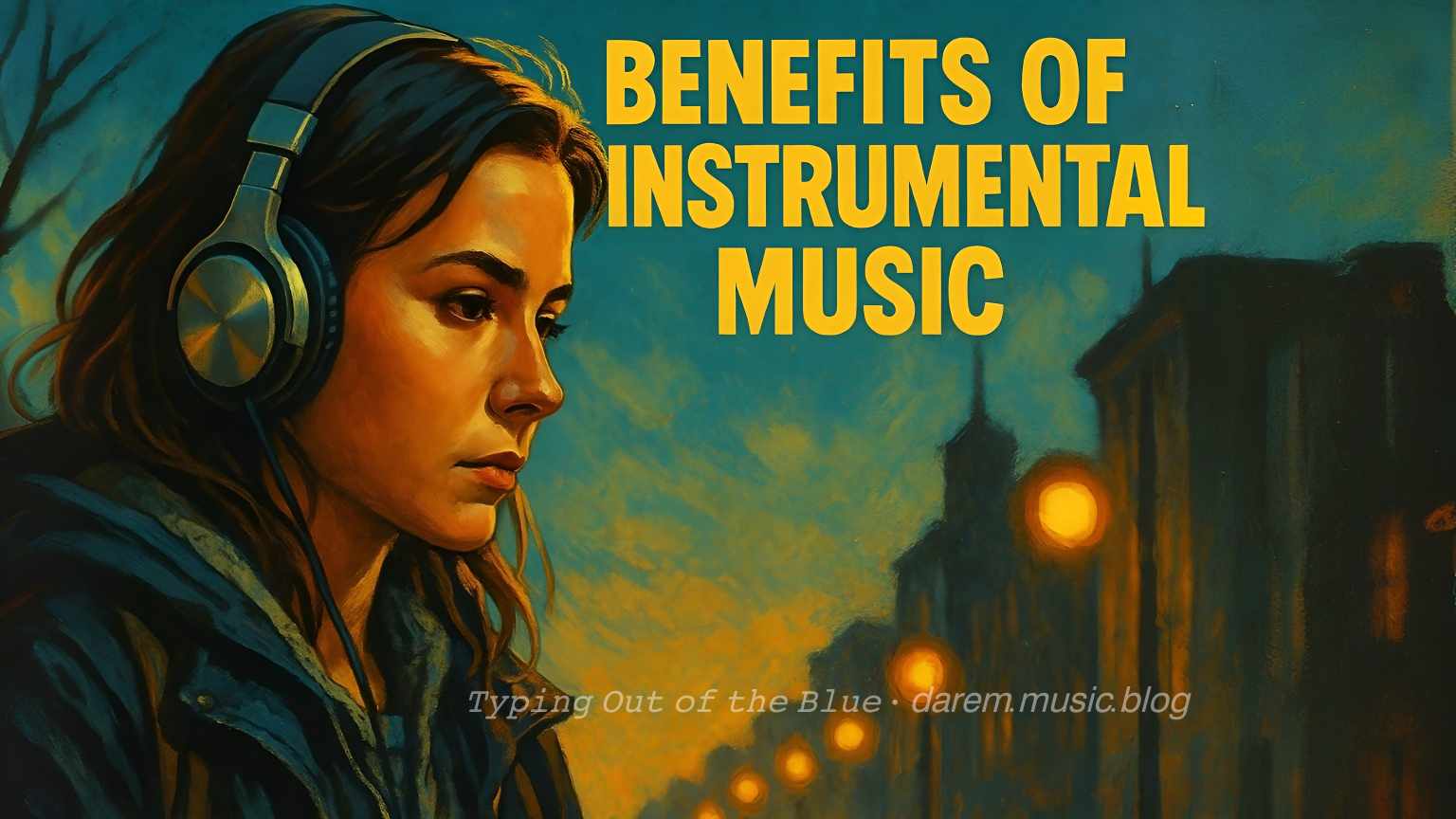
Benefits of Instrumental Music

Instrumental music sharpens focus, eases stress, and sparks creativity—all while keeping the purity of sound.

Picture this: it’s late, coffee’s gone cold, and you’re staring at a screen trying to focus. Or maybe it’s morning, and you just want a calm start before the day’s noise kicks in. You hit play, and the room fills with music—no words, just sound. Suddenly, you can breathe, think, and move better. That’s the quiet power of instrumental music.

1. Focus and Concentration

Instrumental music sharpens focus and sustains concentration, making it a go-to for studying, working, or relaxing.

2. Emotional Impact

Without lyrics, it lets listeners connect personally, offering calming, inspiring, or uplifting experiences.

3. Freedom from Negative Messages

No words means no conflicting or harmful messages—just pure sound.

4. Versatility

From classical and jazz to ambient and electronic, instrumental music adapts to any mood or setting.

5. Added Warmth Through Wordless Vocals

Some tracks use humming, ooohs, or aaahs as textures. Others use vocables—short, wordless syllables like “la la la” or “na na na.” They add warmth and rhythm while keeping the purity of instrumental music.

6. Stress Relief

Slow and gentle instrumentals, especially classical or ambient, ease tension, lower stress, and help the body relax.

7. Creativity Boost

Without the pull of lyrics, instrumental music leaves space for ideas to flow—perfect for artists, writers, and innovators.

Tempo Matters Too

The effect also depends on tempo. Slow tracks calm and relax, while upbeat ones energize and motivate. Choosing the right pace makes the benefits even stronger.

The choice between instrumental and lyrical music depends on your preferences and the context in which you’re listening. If instrumental music helps you feel more at peace or aligns better with your values, it can be a great choice.

Karaoke track while working or studying? Nah. You’ll just end up singing along and not finishing your work.

𝚃𝚢𝚙𝚒𝚗𝚐 𝙾𝚞𝚝 𝚘𝚏 𝚝𝚑𝚎 𝙱𝚕𝚞𝚎 • 𝖽𝖺𝗋𝖾𝗆.𝗆𝗎𝗌𝗂𝖼.𝖻𝗅𝗈𝗀

The Undoing Interlude • Darem Placer
An electronic instrumental album in 432 Hz centered on self-reflection and navigating the sentimental journey of contemplating life’s missed opportunities.

Listen on Apple Music, Apple Music Classical, and YouTube Music