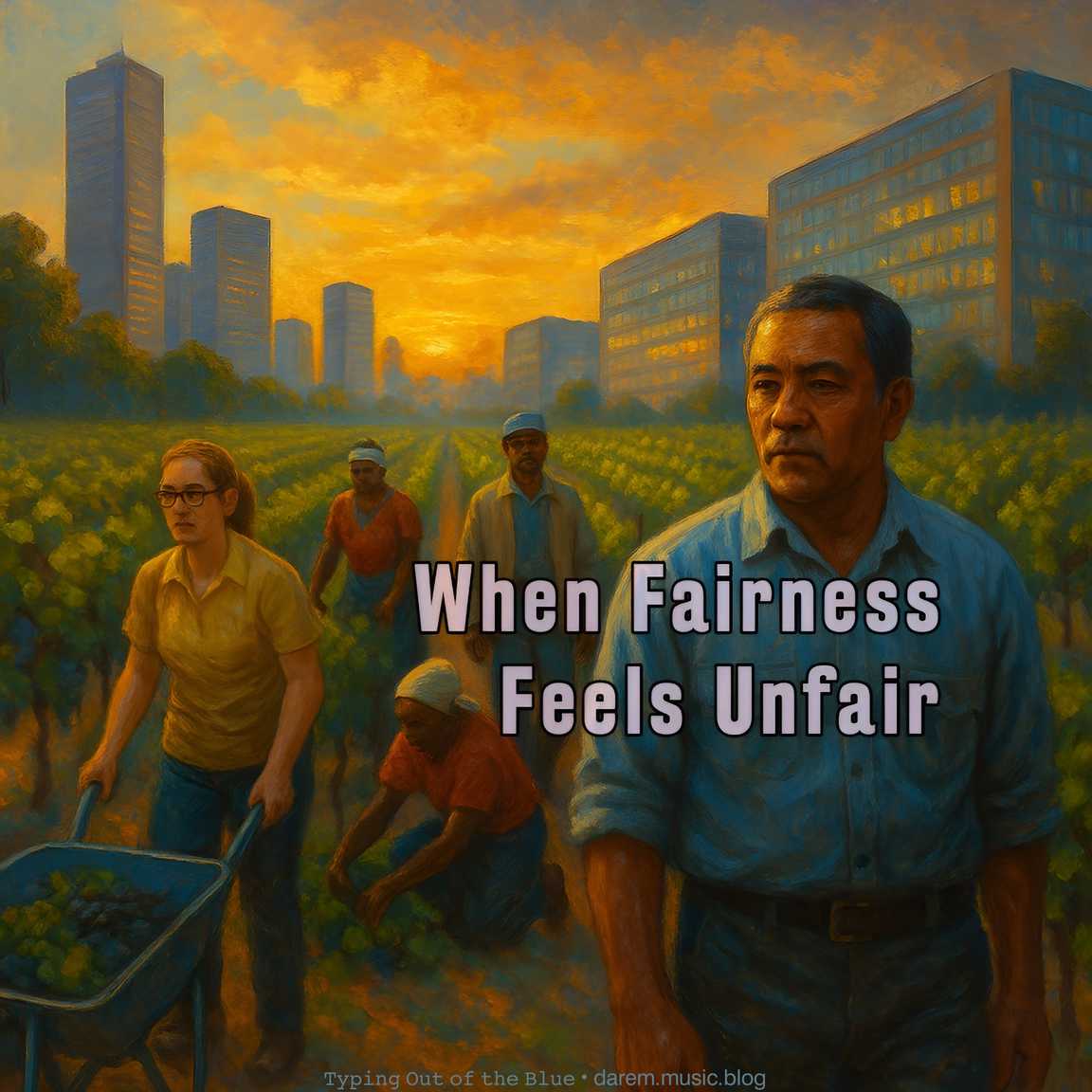
When Fairness Feels Unfair

When fairness starts to feel forced, maybe the problem isn’t justice—it’s who’s defining it.

You ever notice how some people seem to get the same reward even when they do less? In school. At work. In life. You give your whole day, someone else shows up late—and somehow, you both end up equal.

It feels wrong, right? But it’s not new. Jesus once told that exact story—the parable of the workers in the vineyard. The early workers complained, “Unfair! We worked longer.” But the owner said, “Didn’t I pay you what we agreed on?”

It makes you think—maybe God’s fairness isn’t about equal hours, but equal love. Still, when people use that story to excuse unfair systems, they miss the whole point. Because the owner in the parable kept his promise. There was honesty. There was mercy. In real life, some “vineyard owners” break both—they call it fairness, but it’s just control wearing kindness as a mask.

So maybe the lesson isn’t about who deserves more. It’s about keeping your word. And remembering that mercy without truth isn’t grace—it’s just noise.

Sometimes the holiest thing you can do is stay silent—not out of fear, but because you’ve seen how people twist fairness into favor.

⌨ ᴛʸᵖⁱⁿᵍ ᴏᵘᵗ ᵒᶠ ᵗʰᵉ ʙˡᵘᵉ ᵈᵃʳᵉᵐ ᵐᵘˢⁱᶜ ᵇˡᵒᵍ
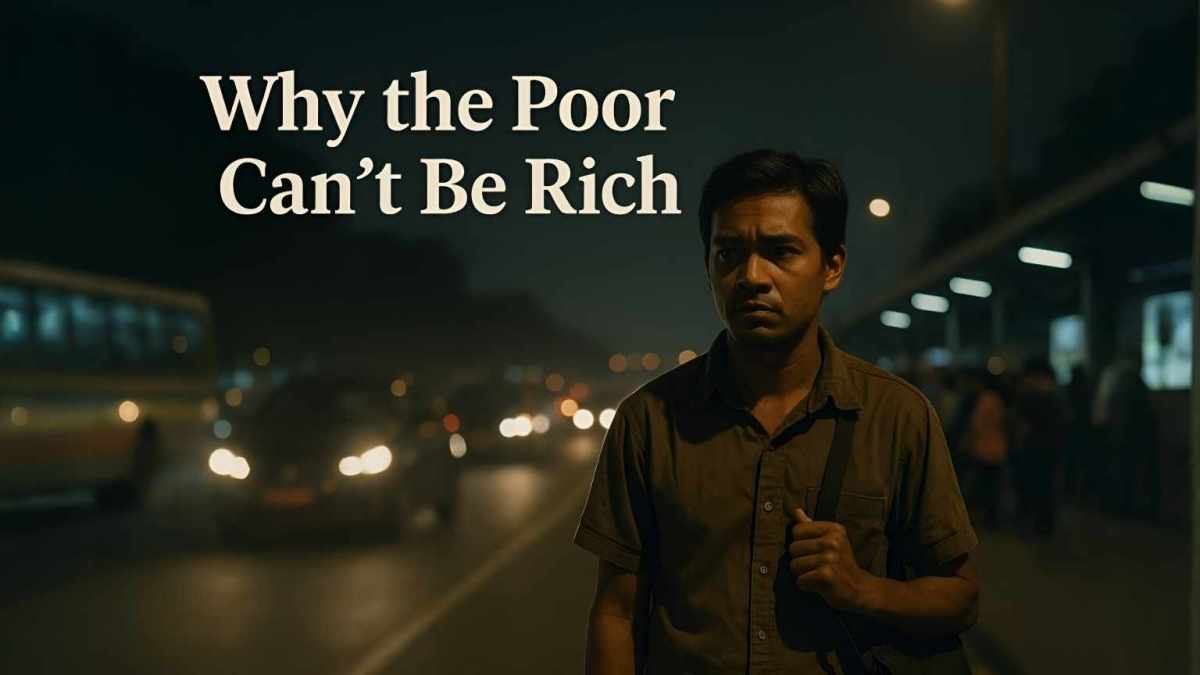
Why the Poor Can’t Be Rich

The poor face a road filled with risks—unsafe commutes, crushing debt from sickness, and broken dreams after graduation when AI takes the jobs meant for them. Meanwhile, the rich move ahead with ease. But in the end, true wealth isn’t money. It’s kindness, dignity, and the choice to do good even when life is unfair.

The world isn’t fair. Some are born with gold in their hands, others with nothing but weight to carry. For the poor, the road to wealth feels almost impossible.

Why? Because everything costs. Education, tools, opportunities. The rich have shortcuts and something to fall back on. The poor take the long road with no room for mistakes. Even technology, which was supposed to make things equal, now carries a price tag made for the wealthy. Internet, tuition, gadgets, transportation—all with a price tag. A new smartphone or laptop? Out of reach for most.

That’s why many feel stuck. Commuting every day on unsafe public transport—exposed to hold-ups, snatchers, and pickpockets—while the rich sit behind the wheel, safe inside their cars. Getting sick means falling into debt, while the rich recover in comfort. And for a poor student whose family scraped every peso to send him to school, graduation should mean hope. Instead, he steps out and finds the dream job already gone—replaced by AI. For the rich, that’s nothing. Some of them even own the companies behind it.

But money alone doesn’t guarantee peace, and poverty doesn’t erase every chance at joy. Life isn’t measured only by what sits in the bank—it’s measured by meaning.

Real wealth is in choosing good, showing kindness, holding on to dignity even when the world tries to take it away. A poor man who could steal but chooses not to, a man who shares his last piece of bread, a student who helps a classmate, a worker who refuses to cheat—they carry a richness no vault can contain.

So maybe the real question isn’t “why can’t the poor be rich?” but “what kind of wealth actually lasts?” Because money fades. Kindness doesn’t.

𝚃𝚢𝚙𝚒𝚗𝚐 𝙾𝚞𝚝 𝚘𝚏 𝚝𝚑𝚎 𝙱𝚕𝚞𝚎
𝚍𝚊𝚛𝚎𝚖𝚙𝚕𝚊𝚌𝚎𝚛.𝚌𝚘𝚖