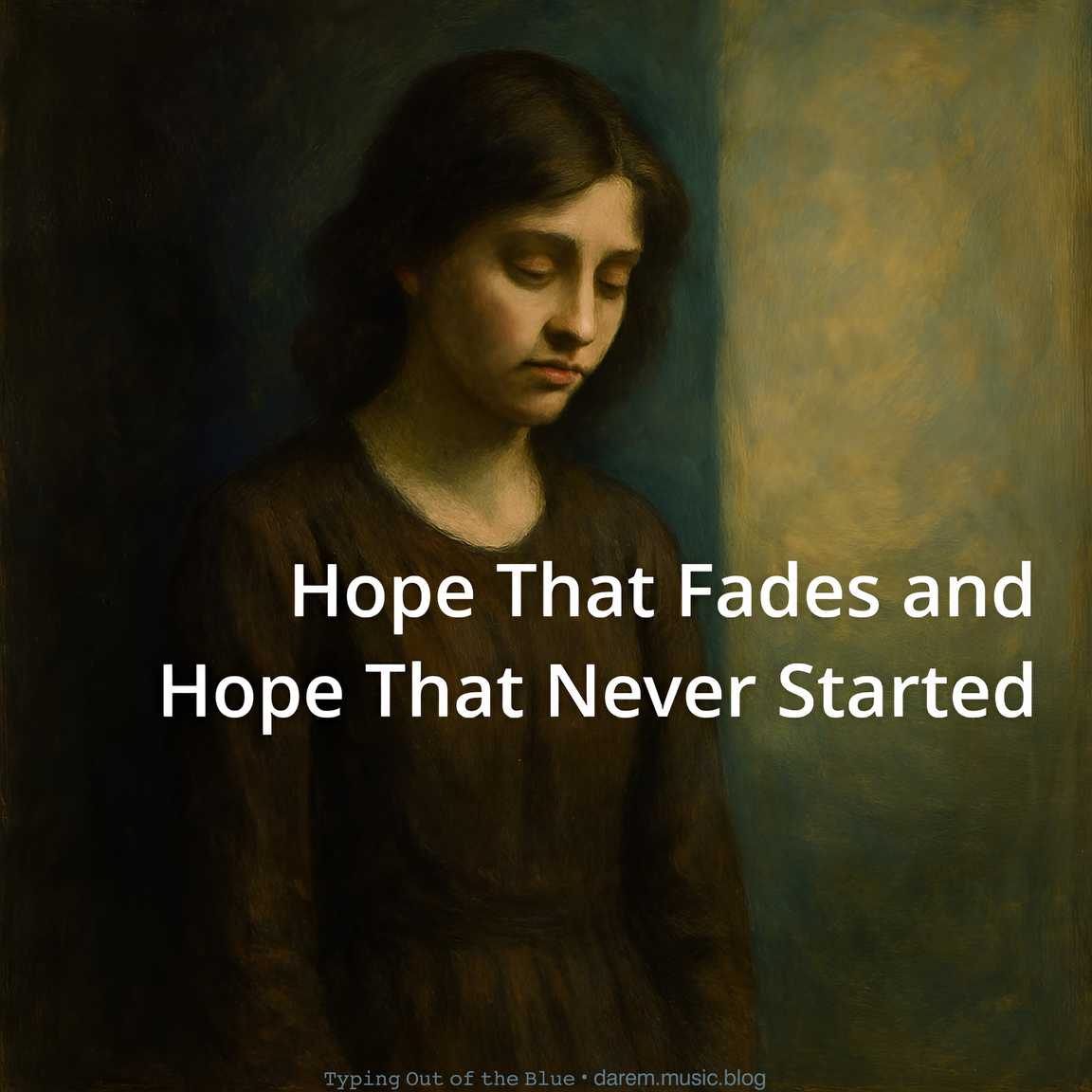
Hope That Fades and Hope That Never Started

Why losing hope is not the same as never learning how to hope at all.

People often think hope works the same for everyone.
But it doesn’t.
There’s a clear difference between a person who lost hope and a person who never hoped at all.

When someone loses hope

A person who loses hope is not empty.
They once looked forward to something.
They once believed in a better moment.
They know how hope feels because they lived it before.

That memory stays.
It becomes a small spark inside, even if life feels heavy.
It can come back with patience, rest, and the right time.

When someone never hoped

This is a different story.
Some people grow up with comfort, stability, or a life that never pushed them to reach for anything bigger.
They did not learn how to wait for something.
They did not learn how to want something deeply.

Their life is not meaningless, but it can feel flat.
So when life finally shakes them, they struggle more.
They don’t have a “hope reflex.”
They don’t know what to hold on to because they never had to hold on before.

Hope is not magic.
It is a skill built through real experience.

• If you lost hope, you can still find your way back because you know what hope feels like.

• If you never hoped, you can still learn—but you start from zero.

Both paths are human.
Both can move forward.
Hope does not disappear.
It waits for the moment when someone chooses to reach again—
and maybe even chooses to Hold.


Hold • Darem Placer

The story doesn’t end here. Hold is just one voice in a larger echo. The rest of the album, Indelible Imprint of Reverberation, carries the same journey—tracks that fade, linger, rise, and wait. Soon on Bandcamp.

⌨ ᴛʸᵖⁱⁿᵍ ᴏᵘᵗ ᵒᶠ ᵗʰᵉ ʙˡᵘᵉ ᵈᵃʳᵉᵐ ᵐᵘˢⁱᶜ ᵇˡᵒᵍ
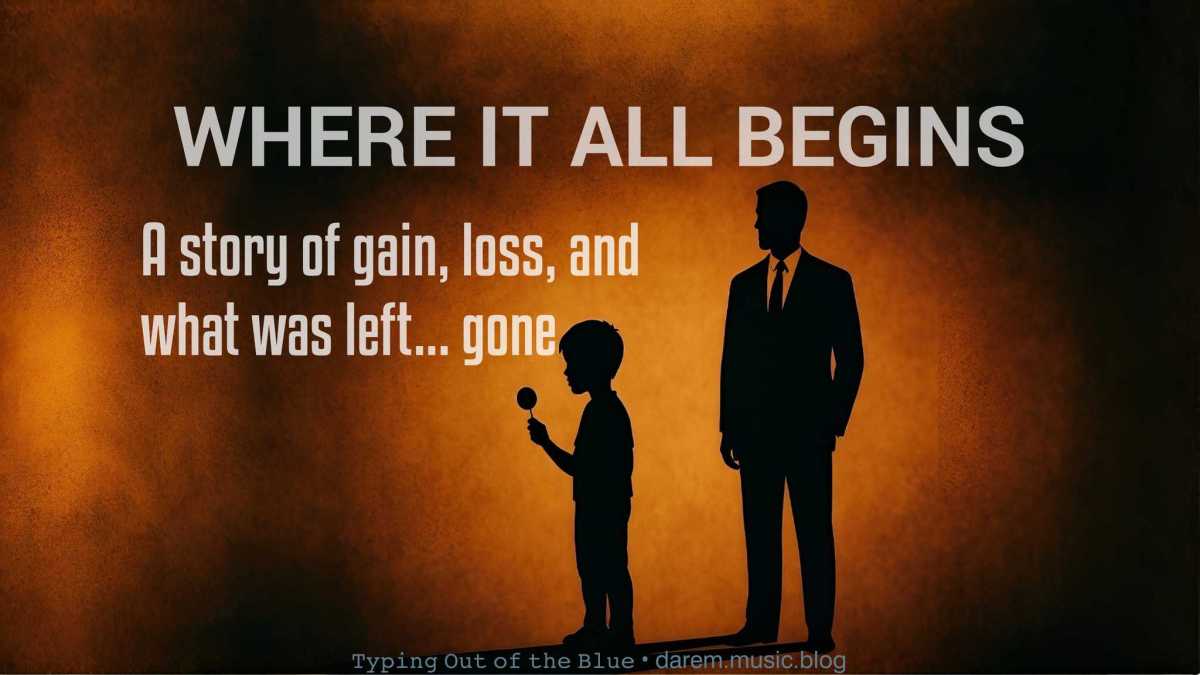
Where It All Begins

From small excuses to shiny success, the climb looks bright—until a quiet question asks what was lost along the way.

A story of gain, loss, and what was left… gone

It’s fine, it’s just a small thing.”

That’s the excuse that comes first. A boy skips his chores and hides behind those words. Nobody says anything, so he learns that wrong can be covered if you say the right line.

That same excuse follows him to school. During tests, he leans over to copy answers. It feels clever, almost harmless, and soon it becomes routine. Passing without effort feels better than failing with honesty.

As he grows older, the pattern deepens. At the store, he pockets the extra coins a cashier mistakenly gives. He calls it luck, treats himself to a snack, and laughs with friends about his “free win.” By then, small wins already felt normal.

College only makes the habit stronger. He takes credit for group projects, and when teachers praise him, he learns that charm and words can get him further than hard work. Truth becomes optional—applause feels better.

When he gets his first job, it doesn’t feel much different from school. He hides errors, takes credit he hasn’t earned, and signs off papers without caring what they mean. By being polite and pleasing, he fools his boss into thinking he’s efficient, but to him it’s just the same easy trick he has always used—do less, look good, and get away with it.

With the same tricks, he climbs higher. He starts a business, bends rules, charges more than he should, and calls it strategy. Money flows, his house grows larger, the cars get shinier, and people admire his success. They call him smart, even blessed.

But when the noise fades and the doors close, a quiet question follows him: what good is all this gain if, somewhere along the way, he has traded the one thing he could never afford to lose—

gone.

Gone • Darem Placer
Indelible Imprint of Reverberation includes Gone

ᴛʸᵖⁱⁿᵍ ᴏᵘᵗ ᵒᶠ ᵗʰᵉ ʙˡᵘᵉ ᵈᵃʳᵉᵐ ᵐᵘˢⁱᶜ ᵇˡᵒᵍ