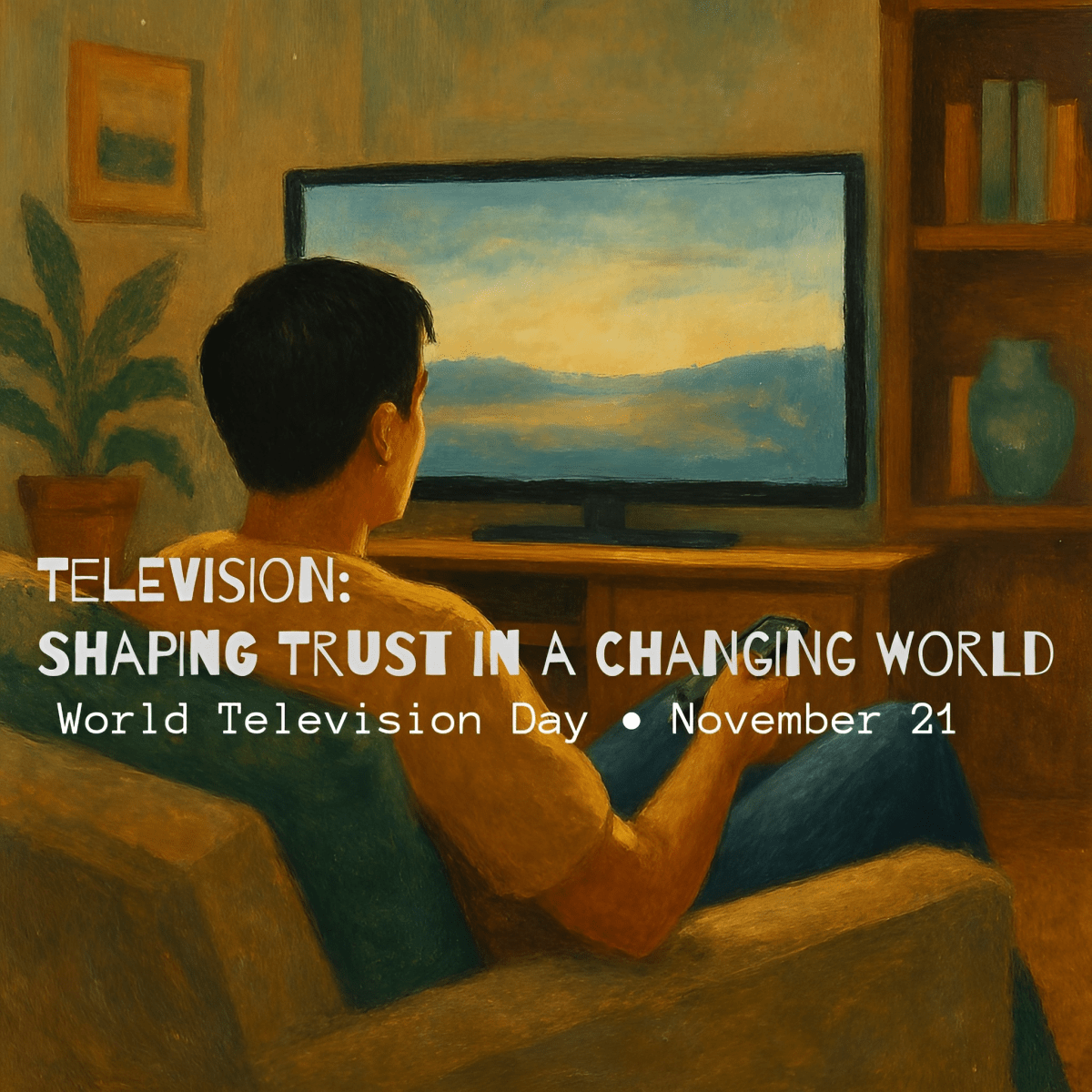
Television: Shaping Trust in a Changing World

Television still matters when it chooses clarity over noise, giving people a steady place to understand a changing world.

World Television Day • November 21

Television isn’t the loud center of the home anymore, but it remains a steady place people look to when they need clarity. In a time when information moves too fast and half-stories spread everywhere, TV stands out by slowing things down and showing the fuller picture.

Trust is shaped in the way news is checked before it airs. In documentaries built with careful research. In programs that choose real stories instead of quick attention grabs. TV earns trust when it chooses accuracy over noise and context over shortcuts.

Even with phones and streaming taking over daily life, one thing hasn’t changed—people still want honesty. They want something reliable to help them understand a world that keeps shifting.

When stories are made with honesty, television becomes more than entertainment. It becomes a steady guide as the world continues to change.

Z Particle (When In Doubt, Play Electrically) • Darem Placer

Listen on Apple Music and YouTube Music

Play Acoustically Amid the Noise and the Haste includes Z Particle  (When In Doubt, Play Electrically)

⌨ ᴛʸᵖⁱⁿᵍ ᴏᵘᵗ ᵒᶠ ᵗʰᵉ ʙˡᵘᵉ ᵈᵃʳᵉᵐ ᵐᵘˢⁱᶜ ᵇˡᵒᵍ
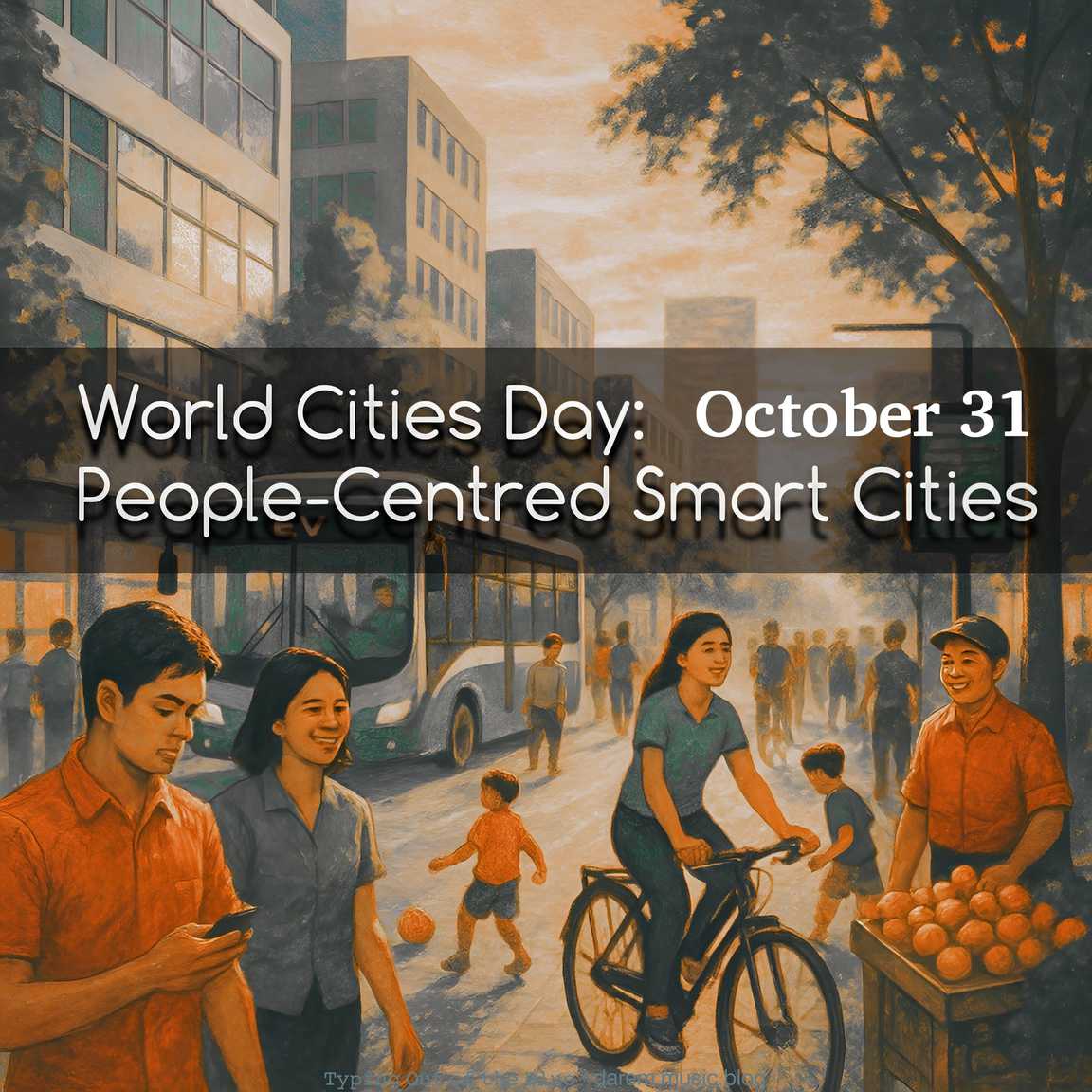
World Cities Day: People-Centred Smart Cities

World Cities Day 2025 calls for smart cities with wise hearts—where tech serves people and progress feels human again.

Every October 31, the world marks World Cities Day — a UN reminder that our fast-growing cities must stay livable, fair, and human. The 2025 theme, “People-Centred Smart Cities,” means technology should lift people up, not take their place.

A city isn’t “smart” just because it has apps and sensors. It’s smart when traffic moves because people cooperate, when data helps families find homes, and when digital access reaches even the forgotten corners. True smartness listens before it upgrades.

Across the world, here’s what that looks like:

• Barcelona (Spain) – Locals use small air- and noise-sensing kits to map real-time street data, proving that citizens can be city scientists.

• Seoul (South Korea) – Online sharing hubs let neighbors lend, swap, and post solutions for daily needs — tech meets community.

• Paris (France) – The “15-Minute City” model keeps work, shops, and schools within walking distance—less stress, more life.

• Bogotá (Colombia) – Open-data buses and bike routes help poorer districts connect to jobs and education.

• Quezon City (Philippines) – Smart-traffic systems and disaster-risk maps are being tested with barangay input, keeping planning close to the ground.

The message is simple: smart cities must have wise hearts. Gadgets may power the system, but compassion keeps it alive. Real progress is when technology doesn’t replace people—it remembers them.

⌨ ᴛʸᵖⁱⁿᵍ ᴏᵘᵗ ᵒᶠ ᵗʰᵉ ʙˡᵘᵉ ᵈᵃʳᵉᵐ ᵐᵘˢⁱᶜ ᵇˡᵒᵍ