
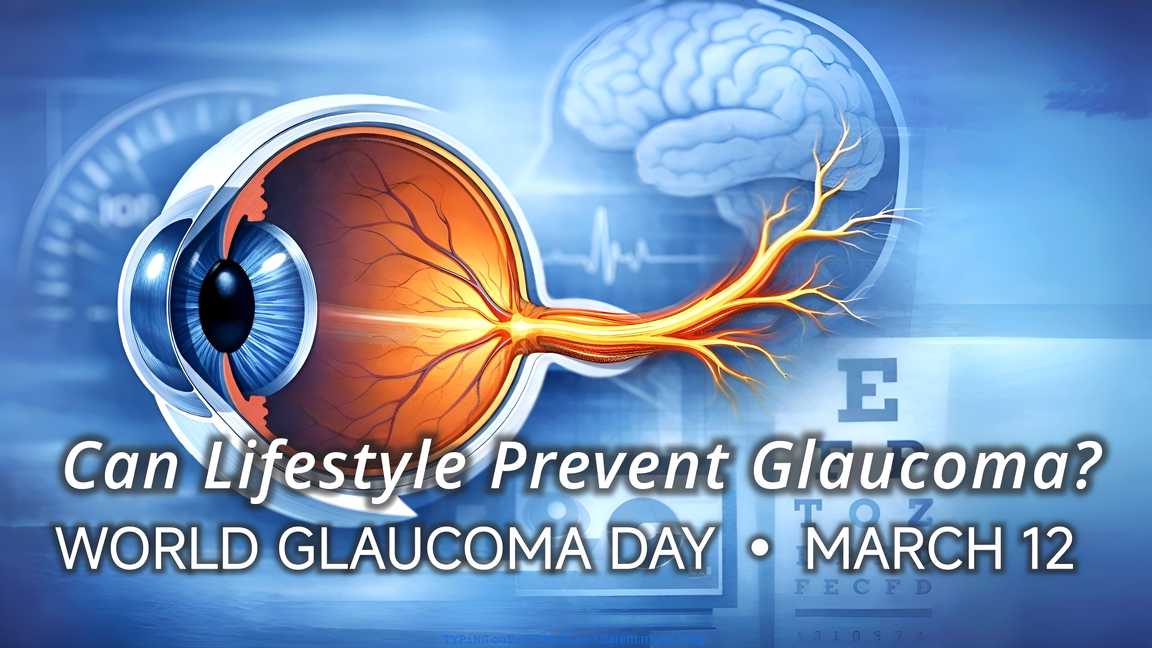
Glaucoma is a group of eye diseases that damage the optic nerve, usually because of increased pressure inside the eye. The optic nerve carries visual information from the eye to the brain, so when it is damaged, vision can slowly be lost. In many cases, the damage begins before a person notices any change in sight.
Every March 12, World Glaucoma Day reminds people of a serious eye disease that often arrives without warning.
What makes glaucoma dangerous is that many people do not notice anything unusual at first. Vision loss can begin quietly, especially in the side vision.
Because of this, many people ask the same question: can glaucoma be prevented through lifestyle or food?
The honest answer is simple. There is no lifestyle or diet that can completely prevent glaucoma.
The disease is strongly connected to factors like age, genetics, and the natural pressure inside the eye. Even people who live very healthy lives can still develop it.
But lifestyle can still help create better conditions for eye health and may lower some risks.
Regular exercise is one example. Moderate physical activity such as walking, cycling, or light workouts can slightly lower eye pressure and improve blood circulation. Good blood flow is important because the optic nerve depends on steady oxygen and nutrients.
Food can also play a small supporting role. Leafy green vegetables such as spinach, lettuce, and kale contain nitrates that help blood circulation. Some studies suggest these vegetables may support eye health and reduce certain glaucoma risks.
Caffeine is another factor worth watching. Large amounts of caffeine may temporarily raise eye pressure in some people. It does not mean coffee must be avoided completely, but moderation helps.
Smoking is also discouraged. Tobacco can damage blood vessels throughout the body, including those that supply the optic nerve.
Even sleeping habits may have an effect. Sleeping face down or putting pressure on the eyes for long periods may increase eye pressure during sleep.
Still, it is important to understand the bigger picture.
Lifestyle can support eye health, but it does not replace detection.
Glaucoma is often called the “silent thief of sight” because vision loss happens slowly and quietly. The brain adjusts, so many people think their eyesight is normal until the damage is already advanced.
That is why awareness days like World Glaucoma Day focus on early care.
Healthy habits help the body. But protecting vision requires something more simple: paying attention to the eyes before they complain.
Sometimes the most powerful protection is not a special diet or a new routine.
It is simply the decision to care about eyesight early enough to keep it.
⌨ ᴛʸᵖⁱⁿᵍ ᴏᵘᵗ ᵒᶠ ᵗʰᵉ ʙˡᵘᵉ ᵈᵃʳᵉᵐ ᵐᵘˢⁱᶜ ᵇˡᵒᵍ
