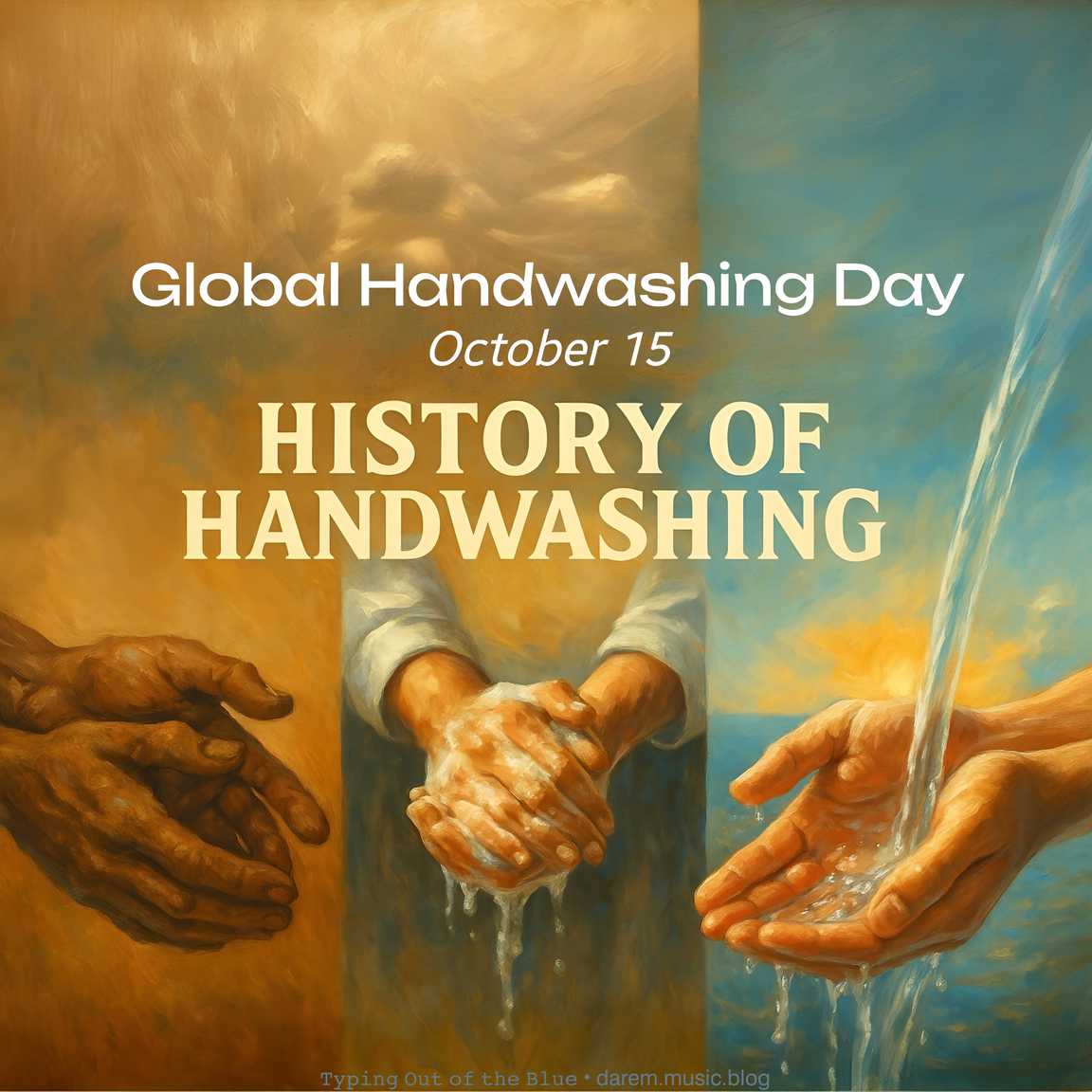
Global Handwashing Day • October 15
Long before science spoke, people already believed in the power of clean hands. Ancient Egyptians, Hebrews, and Hindus washed not to kill germs, but to cleanse the spirit. Every drop of water was a quiet prayer—a sign of respect before touching what mattered.
Then came Ignaz Semmelweis, a doctor who saw what others refused to see. Mothers were dying after childbirth, and he realized the cause—unclean hands. When he made doctors wash before touching patients, deaths fell almost overnight. But his discovery was too simple for a proud world. They mocked him, and he died unheard.
Years later, Louis Pasteur and Robert Koch proved the germ theory—showing that invisible life could destroy visible lives. The truth Semmelweis carried finally found a voice. From that moment, hospitals changed. Soaps became as important as stethoscopes. Hygiene was no longer ritual—it was responsibility.
And as centuries turned, that responsibility grew. From hospitals to schools, from kitchens to crowded streets, washing hands became more than a habit. It became a way of caring—a small act that holds the weight of compassion.
Today, every time water runs through our fingers, it reminds us of that long journey—from ignorance to awareness, from fear to care. Our hands tell the story of humanity’s progress—of how we learn, how we adapt, how we move forward together.
Because the future is, quite literally, at hand. And what we choose to hold—cleanliness, care, kindness—will shape the world we pass on.

⌨ ᴛʸᵖⁱⁿᵍ ᴏᵘᵗ ᵒᶠ ᵗʰᵉ ʙˡᵘᵉ ᵈᵃʳᵉᵐ ᵐᵘˢⁱᶜ ᵇˡᵒᵍ

