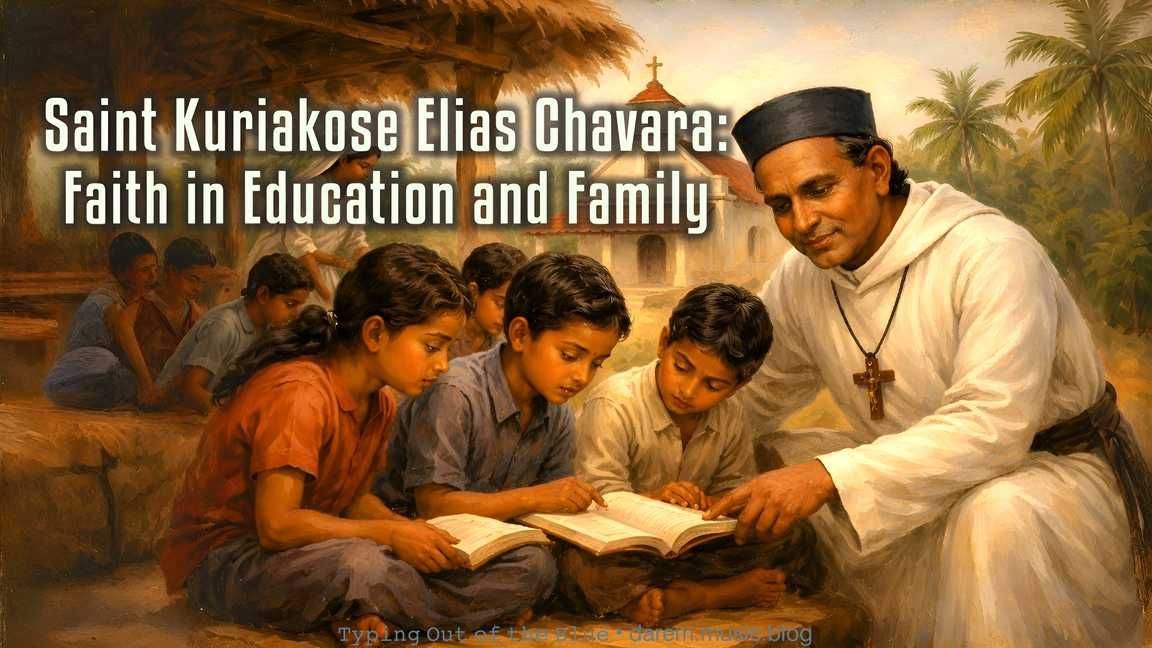
Born in Kerala, India in 1805, Kuriakose Elias Chavara was a priest, educator, writer, and reformer. He believed that faith should touch real life—education, family, and human dignity. Not only the altar. Not only prayers. But also the classroom, the home, and the conscience.
One of his most radical ideas for his time was education for all, especially the poor. He encouraged schools to be attached to churches so everyone could have access to learning. Today it sounds normal. Back then, it changed everything. For him, ignorance kept people trapped, while knowledge set people free.
He founded the Carmelites of Mary Immaculate (CMI), the first indigenous Catholic religious congregation for men in India, and also helped establish a women’s congregation. His vision was not an imported faith, but one rooted in local culture while remaining faithful to the Gospel.
He also cared deeply about family prayer. He believed that if the altar was peaceful but the home was in chaos, something was missing. Because of this, he promoted prayer inside homes, not only inside churches.
His holiness is marked by consistency, courage, and genuine concern for others.
Saint Chavara shows what holiness looks like when it is lived in the world itself—repairing what is broken—one school, one family, one silent act at a time.
⌨ ᴛʸᵖⁱⁿᵍ ᴏᵘᵗ ᵒᶠ ᵗʰᵉ ʙˡᵘᵉ ᵈᵃʳᵉᵐ ᵐᵘˢⁱᶜ ᵇˡᵒᵍ