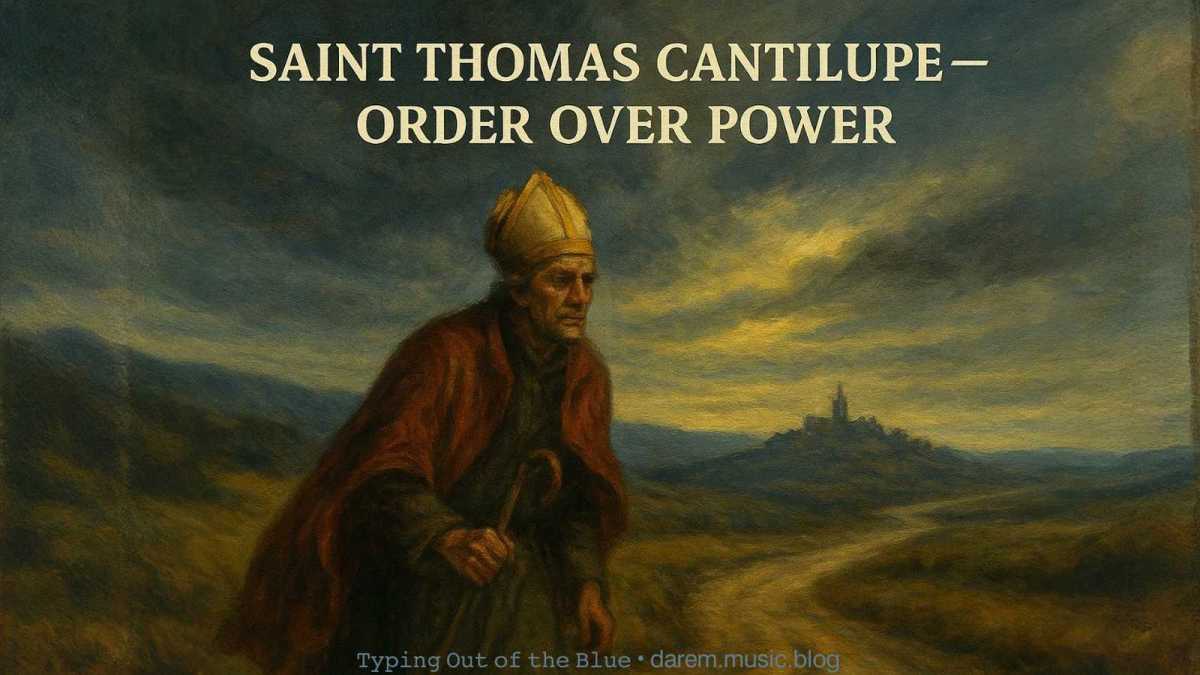
Saint Thomas Cantilupe—Order Over Power

A bishop who clashed with power, carried faith to Rome, and left a legacy that outlasted politics.

Amid the storms of Church politics in the late 1200s, Thomas Cantilupe lived with courage, integrity, humility, and holiness. As Bishop of Hereford, he was called the “father of the poor,” a man of prayer who defended his flock with the same strength he defended the altar.

He believed faith needed discipline, fairness, and order. That conviction brought him into conflict with Archbishop John Peckham of Canterbury. The Archbishop wanted to show his authority, but Bishop Thomas would not allow abuse of power. To him, obedience mattered, but never blind obedience.

When he was excommunicated, many thought his stand was over. But Thomas did not give up. He carried his case straight to Rome, determined that truth must be heard. On the way to Rome, he fell sick and died.

After his death in 1282, miracles began at his tomb in Hereford Cathedral. The people remembered him not as a rebel, but as a man of prayer and courage. In 1320, Pope John XXII declared him a saint—the last Englishman canonized before the Reformation.

His story shows that our fights may feel unfinished, but what stays is how we lived them.

ᴛʸᵖⁱⁿᵍ ᴏᵘᵗ ᵒᶠ ᵗʰᵉ ʙˡᵘᵉ ᵈᵃʳᵉᵐ ᵐᵘˢⁱᶜ ᵇˡᵒᵍ

Traces of courage, silence, and sacrifice—this is Saints.

Listen on Apple Music, Apple Music Classical, and YouTube Music
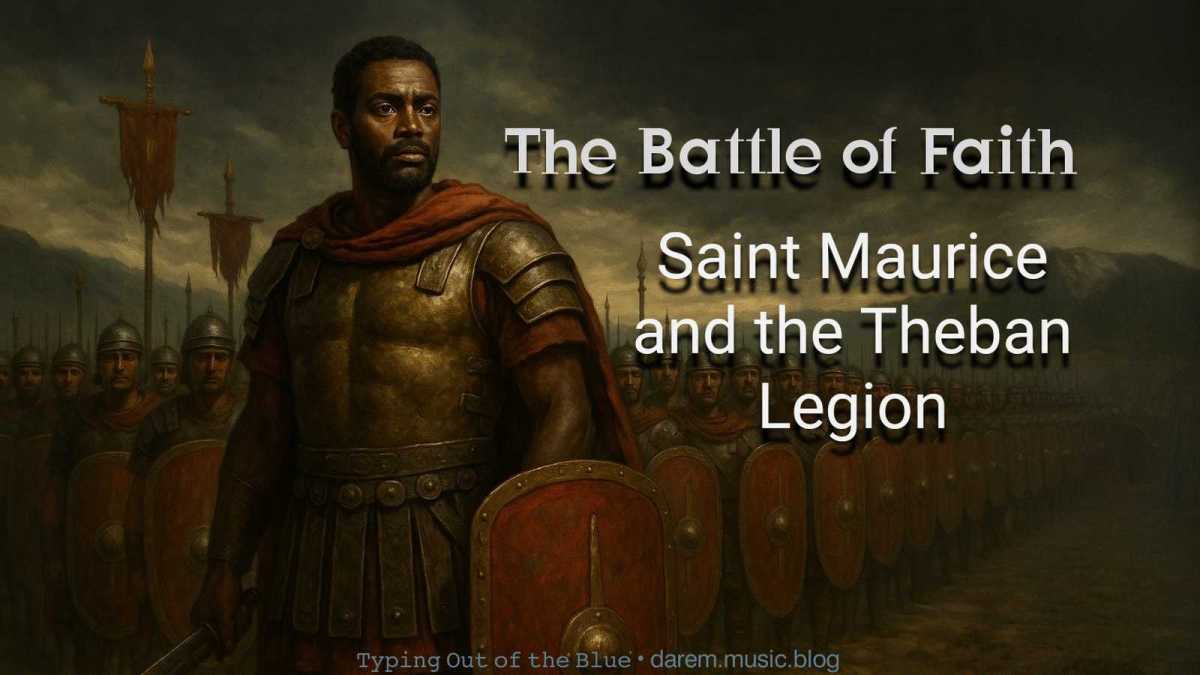
The Battle of Faith

An entire legion faced a choice—loyalty to empire, or loyalty to Christ.

Saint Maurice and the Theban Legion

Most martyrs died alone. Some died in small groups. But this story is different—Maurice stood with more than 6,600 Christian soldiers, all ready to die with him.

This legion was known as the Theban Legion—because they came from Thebes in Egypt. It was one of the strongest units of the Roman army. Around 285 AD, Emperor Maximian sent them to Gaul, in what is now Switzerland.

The emperor gave them two commands:

• join in sacrifices to the Roman gods
• attack fellow Christians in the area

Maurice and his men refused. They declared: We will serve Rome faithfully as soldiers—but we cannot betray Christ.

The emperor was furious. First he ordered “decimation”—every tenth soldier executed. Still, the legion stood firm. A second decimation followed, yet not one gave in. At last, the emperor commanded the execution of them all. More than 6,600 trained warriors chose death together rather than deny their faith.

This was not the ordinary story of a single martyr—it was an entire army laying down their swords. Maurice and the Theban Legion show us that true courage is not counted in victories won, but in the strength to stand together for what is right—even when the world’s sword is raised against you.

Maurice was honored with the name Saint Maurice—and his Theban Legion is remembered as an army of martyrs whose witness still burns like fire.

ᴛʸᵖⁱⁿᵍ ᴏᵘᵗ ᵒᶠ ᵗʰᵉ ʙˡᵘᵉ ᵈᵃʳᵉᵐ ᵐᵘˢⁱᶜ ᵇˡᵒᵍ

Traces of courage, silence, and sacrifice—this is Saints.

Listen on Apple Music, Apple Music Classical, and YouTube Music