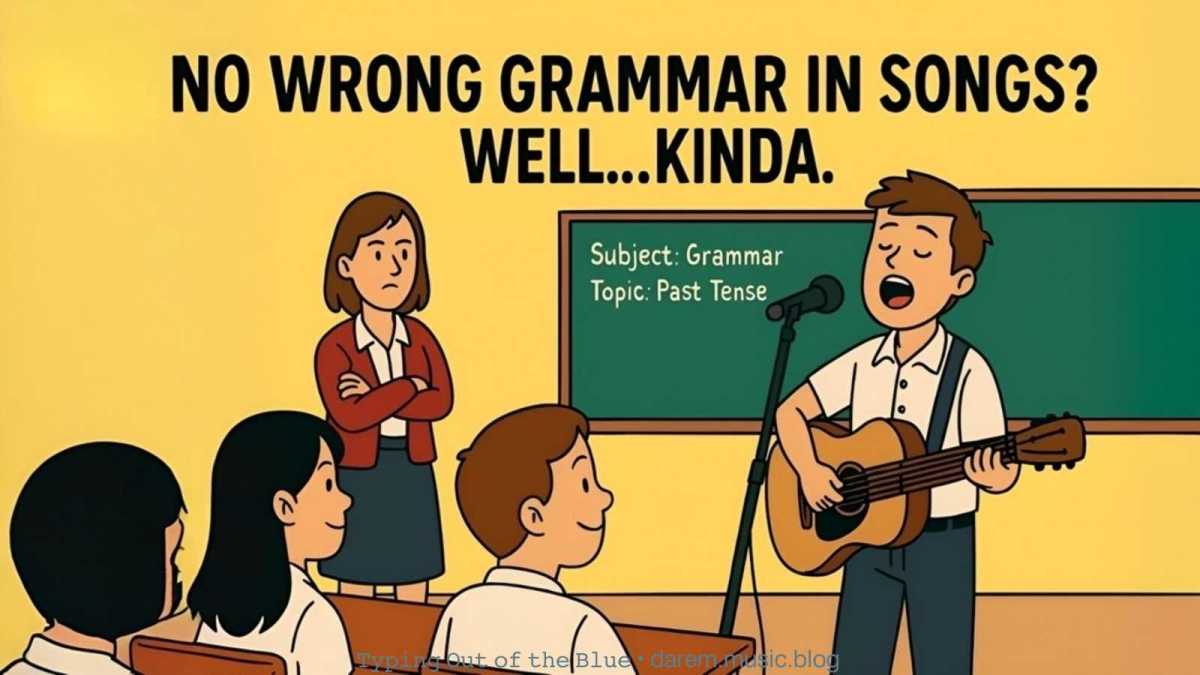
There are no strict grammar rules in lyric writing. Songwriters can switch tenses, repeat words, invent lines, or even ignore sentence structure—because songs aren’t made to follow textbooks. They’re made to capture something real in just a few minutes.
In one short song, you can fit the past, present, and future. So even if it’s “wrong” by grammar standards, it can still sound right in music.
Check these real lines:
“She don’t know she’s beautiful” – Sammy Kershaw
It should be doesn’t, but don’t hits harder—simpler, rawer.
“I can’t get no satisfaction” – The Rolling Stones
Double negative, yes—but it adds frustration. You feel the longing.
“We was just kids when we fell in love” – Ed Sheeran
Technically were, but was feels more nostalgic, more real.
“Ain’t no sunshine when she’s gone” – Bill Withers
Ain’t isn’t formal, but it’s soulful. There isn’t just doesn’t hit.
“I seen it all” – Kanye West
It should be I’ve seen, but I seen sounds streetwise and confident.
“You was my best toy” – Adrian Gurvitz
Correct is you were, but you was gives a laid-back, bluesy feel.
Songs like these don’t follow grammar rules—they follow emotion.
But don’t take it too far.
Just because it works in a song doesn’t mean it’s okay in conversation, recitation, or a report. Not everything that sings well sounds good in real life.
Lyrics are freedom. You can say anything in a song—and it still works.
But if you’re not planning to sing it, better say it right.
ᴛʸᵖⁱⁿᵍ ᴏᵘᵗ ᵒᶠ ᵗʰᵉ ʙˡᵘᵉ ᵈᵃʳᵉᵐ ᵐᵘˢⁱᶜ ᵇˡᵒᵍ
